Larger, easier-launching CGB head; choose only if that is printed on the club.
“A max-forgiveness, easy-launch head aimed at moderate speeds; the honest rung-1 choice of its era. Old but still does the one job a rung-1 driver needs.”
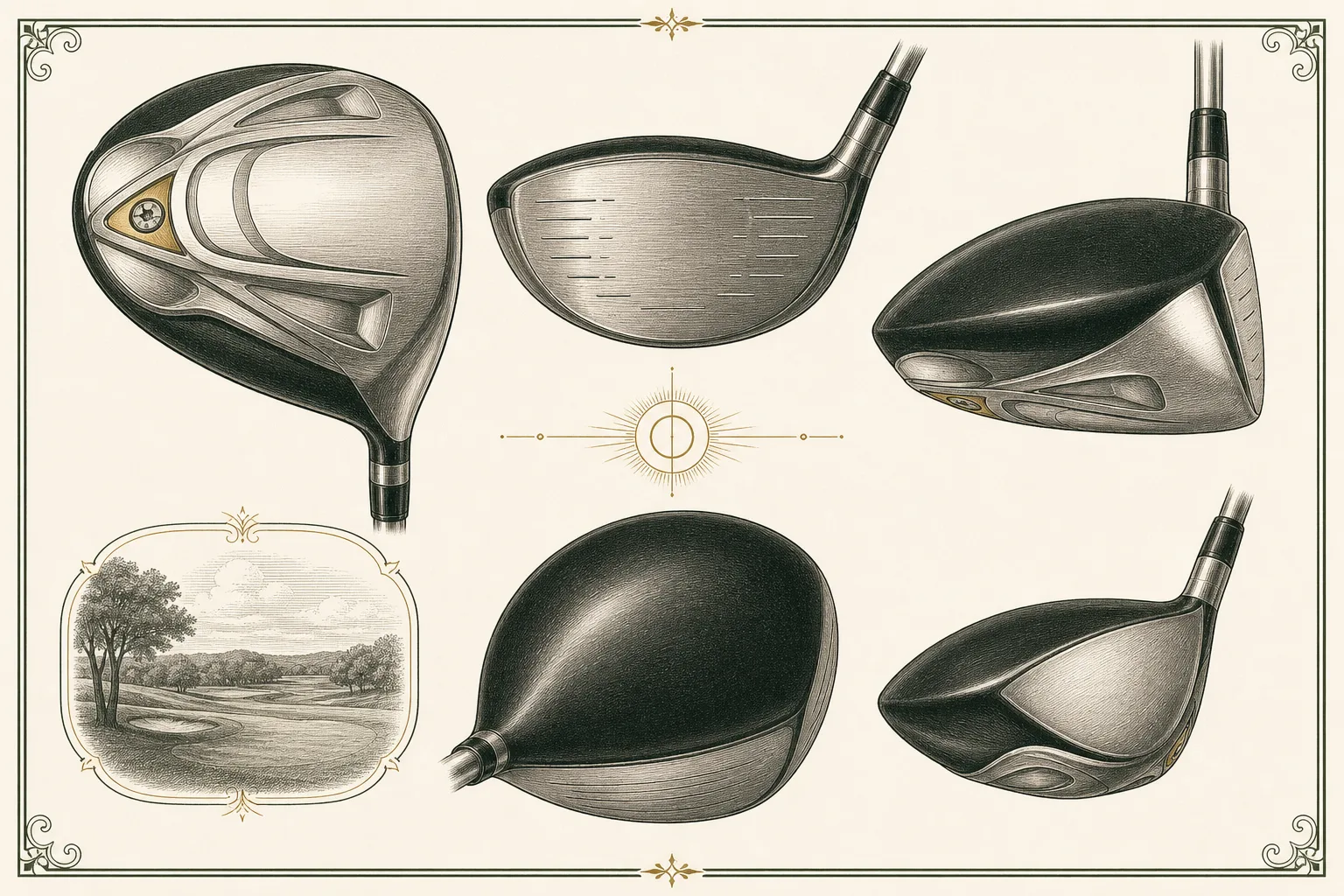
The driver half of TaylorMade's 2007 CGB Max push, this 460cc titanium head paired Inverted Cone Technology with a distinctive triangular shape that set the center of gravity unusually far back for its era, plus a three-weight Movable Weight system TaylorMade claimed could shift trajectory up to 35 yards side-to-side -- the biggest draw-bias swing in the company's lineup to that point when the 16-gram weight sat in the heel port. TaylorMade also paired it with its 'SuperFast' shaft package, an intentionally light total-weight build meant to add clubhead speed. Reviewers measured effective MOI above 5,800 and rated it among the longest drivers tested, even on mis-hits.
A genuinely strong technical package for its year -- highest-MOI, biggest draw-bias claim in TaylorMade's own lineup at launch, well reviewed across multiple outlets -- but it's remembered, when at all, as one generation in TaylorMade's fast-churning movable-weight driver family rather than as an object anyone specifically chases today; the family's lasting legend belongs to the original R7 Quad, not this later CGB Max iteration.
High handicappers and slicers who want the biggest available draw-bias option in TaylorMade's mid-2000s lineup and maximum forgiveness on mis-hits. Better players wanting a compact, workable head should look to the r7 425/425 TP instead.
Launched as the driver companion to the r7 CGB Max irons in TaylorMade's 2007 lineup, continuing the movable-weight arms race started by the R7 Quad and competing with Callaway's FT-5/FT-i and Ping's G10 drivers of the same period; TaylorMade moved on to the R7 SuperQuad and then the R9 (2009) shortly after.
A 460cc titanium head, effective MOI measured above 5,800 by reviewers, a three-weight movable system biased toward maximum stability, and a triangular shape pushing CG far back made this TaylorMade's most forgiveness-forward driver shape of the CGB era -- just shy of the very top of the forgiveness scale.
Calibrated across the whole catalog — a tour blade scores low here on purpose; it means control, not ease.
$30-55 private-party for a clean example in 2026; despite genuinely strong period engineering credentials, it's a common 20-year-old used driver with no collector premium today.
Reading is one thing — hitting is another. Book a bay and see the numbers for yourself before you buy anywhere.
Larger, easier-launching CGB head; choose only if that is printed on the club.
“A max-forgiveness, easy-launch head aimed at moderate speeds; the honest rung-1 choice of its era. Old but still does the one job a rung-1 driver needs.”
The driver half of TaylorMade's 2007 CGB Max push, this 460cc titanium head paired Inverted Cone Technology with a distinctive triangular shape that set the center of gravity unusually far back for its era, plus a three-weight Movable Weight system TaylorMade claimed could shift trajectory up to 35 yards side-to-side -- the biggest draw-bias swing in the company's lineup to that point when the 16-gram weight sat in the heel port. TaylorMade also paired it with its 'SuperFast' shaft package, an intentionally light total-weight build meant to add clubhead speed. Reviewers measured effective MOI above 5,800 and rated it among the longest drivers tested, even on mis-hits.
A genuinely strong technical package for its year -- highest-MOI, biggest draw-bias claim in TaylorMade's own lineup at launch, well reviewed across multiple outlets -- but it's remembered, when at all, as one generation in TaylorMade's fast-churning movable-weight driver family rather than as an object anyone specifically chases today; the family's lasting legend belongs to the original R7 Quad, not this later CGB Max iteration.
High handicappers and slicers who want the biggest available draw-bias option in TaylorMade's mid-2000s lineup and maximum forgiveness on mis-hits. Better players wanting a compact, workable head should look to the r7 425/425 TP instead.
Launched as the driver companion to the r7 CGB Max irons in TaylorMade's 2007 lineup, continuing the movable-weight arms race started by the R7 Quad and competing with Callaway's FT-5/FT-i and Ping's G10 drivers of the same period; TaylorMade moved on to the R7 SuperQuad and then the R9 (2009) shortly after.
A 460cc titanium head, effective MOI measured above 5,800 by reviewers, a three-weight movable system biased toward maximum stability, and a triangular shape pushing CG far back made this TaylorMade's most forgiveness-forward driver shape of the CGB era -- just shy of the very top of the forgiveness scale.
Calibrated across the whole catalog — a tour blade scores low here on purpose; it means control, not ease.
$30-55 private-party for a clean example in 2026; despite genuinely strong period engineering credentials, it's a common 20-year-old used driver with no collector premium today.
Reading is one thing — hitting is another. Book a bay and see the numbers for yourself before you buy anywhere.