“A rung-1 max-forgiveness driver with a Power Milled Face and draw bias to straighten slices and launch it high. Not adjustable at the head like rivals. Commodity used pricing now, but a friendly big stick for the average golfer.”
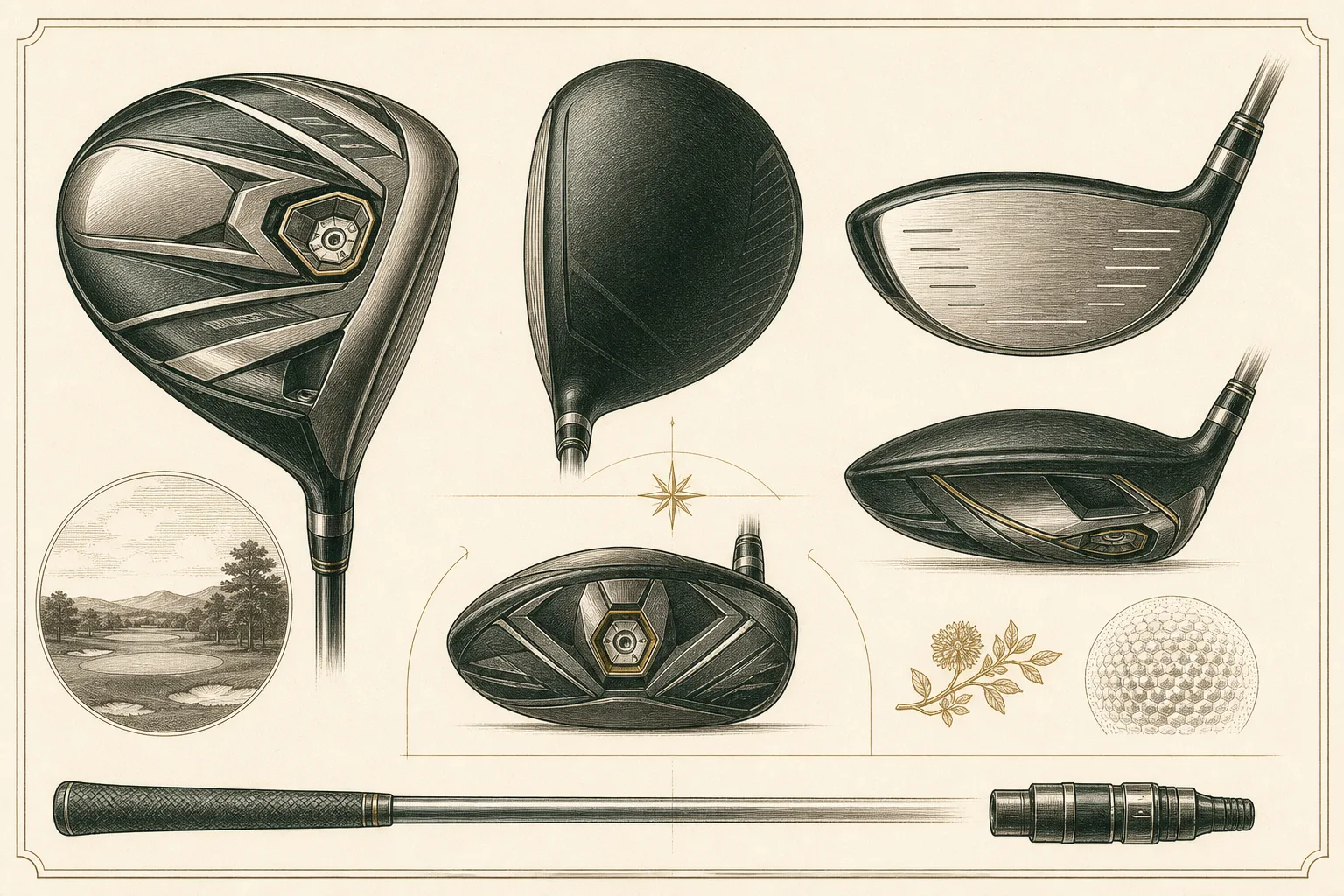
The JGR (short for 'Just Get Ready to hit it long and straight,' per Bridgestone's own marketing) was the brand's 2016 max-game-improvement driver, built around an Improved Power Milled Face — an arched milling pattern spaced wider near the top of the face to hold spin on high strikes and tighter/rougher lower on the face to cut spin, plus vertical heel/toe milling to control mishits — paired with the flexing FAST crown and a 460cc, draw-biased head. Independent reviewers rated it among the longest drivers tested in the max-GI category, with excellent forgiveness across the face, on a modest $399 launch price undercutting the majors.
It earned genuine, independently sourced praise — MyGolfSpy featured it in first-look coverage and multiple outlets called out its distance and forgiveness as standouts in its category and price point — a real, sourced distinction above pure commodity. But it stopped short of cult status: no scarcity, no tour-legend narrative, and it was superseded within two years by the Tour B JGR without any lasting collector interest.
A strong fit for high-to-mid handicappers or slice-fighters wanting an affordable, forgiving, draw-biased 460cc driver; the draw bias built into the head means a player who already draws the ball or plays a fade should test carefully, as it is not neutral. Better players wanting workability or a fade-neutral head should look elsewhere.
Launched in 2016 against Callaway's Big Bertha/XR, TaylorMade's M1/M2, and Ping's G-series — all also chasing forgiving max-distance drivers that year. Bridgestone replaced it with the Tour B JGR line in 2018, continuing the same forgiving-distance mission with added tour credibility.
460cc draw-biased head, an Improved Power Milled Face specifically engineered to hold ball speed and control spin variance across strike locations, and a flexing FAST crown for easy launch all stack toward max-GI forgiveness — reviewers explicitly called out excellent contact and carry 'all across the face.'
Calibrated across the whole catalog — a tour blade scores low here on purpose; it means control, not ease.
Realistic 2026 private-party pricing runs roughly $80–$145 — 2nd Swing/eBay listings for used JGR drivers commonly sit at $119.99–$142.99 in average (8.0-graded) condition — down sharply from its $399 launch price but a fair reflection of an eight-plus-year-old commodity driver with no collector demand.
Reading is one thing — hitting is another. Book a bay and see the numbers for yourself before you buy anywhere.
“A rung-1 max-forgiveness driver with a Power Milled Face and draw bias to straighten slices and launch it high. Not adjustable at the head like rivals. Commodity used pricing now, but a friendly big stick for the average golfer.”
The JGR (short for 'Just Get Ready to hit it long and straight,' per Bridgestone's own marketing) was the brand's 2016 max-game-improvement driver, built around an Improved Power Milled Face — an arched milling pattern spaced wider near the top of the face to hold spin on high strikes and tighter/rougher lower on the face to cut spin, plus vertical heel/toe milling to control mishits — paired with the flexing FAST crown and a 460cc, draw-biased head. Independent reviewers rated it among the longest drivers tested in the max-GI category, with excellent forgiveness across the face, on a modest $399 launch price undercutting the majors.
It earned genuine, independently sourced praise — MyGolfSpy featured it in first-look coverage and multiple outlets called out its distance and forgiveness as standouts in its category and price point — a real, sourced distinction above pure commodity. But it stopped short of cult status: no scarcity, no tour-legend narrative, and it was superseded within two years by the Tour B JGR without any lasting collector interest.
A strong fit for high-to-mid handicappers or slice-fighters wanting an affordable, forgiving, draw-biased 460cc driver; the draw bias built into the head means a player who already draws the ball or plays a fade should test carefully, as it is not neutral. Better players wanting workability or a fade-neutral head should look elsewhere.
Launched in 2016 against Callaway's Big Bertha/XR, TaylorMade's M1/M2, and Ping's G-series — all also chasing forgiving max-distance drivers that year. Bridgestone replaced it with the Tour B JGR line in 2018, continuing the same forgiving-distance mission with added tour credibility.
460cc draw-biased head, an Improved Power Milled Face specifically engineered to hold ball speed and control spin variance across strike locations, and a flexing FAST crown for easy launch all stack toward max-GI forgiveness — reviewers explicitly called out excellent contact and carry 'all across the face.'
Calibrated across the whole catalog — a tour blade scores low here on purpose; it means control, not ease.
Realistic 2026 private-party pricing runs roughly $80–$145 — 2nd Swing/eBay listings for used JGR drivers commonly sit at $119.99–$142.99 in average (8.0-graded) condition — down sharply from its $399 launch price but a fair reflection of an eight-plus-year-old commodity driver with no collector demand.
Reading is one thing — hitting is another. Book a bay and see the numbers for yourself before you buy anywhere.