A distinct r7 generation; match the full name printed on the head.
“Renamed and de-duplicated from a 'r7 425 / 460' entry that conflated two distinct 2005 SKUs. The r7 425 is the compact-forgiveness half of the Quad follow-up: 425cc, 28 grams of movable weight across two TLC ports. Confirmed via TaylorMade's own spec sheet. Distinct from the larger r7 460 and the tour-only r7 425 TP.”
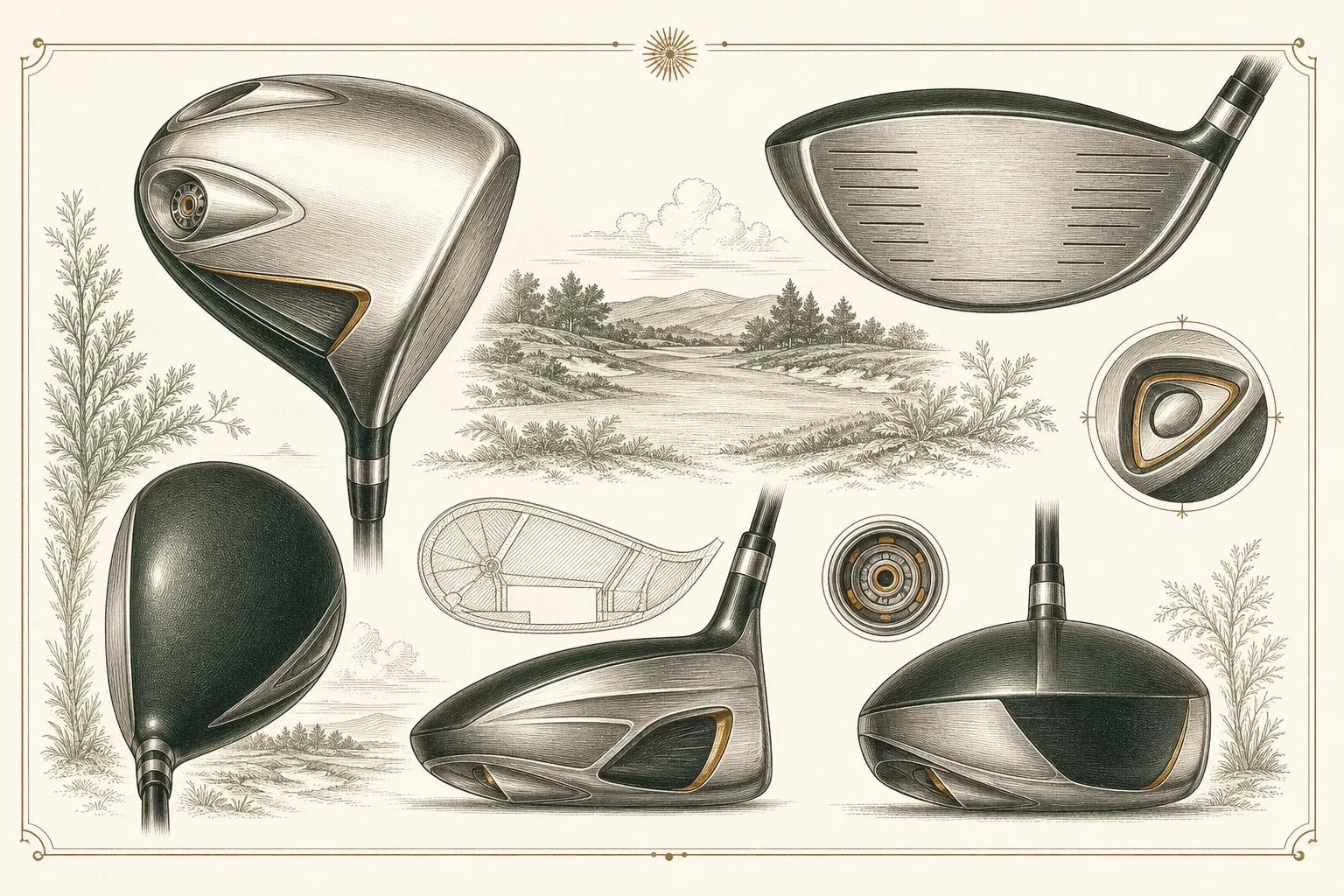
Introduced November 10, 2005 as the successor to the R7 Quad -- the driver Wikipedia and period reporting describe as the most-played model on the PGA Tour and best-selling driver in the amateur market since 2004 -- the r7 425 refined Movable Weight Technology onto a fully cast head using TaylorMade's new Ultra-Thin Wall (UTW) process, cutting wall thickness to 0.6mm (about 25% thinner than the Quad) to free up 28 grams split across two widely-spaced TLC ports rather than the Quad's four smaller ones. Robot testing claimed up to 13 yards of trajectory change, and the face carried the new Inverted Cone Technology. It topped the Darrell Survey as the No. 1 driver model in its PGA Tour debut in January 2006, played by Sergio Garcia, Sean O'Hair, Fred Funk, Peter Lonard and Kenny Perry.
Genuinely historically important -- it took over from the Quad as the most-played driver on tour within weeks of release and helped cement movable-weight technology as an industry standard every major OEM eventually copied -- but credit for originating that technology belongs to the 2004 R7 Quad, not the 425 itself, and there's no modern collector or forum chase for clean 425 heads. It's remembered as a milestone, not hunted as a relic.
Better players and low-to-mid handicappers who want a compact, tour-shaped head with genuine draw/fade tuning. A high-handicapper chasing maximum forgiveness and the largest legal head should look at the same-family r7 460 instead.
Launched as the successor to the 2004 R7 Quad and immediately took over as TaylorMade's flagship movable-weight driver, competing with Callaway's Great Big Bertha II/Fusion and Titleist's 909 series; TaylorMade further diversified the shape with the larger, same-era r7 460, and both were eventually replaced by the R7 SuperQuad and then the R9 series (2009) with Flight Control Technology.
At 425cc this is meaningfully smaller than the 460cc USGA maximum and leans toward the more compact, tour-preferred end of the r7 family -- the shape pros like Sergio Garcia gamed -- rather than the maximum-forgiveness end. The two widely-spaced TLC ports and UTW-thinned walls give real adjustability and stability, but it's built more for better ball-strikers wanting shot-shape control than beginners wanting the biggest possible head.
Calibrated across the whole catalog — a tour blade scores low here on purpose; it means control, not ease.
Realistically $30-55 for a clean, playable head in 2026; 20 years on this is a common, well-worn used driver, not a collectible -- most surviving units sell to budget buyers rather than enthusiasts, despite its genuine tech-history importance.
Reading is one thing — hitting is another. Book a bay and see the numbers for yourself before you buy anywhere.
A distinct r7 generation; match the full name printed on the head.
“Renamed and de-duplicated from a 'r7 425 / 460' entry that conflated two distinct 2005 SKUs. The r7 425 is the compact-forgiveness half of the Quad follow-up: 425cc, 28 grams of movable weight across two TLC ports. Confirmed via TaylorMade's own spec sheet. Distinct from the larger r7 460 and the tour-only r7 425 TP.”
Introduced November 10, 2005 as the successor to the R7 Quad -- the driver Wikipedia and period reporting describe as the most-played model on the PGA Tour and best-selling driver in the amateur market since 2004 -- the r7 425 refined Movable Weight Technology onto a fully cast head using TaylorMade's new Ultra-Thin Wall (UTW) process, cutting wall thickness to 0.6mm (about 25% thinner than the Quad) to free up 28 grams split across two widely-spaced TLC ports rather than the Quad's four smaller ones. Robot testing claimed up to 13 yards of trajectory change, and the face carried the new Inverted Cone Technology. It topped the Darrell Survey as the No. 1 driver model in its PGA Tour debut in January 2006, played by Sergio Garcia, Sean O'Hair, Fred Funk, Peter Lonard and Kenny Perry.
Genuinely historically important -- it took over from the Quad as the most-played driver on tour within weeks of release and helped cement movable-weight technology as an industry standard every major OEM eventually copied -- but credit for originating that technology belongs to the 2004 R7 Quad, not the 425 itself, and there's no modern collector or forum chase for clean 425 heads. It's remembered as a milestone, not hunted as a relic.
Better players and low-to-mid handicappers who want a compact, tour-shaped head with genuine draw/fade tuning. A high-handicapper chasing maximum forgiveness and the largest legal head should look at the same-family r7 460 instead.
Launched as the successor to the 2004 R7 Quad and immediately took over as TaylorMade's flagship movable-weight driver, competing with Callaway's Great Big Bertha II/Fusion and Titleist's 909 series; TaylorMade further diversified the shape with the larger, same-era r7 460, and both were eventually replaced by the R7 SuperQuad and then the R9 series (2009) with Flight Control Technology.
At 425cc this is meaningfully smaller than the 460cc USGA maximum and leans toward the more compact, tour-preferred end of the r7 family -- the shape pros like Sergio Garcia gamed -- rather than the maximum-forgiveness end. The two widely-spaced TLC ports and UTW-thinned walls give real adjustability and stability, but it's built more for better ball-strikers wanting shot-shape control than beginners wanting the biggest possible head.
Calibrated across the whole catalog — a tour blade scores low here on purpose; it means control, not ease.
Realistically $30-55 for a clean, playable head in 2026; 20 years on this is a common, well-worn used driver, not a collectible -- most surviving units sell to budget buyers rather than enthusiasts, despite its genuine tech-history importance.
Reading is one thing — hitting is another. Book a bay and see the numbers for yourself before you buy anywhere.