
There's a moment in almost every fitting where the numbers point to a softer shaft and the golfer's face falls. Regular instead of stiff. Senior instead of regular. It lands like a demotion — like the launch monitor just read out a skill grade.
It didn't. Flex is not a skill level. It's a timing and stability match, and getting talked out of the right one by ego is one of the most expensive mistakes in equipment.
What the shaft is actually doing
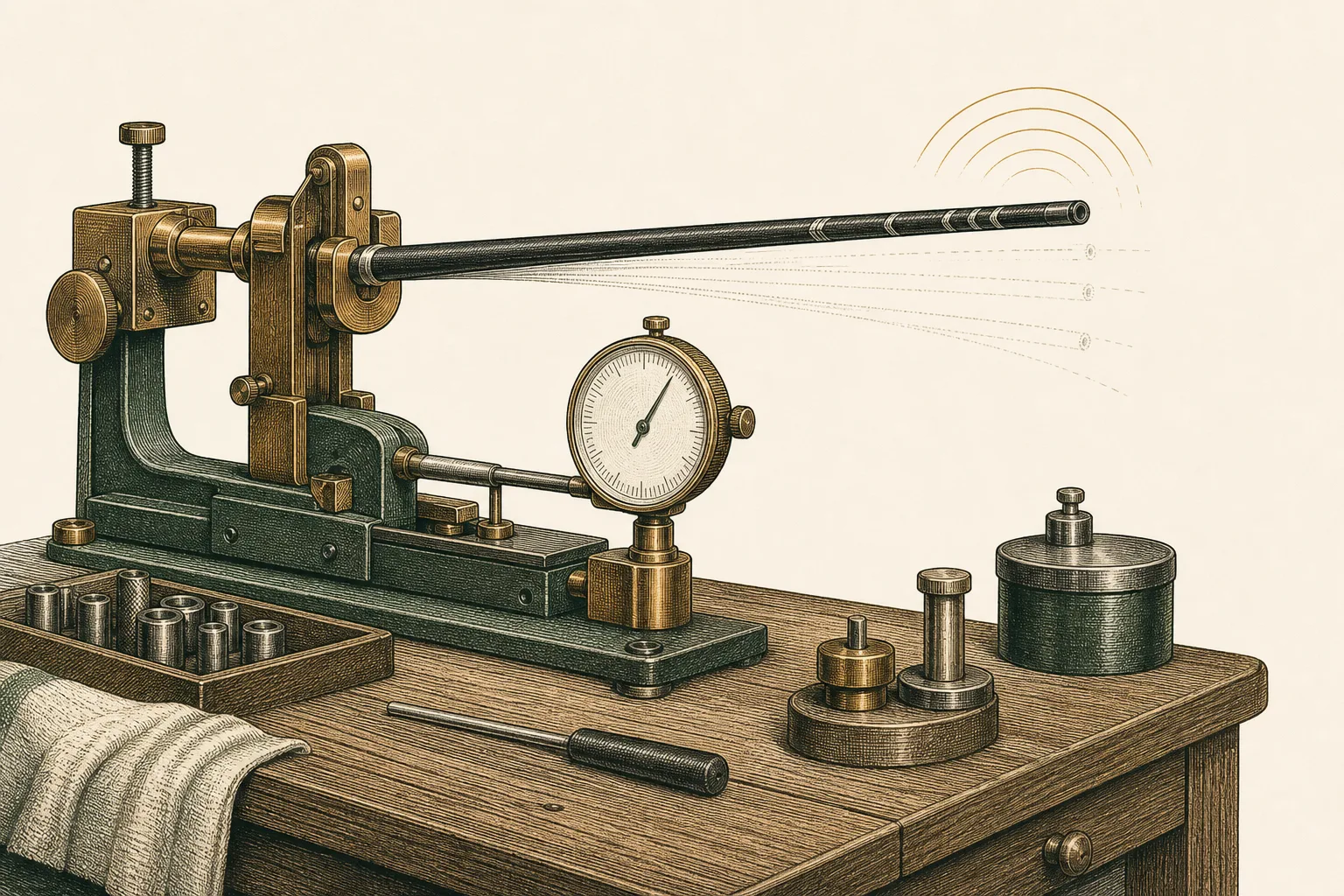
The shaft is not a rigid stick — it's a spring with a clubhead on the end. It bends as you swing down, stores energy, and unbends ("recovers") through impact. The fit question is purely mechanical: does the shaft finish recovering right as the head arrives at the ball?
- Too stiff for the force you produce: the shaft never fully loads. It arrives at the ball still straight, having done none of the work. Low launch, low spin, a flight that falls out of the air, a strike that feels like swinging a board — and typically a miss to the right, because an unloaded shaft also resists squaring. Distance evaporates.
- Too soft for the force you produce: the shaft over-loads and is still whipping through as you reach the ball. High launch, high spin, ballooning flight, a head that arrives somewhere slightly different every swing — and an inconsistent, hooky left miss.
The right flex is simply the spring rate that matches your force. A senior-flex player isn't a worse golfer; they don't generate enough force to bend a stiff shaft, so in their hands a stiff shaft is a dead stick. Give them a softer profile and it launches the ball for them. That's not a concession. That's the club doing its job.
Shaft flex tracks your body and your force, not your skill. The best ball-striker you know might be in a lighter, softer shaft than you — because they're 68 and smooth, and the shaft is matched to the force they actually produce.
Two nuances that most golfers never hear
1. Tempo loads shafts, not just speed. Two players can swing 95 mph and need different flexes. A smooth, gradual transition loads the shaft gently — that player can play softer. A violent transition — an aggressive change of direction at the top — spikes enormous load into the shaft for a moment, and that player may need stiff at a speed the chart says is regular. Charts key on clubhead speed because it's easy to measure; fitters watch the transition.
2. Flex letters aren't standardized. There is no governing body for what "regular" means. One brand's R measures like another brand's S. Between eras it's worse — a 1990s S and a 2020s S can be different shafts entirely. This is why serious fitters measure frequency (CPM — cycles per minute) instead of trusting the paint. It's also why buying a used club "because it's stiff, and I play stiff" is close to meaningless — the label is a marketing letter, not a measurement.
Weight is half the story
Flex gets the attention, but shaft weight moves the needle at least as much: heavier shafts slow the swing slightly and stabilize the delivery; lighter shafts add speed and demand better timing. The same dignity rule applies. A 60-gram graphite iron shaft in the hands of a player who needs it isn't a ladies'-tee accessory — it's the correct spring for the engine. Our shafts primer covers the weight/flex/profile triangle in full.
In the bay
This is the single most convincing demo a launch monitor can run, because flex shows up in the numbers before you can even articulate the feel:
- Hit the same head in three flexes, ten balls each.
- Ignore your ego and watch three numbers: launch, spin, and the left-right spread of the misses.
- The correct shaft shows up as the tightest spread with a flight that holds its window — not the one whose letter you wanted.
Flex isn't about how hard you swing. It's about where the ball goes. Every club is a trade-off puts this axis alongside the other three; book a bay and let the numbers pick the letter.
From the glossary
Related reading: Every Club Is a Trade-Off · Shafts: Flex, Weight, and Your Swing Speed · Torque: What Makes a Shaft Stable, and What Makes One Loud · The Smart Used-Shaft Market

The Most Forgiving Drivers of the 2010s, Ranked by the Data
From roughly 2014 to 2019, every major manufacturer spent its entire driver budget chasing one number: MOI — how much the head resists twisting when you miss the middle. Carbon crowns, tungsten back weights, faces engineered to fight your specific mishit. Those flagships were the most forgiving drivers ever built to that point, and forgiveness does not expire. Your heel strike in 2026 is the same heel strike it was in 2018, and a head that held ball speed on it then holds ball speed on it now.