
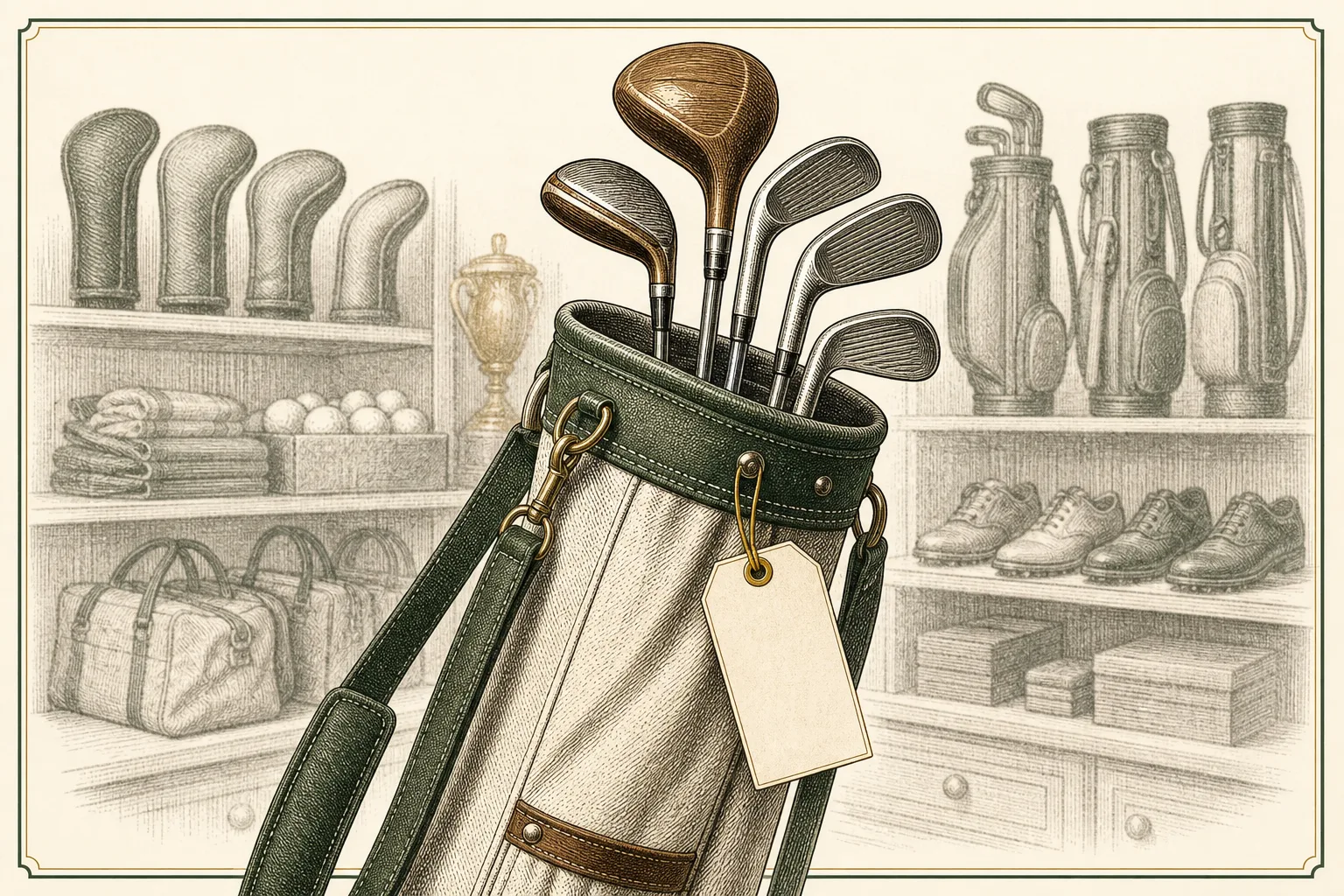
Here's the good news up front: your first set of golf clubs is the cheapest it will ever be to get into this game, if you shop smart. The used market is deep, box sets are genuinely good now, and the clubs that matter most for a beginner happen to be the cheapest ones in the bag. The bad news: the golf industry is exceptionally good at convincing new players to spend $600 on a driver they can't hit yet. This guide is about not being that person.
The two smart paths (and the one dumb one)
For a first set, you have two good options: a complete box set or used name-brand clubs. The dumb option is walking into a big-box store and buying this year's full retail lineup piece by piece. You'll spend $2,500+ on clubs designed for swings you don't have yet, and they'll lose a third of their value the moment you swipe your card.
Box sets — think Callaway Strata, Wilson, Tour Edge, or newer direct-to-consumer brands like Stix — give you a driver, woods or hybrids, irons, a putter, and a bag in one purchase. Strata-style sets run under $250 for everything including the bag; upgraded sets like Stix run $600–$1,000 (MyGolfSpy tests these every year). Are they as good as premium clubs? No. Are they good enough to learn on for two full seasons? Absolutely. The main compromises are lighter, whippier shafts and less refined feel — neither of which will hold back someone still learning to make consistent contact.
Used name-brand clubs are the better play if you're even slightly patient. A set of game-improvement irons from Callaway, Ping, TaylorMade, or Cobra that sold for $900 four years ago sells for $300–$450 today, and those clubs are built with better materials and tighter quality control than any box set. Golf.com's guide to buying used makes the key point: clubs under five years old still perform essentially like new and hold resale value — so when you outgrow them, you can sell them and recoup a real chunk of what you paid. A box set resells for almost nothing.
My honest recommendation: box set if you want zero friction and aren't sure golf will stick; used name-brand if you're in. And whichever path you take — do not buy blades. Those gorgeous thin forged irons the pros play punish every miss, and as a beginner, most of your shots are misses. You want game-improvement irons: bigger heads, wider soles, more forgiveness. Your ego will survive.
Where the money actually matters
Here's the counterintuitive part. New golfers spend big on the driver and cheap out on the putter and wedges. That's exactly backwards.
Putter and wedges: spend here. You'll hit your putter more than any other club — often 30+ times a round. A used premium putter (an Odyssey or a Ping, $60–$120 on the used market) that feels right in your hands is worth more strokes than any driver upgrade. Same logic for wedges: a used Vokey or Cleveland with healthy grooves runs $50–$80, and short-game shots are where beginners bleed the most strokes. These clubs also barely age — putter design moves slowly, and a five-year-old wedge is functionally identical to this year's.
Driver: this is where you save. A three-to-five-year-old used driver from a major brand costs $120–$250 and gives you nearly all the performance of the $600 current model. Golf Digest's cheat sheet on buying used backs this up: year-over-year driver gains are marginal, and the used market is flooded with barely-hit drivers from golfers chasing the new thing. Let their impatience fund your bag.
Irons: middle of the budget. Used game-improvement irons, 5-iron through pitching wedge, are the core purchase. You don't need a 3- or 4-iron — you can't hit them yet, and a hybrid does their job better anyway.
A realistic target for a very good used first bag: $400–$700 total. Driver ~$150, hybrid ~$60, irons ~$300, extra wedge ~$60, putter ~$90, used bag ~$50.
The used-market playbook
Where to buy, roughly in order of safety: certified pre-owned programs (Callaway Pre-Owned, PGA Tour Superstore trade-ins, 2nd Swing, GlobalGolf) give you condition grading and return windows — you pay a small premium for that safety net, and it's worth it for your first purchase. eBay is cheaper but demands diligence: buy from sellers with long track records and real photos, not stock images. Facebook Marketplace is the cheapest and the riskiest — great deals exist, but so do counterfeits, especially of premium brands.
When you inspect a club, check three things. First, the face and grooves: light bag scratches are cosmetic; a worn-smooth hitting area on irons or wedges means the club is spent. Second, the shaft: no dents, no rust, no rattles. Third, the grips: cracked or glassy grips need replacing, which is fine — budget about $10–12 per club and treat it as a feature, since fresh grips make any used club feel new.
Two red flags that should end the negotiation: any dent or crack in a driver or fairway-wood crown (the head is compromised), and prices dramatically below market on premium gear (counterfeit until proven otherwise).
One genuinely useful trick: before you buy anything, hit clubs. Demo days, retail hitting bays, a friend's set at the range. This is honestly one of the best uses of a launch monitor — bring a candidate club (or a buddy's set) into a bay at Clubhouse and watch the actual numbers. Ten minutes of ball-speed and dispersion data tells you more than an hour of online reviews.
When to get fitted (not yet — but sooner than you think)
Full custom fitting on day one is a waste of money, and most honest fitters will tell you so. If you can't make semi-consistent contact, the data from a fitting session is noise, and the clubs get fitted to a swing that will be gone in three months. Golf.com and fitters like True Spec agree on the threshold: you don't need to hit it straight — you need a repeatable pattern, meaning solid contact more often than not.
For most new golfers that's somewhere between three months and a year of regular play. Until then, one shortcut is worth doing on day one: get your lie angle and grip size checked. It takes minutes, costs little, and if you're notably tall, short, or have large hands, off-the-rack clubs may be fighting you from the first swing.
Once you've got that repeatable pattern, a fitting becomes one of the highest-value purchases in golf — and it pairs beautifully with the buy-used strategy. Get fitted, learn your specs (shaft flex, lie angle, length), then buy used clubs in those specs. Fitting-level precision at used-market prices. When you're at that stage, Clubhouse runs fitting sessions on the same launch monitors you practice on, so the numbers you get fitted with are numbers you already understand.
The one-paragraph version
Buy used name-brand game-improvement clubs (or a box set if you want zero hassle), spend your real money on the putter and wedges, buy the driver used and three years old, skip the blades and the long irons, regrip everything, and get fitted once your contact is repeatable — not before. Do that and you'll have a bag that costs a third of retail, resells for most of what you paid, and never once holds you back while you learn.
From the glossary
Related reading: Used Clubs: How Old Is Too Old? · The 14 Clubs in Your Bag (and What Each Is For) · Grips, Lie Angle, and Why Fitting Matters · Blades, Cavity Backs, and Everything Between

The Most Forgiving Drivers of the 2010s, Ranked by the Data
From roughly 2014 to 2019, every major manufacturer spent its entire driver budget chasing one number: MOI — how much the head resists twisting when you miss the middle. Carbon crowns, tungsten back weights, faces engineered to fight your specific mishit. Those flagships were the most forgiving drivers ever built to that point, and forgiveness does not expire. Your heel strike in 2026 is the same heel strike it was in 2018, and a head that held ball speed on it then holds ball speed on it now.