“The Speed Pocket debuted here and reshaped the entire fairway-wood category — genuinely changed how forgiving fairways launch off both tee and turf, still a fine rung-1 used buy.”
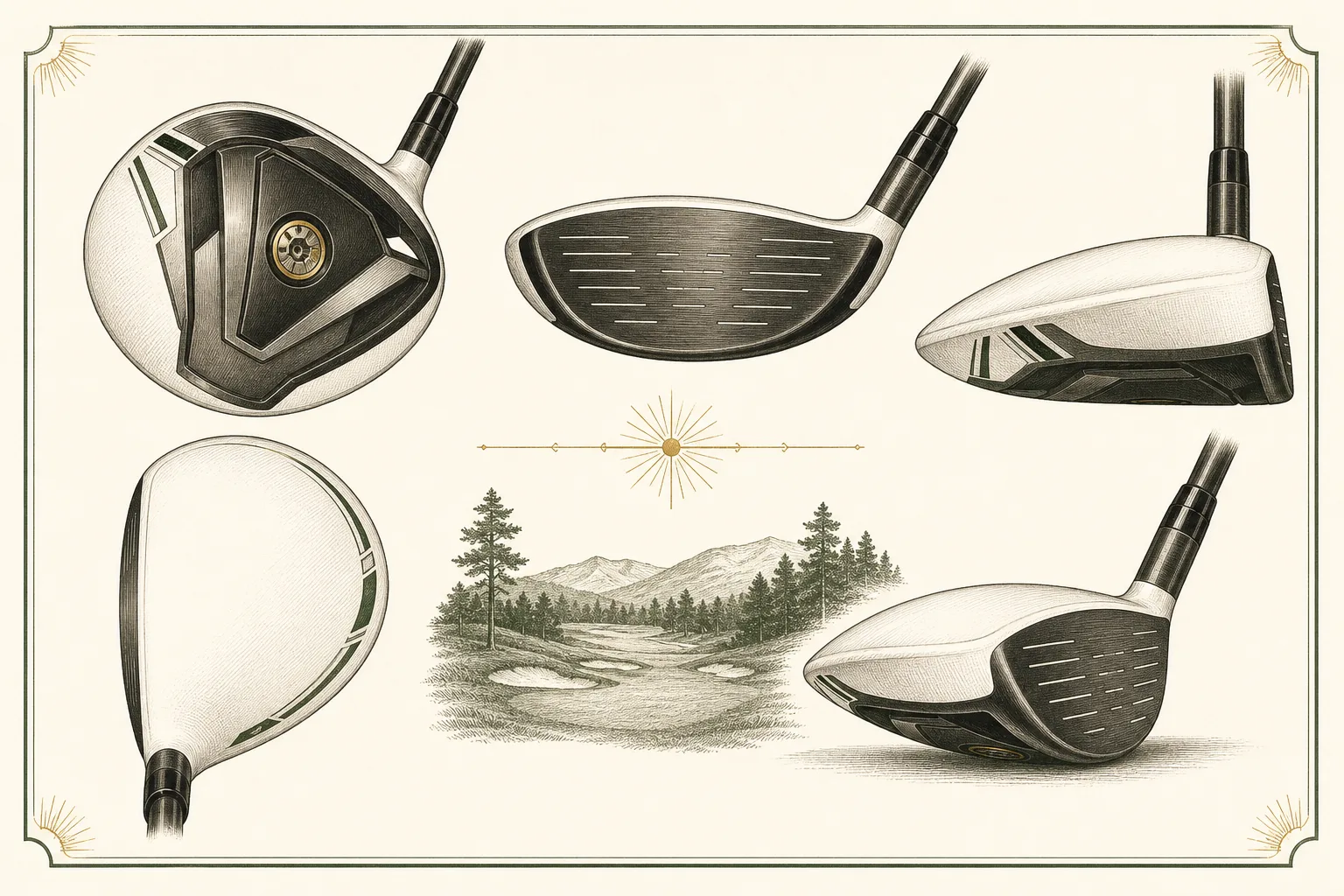
RocketBallz introduced the Speed Pocket, a deep slot running parallel to and just behind the face on the sole, which flexed the thin face like a trampoline to lift ball speed and COR beyond what TaylorMade's prior Burner SuperFast 2.0 fairways could do — reviewers measured roughly 3-4 mph faster ball speed. Combined with a deeper face and a forward-shifted CG, it produced real distance gains testers pegged at 15-20 yards over older fairways, enough to make it, unusually for a fairway wood, one of the most talked-about clubs of 2012. The one recurring gripe: the Speed Pocket doubled as a dirt magnet, regularly needing a tee to dig grass and debris out after impact.
The Speed Pocket it debuted became the industry-standard face-flex slot design, carried forward through TaylorMade's own Stage 2, JetSpeed, M-series and beyond, and imitated across the fairway-wood category. Retrospective coverage as recently as a 'do they still hold up in 2026' feature confirms it is still discussed and recommended more than a decade later, not merely a flash-in-the-pan launch story.
Any handicap golfer wanting more forgiving, higher-launching distance off the tee or turf than an older fairway wood provides — genuinely broad appeal, from mid-handicappers to lower-handicap players wanting a workhorse 3-wood. It requires no real caveat beyond needing periodic cleaning of the Speed Pocket channel.
Launched in early 2012 against Callaway's RAZR Fit fairways and Titleist's 910F, and immediately reset expectations for how much distance a fairway-wood redesign could deliver in one generation. TaylorMade replaced it with RocketBallz Stage 2 within about a year, carrying the Speed Pocket concept forward rather than abandoning it.
The Speed Pocket's face flex protects ball speed on thin and low strikes specifically, on top of a deep, forgiving fairway-wood face shape and forward CG that keeps the ball airborne from tee or turf. It is not the maximum-forgiveness fairway wood of any era, but it was meaningfully more forgiving on mis-hits than the Burner SuperFast generation it replaced.
Calibrated across the whole catalog — a tour blade scores low here on purpose; it means control, not ease.
Cheap and plentiful today: realistic private-party prices for a single RocketBallz fairway wood run roughly $40-$80 depending on loft, shaft and condition, well down from its $220 launch MSRP. It is not collectible, but its enduring functional reputation (see the 2026 'do they still hold up' retrospective) means it remains a genuinely recommendable budget fairway wood rather than an obsolete relic.
The Legends Rack
"It's sooo far." The Speed Pocket slot made the RBZ 3-wood a genuine viral phenomenon — TaylorMade claimed 17 extra yards and, for once, real golfers agreed. Probably the most-requested single fairway wood in used golf. Who'll love it: everyone. This is a must-source; buy two.
Who it suitsAll
Reading is one thing — hitting is another. Book a bay and see the numbers for yourself before you buy anywhere.
“The Speed Pocket debuted here and reshaped the entire fairway-wood category — genuinely changed how forgiving fairways launch off both tee and turf, still a fine rung-1 used buy.”
RocketBallz introduced the Speed Pocket, a deep slot running parallel to and just behind the face on the sole, which flexed the thin face like a trampoline to lift ball speed and COR beyond what TaylorMade's prior Burner SuperFast 2.0 fairways could do — reviewers measured roughly 3-4 mph faster ball speed. Combined with a deeper face and a forward-shifted CG, it produced real distance gains testers pegged at 15-20 yards over older fairways, enough to make it, unusually for a fairway wood, one of the most talked-about clubs of 2012. The one recurring gripe: the Speed Pocket doubled as a dirt magnet, regularly needing a tee to dig grass and debris out after impact.
The Speed Pocket it debuted became the industry-standard face-flex slot design, carried forward through TaylorMade's own Stage 2, JetSpeed, M-series and beyond, and imitated across the fairway-wood category. Retrospective coverage as recently as a 'do they still hold up in 2026' feature confirms it is still discussed and recommended more than a decade later, not merely a flash-in-the-pan launch story.
Any handicap golfer wanting more forgiving, higher-launching distance off the tee or turf than an older fairway wood provides — genuinely broad appeal, from mid-handicappers to lower-handicap players wanting a workhorse 3-wood. It requires no real caveat beyond needing periodic cleaning of the Speed Pocket channel.
Launched in early 2012 against Callaway's RAZR Fit fairways and Titleist's 910F, and immediately reset expectations for how much distance a fairway-wood redesign could deliver in one generation. TaylorMade replaced it with RocketBallz Stage 2 within about a year, carrying the Speed Pocket concept forward rather than abandoning it.
The Speed Pocket's face flex protects ball speed on thin and low strikes specifically, on top of a deep, forgiving fairway-wood face shape and forward CG that keeps the ball airborne from tee or turf. It is not the maximum-forgiveness fairway wood of any era, but it was meaningfully more forgiving on mis-hits than the Burner SuperFast generation it replaced.
Calibrated across the whole catalog — a tour blade scores low here on purpose; it means control, not ease.
Cheap and plentiful today: realistic private-party prices for a single RocketBallz fairway wood run roughly $40-$80 depending on loft, shaft and condition, well down from its $220 launch MSRP. It is not collectible, but its enduring functional reputation (see the 2026 'do they still hold up' retrospective) means it remains a genuinely recommendable budget fairway wood rather than an obsolete relic.
The Legends Rack
"It's sooo far." The Speed Pocket slot made the RBZ 3-wood a genuine viral phenomenon — TaylorMade claimed 17 extra yards and, for once, real golfers agreed. Probably the most-requested single fairway wood in used golf. Who'll love it: everyone. This is a must-source; buy two.
Who it suitsAll
Reading is one thing — hitting is another. Book a bay and see the numbers for yourself before you buy anywhere.