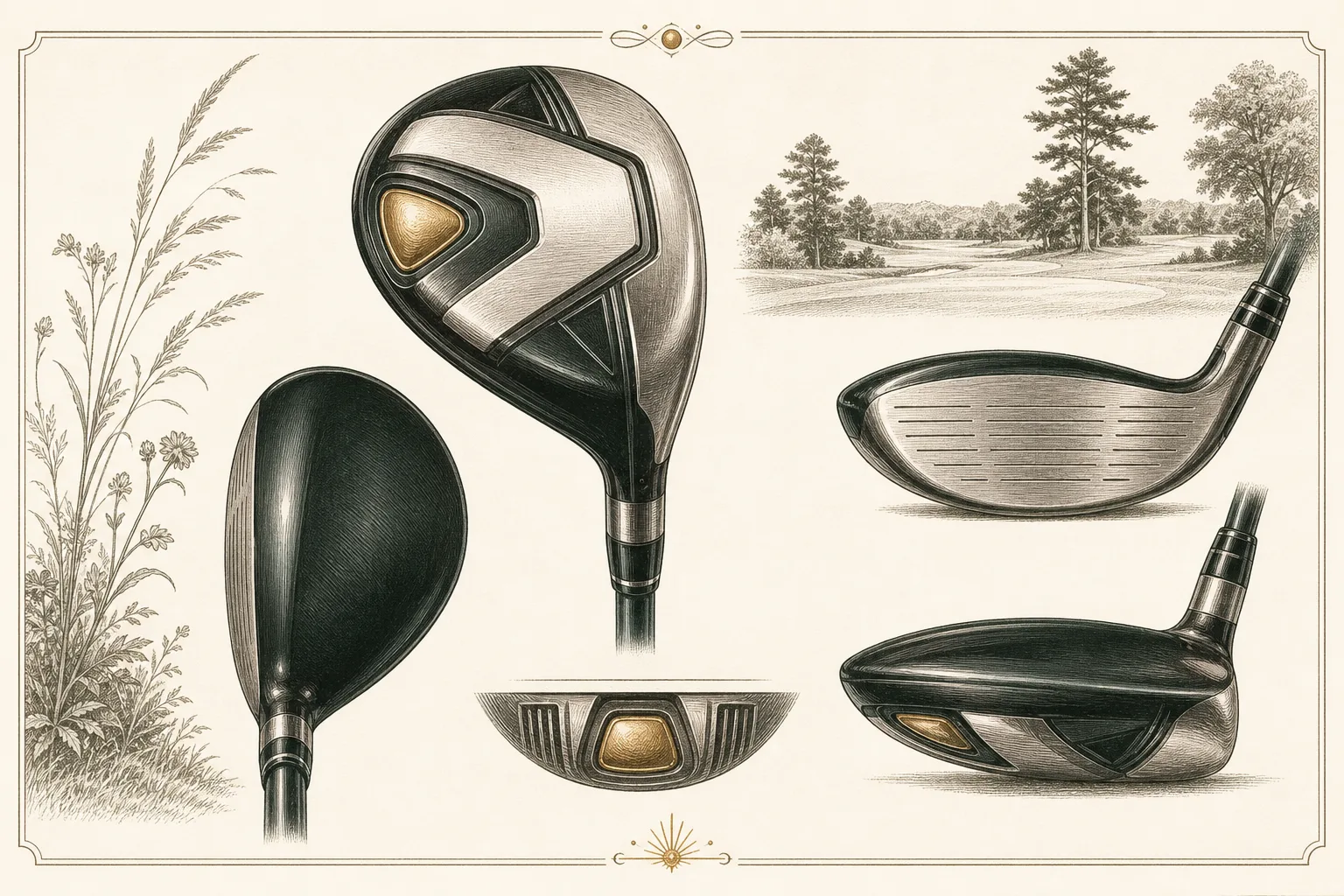
The T-Rail took Cobra's decades-old Baffler concept -- twin rails on the sole to help the club slide through turf instead of digging -- and updated it with a single T-shaped tungsten rail for 2013. The body is 17-4 stainless with a thin 455 maraging-steel face insert for extra ball speed, and the deep, low CG behind a shallow face was built expressly to get the ball airborne easily from any lie: fairway, rough, hardpan or fairway bunker. It sat as Cobra's mid-tier, high-forgiveness fairway option, aimed squarely at mid-to-high handicappers rather than better players chasing workability.
A well-reviewed but unremarkable mainstream release -- Today's Golfer and other outlets praised its feel and forgiveness at launch, but there is no tour legend, scarcity, or lasting forum reverence attached to it. It was one generation in Cobra's long-running, still-continuing Baffler rail lineage, superseded within a couple of years by newer Baffler/King models.
Best for mid-to-high handicappers who struggle to get fairway woods airborne, especially from rough or tight lies where the rail sole helps. Better players wanting shot control or a compact look should look at Cobra's Pro/Tour-oriented offerings instead.
Launched in 2013 alongside Cobra's Baffler XL/AMP-era product cycle, competing with TaylorMade's RocketBallz and Callaway's X Hot fairway woods of the same seasons. Its rail-sole idea carried forward into later King F6/F7/F8 Baffler fairways; a modern equivalent is the Cobra Darkspeed or King LTDx Max.
Deep, low CG and a shallow face combine with the tungsten sole rail to resist digging and launch the ball high even from thin or rough lies; testers rated forgiveness and feel highly across mis-hits. It trades some workability for that ease -- a fine mid-to-high-handicap tool, not a shot-shaper's club.
Calibrated across the whole catalog — a tour blade scores low here on purpose; it means control, not ease.
Realistic 2026 private-party/used-retail pricing runs about $60-$90 per club (2nd Swing lists examples in the $63-$90 range against an original $179.99 retail), reflecting a 12-year-old mid-tier fairway wood with no collectible premium.
Reading is one thing — hitting is another. Book a bay and see the numbers for yourself before you buy anywhere.
The T-Rail took Cobra's decades-old Baffler concept -- twin rails on the sole to help the club slide through turf instead of digging -- and updated it with a single T-shaped tungsten rail for 2013. The body is 17-4 stainless with a thin 455 maraging-steel face insert for extra ball speed, and the deep, low CG behind a shallow face was built expressly to get the ball airborne easily from any lie: fairway, rough, hardpan or fairway bunker. It sat as Cobra's mid-tier, high-forgiveness fairway option, aimed squarely at mid-to-high handicappers rather than better players chasing workability.
A well-reviewed but unremarkable mainstream release -- Today's Golfer and other outlets praised its feel and forgiveness at launch, but there is no tour legend, scarcity, or lasting forum reverence attached to it. It was one generation in Cobra's long-running, still-continuing Baffler rail lineage, superseded within a couple of years by newer Baffler/King models.
Best for mid-to-high handicappers who struggle to get fairway woods airborne, especially from rough or tight lies where the rail sole helps. Better players wanting shot control or a compact look should look at Cobra's Pro/Tour-oriented offerings instead.
Launched in 2013 alongside Cobra's Baffler XL/AMP-era product cycle, competing with TaylorMade's RocketBallz and Callaway's X Hot fairway woods of the same seasons. Its rail-sole idea carried forward into later King F6/F7/F8 Baffler fairways; a modern equivalent is the Cobra Darkspeed or King LTDx Max.
Deep, low CG and a shallow face combine with the tungsten sole rail to resist digging and launch the ball high even from thin or rough lies; testers rated forgiveness and feel highly across mis-hits. It trades some workability for that ease -- a fine mid-to-high-handicap tool, not a shot-shaper's club.
Calibrated across the whole catalog — a tour blade scores low here on purpose; it means control, not ease.
Realistic 2026 private-party/used-retail pricing runs about $60-$90 per club (2nd Swing lists examples in the $63-$90 range against an original $179.99 retail), reflecting a 12-year-old mid-tier fairway wood with no collectible premium.
Reading is one thing — hitting is another. Book a bay and see the numbers for yourself before you buy anywhere.