“The infomercial superstar that made Orlimar - low, deep tungsten weighting got the ball airborne off the turf for everyone. A genuinely forgiving rung-1 fairway of its era; still fun, just old.”
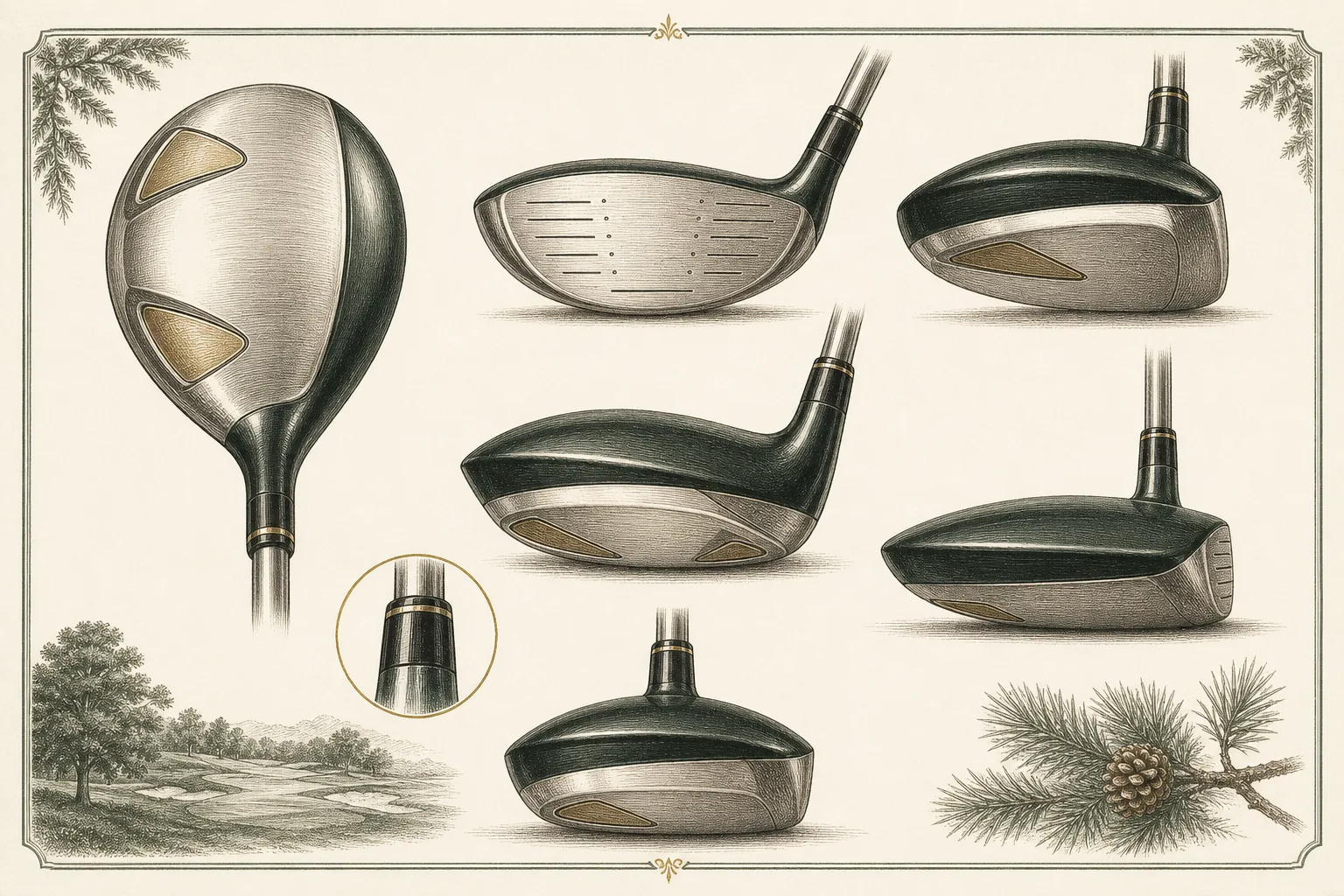
The TriMetal is the club that made Orlimar — and briefly shifted golf’s distance conversation away from the driver. Designed by Jesse Ortiz in San Francisco and launched in 1998, its ‘tri-metal’ build combined a stainless-steel body, a hard maraging-steel face and copper-tungsten weights packed low and deep in the sole. That dense low-back weighting dropped the CG so far down that ordinary golfers could finally launch a fairway wood high off tight turf — a genuine game-improvement breakthrough for the higher handicapper. Sold hard through a saturation infomercial, it turned a tiny family company into a phenomenon almost overnight, and it pushed the whole industry to chase performance in clubs other than the driver.
One of the defining infomercial-era success stories in golf: Orlimar’s sales rocketed from ~$1.5M in 1997 to $50M+ in 1998 — a ~3,000% jump — on the back of the TriMetal, and it is credited by golf media with shifting the distance conversation away from the driver and being one of the era’s most talked-about clubs (Golf Digest; Colorado AvidGolfer; HK Golfer). Orlimar even revived the TriMetal name in 2018 on that legacy. Its fame is cultural and documented across independent outlets — cult classic, though the fame outran the company, which collapsed soon after.
Built for the mid-to-high handicapper (all speeds, moderate especially) who struggles to get a fairway wood up off the ground — it makes launching off tight lies easy, which is exactly why it sold in volume. Still perfectly usable today as a cheap, easy-to-hit fairway or a nostalgia gamer. A better player wanting a penetrating, workable, lower-spin flight or modern ball speed will find it high-spinning and dated — a current low-CG fairway does the same job with more consistency.
Landed in 1998 when driver innovation dominated headlines; the TriMetal made fairway woods a distance story and forced rivals to answer with their own low-CG, multi-material fairways. It sat above Orlimar’s own follow-ups and inspired a wave of ‘tri-metal’ and tungsten-weighted imitators. Ortiz’s reluctance to diversify and disputes with larger makers saw Orlimar fold soon after its peak; the brand passed to King Par, then to Walmart-tier discount status, then to Hireko Golf (2016), which revived the TriMetal name in 2018 on the original’s reputation.
This was the whole point of the club: copper-tungsten weight packed low and deep in the sole pulls the CG down and back, so it launches easily off the deck and from thin/tight lies where a conventional late-’90s fairway wood struggled. For its era it was a genuine game-improvement standout, forgiving of the higher-handicap strike. An 8 places it with the era’s best forgiveness — a modern low-CG fairway is more consistent across the face, but for getting an average golfer’s ball airborne off turf, the TriMetal earned its reputation.
Calibrated across the whole catalog — a tour blade scores low here on purpose; it means control, not ease.
Despite its fame, it is dirt cheap because millions sold and it is 25+ years old: reconditioned-retail listings run ~$20–$28 (2nd Swing), and Golf Avenue quotes ~$90 as a generous store/trade figure — both above realistic private-party value, which is roughly $15–$40 for a clean single fairway on eBay/SidelineSwap, less for ladies/worn examples. It is a cult club by story, not by price: cultural significance without collector scarcity, so nostalgia buyers pay almost nothing.
The Legends Rack
The other great infomercial fairway wood — copper-tungsten-maraging steel, sold by the million on late-night TV, and secretly good. Golfers of a certain age will gasp. Who'll love it: the nostalgia crowd; instant "my uncle swore by this" reactions.
Who it suitsAll
Reading is one thing — hitting is another. Book a bay and see the numbers for yourself before you buy anywhere.
“The infomercial superstar that made Orlimar - low, deep tungsten weighting got the ball airborne off the turf for everyone. A genuinely forgiving rung-1 fairway of its era; still fun, just old.”
The TriMetal is the club that made Orlimar — and briefly shifted golf’s distance conversation away from the driver. Designed by Jesse Ortiz in San Francisco and launched in 1998, its ‘tri-metal’ build combined a stainless-steel body, a hard maraging-steel face and copper-tungsten weights packed low and deep in the sole. That dense low-back weighting dropped the CG so far down that ordinary golfers could finally launch a fairway wood high off tight turf — a genuine game-improvement breakthrough for the higher handicapper. Sold hard through a saturation infomercial, it turned a tiny family company into a phenomenon almost overnight, and it pushed the whole industry to chase performance in clubs other than the driver.
One of the defining infomercial-era success stories in golf: Orlimar’s sales rocketed from ~$1.5M in 1997 to $50M+ in 1998 — a ~3,000% jump — on the back of the TriMetal, and it is credited by golf media with shifting the distance conversation away from the driver and being one of the era’s most talked-about clubs (Golf Digest; Colorado AvidGolfer; HK Golfer). Orlimar even revived the TriMetal name in 2018 on that legacy. Its fame is cultural and documented across independent outlets — cult classic, though the fame outran the company, which collapsed soon after.
Built for the mid-to-high handicapper (all speeds, moderate especially) who struggles to get a fairway wood up off the ground — it makes launching off tight lies easy, which is exactly why it sold in volume. Still perfectly usable today as a cheap, easy-to-hit fairway or a nostalgia gamer. A better player wanting a penetrating, workable, lower-spin flight or modern ball speed will find it high-spinning and dated — a current low-CG fairway does the same job with more consistency.
Landed in 1998 when driver innovation dominated headlines; the TriMetal made fairway woods a distance story and forced rivals to answer with their own low-CG, multi-material fairways. It sat above Orlimar’s own follow-ups and inspired a wave of ‘tri-metal’ and tungsten-weighted imitators. Ortiz’s reluctance to diversify and disputes with larger makers saw Orlimar fold soon after its peak; the brand passed to King Par, then to Walmart-tier discount status, then to Hireko Golf (2016), which revived the TriMetal name in 2018 on the original’s reputation.
This was the whole point of the club: copper-tungsten weight packed low and deep in the sole pulls the CG down and back, so it launches easily off the deck and from thin/tight lies where a conventional late-’90s fairway wood struggled. For its era it was a genuine game-improvement standout, forgiving of the higher-handicap strike. An 8 places it with the era’s best forgiveness — a modern low-CG fairway is more consistent across the face, but for getting an average golfer’s ball airborne off turf, the TriMetal earned its reputation.
Calibrated across the whole catalog — a tour blade scores low here on purpose; it means control, not ease.
Despite its fame, it is dirt cheap because millions sold and it is 25+ years old: reconditioned-retail listings run ~$20–$28 (2nd Swing), and Golf Avenue quotes ~$90 as a generous store/trade figure — both above realistic private-party value, which is roughly $15–$40 for a clean single fairway on eBay/SidelineSwap, less for ladies/worn examples. It is a cult club by story, not by price: cultural significance without collector scarcity, so nostalgia buyers pay almost nothing.
The Legends Rack
The other great infomercial fairway wood — copper-tungsten-maraging steel, sold by the million on late-night TV, and secretly good. Golfers of a certain age will gasp. Who'll love it: the nostalgia crowd; instant "my uncle swore by this" reactions.
Who it suitsAll
Reading is one thing — hitting is another. Book a bay and see the numbers for yourself before you buy anywhere.