“Tungsten weighting up front lowers spin a touch versus a typical game-improvement hybrid, so it flies a bit more like a long iron.”
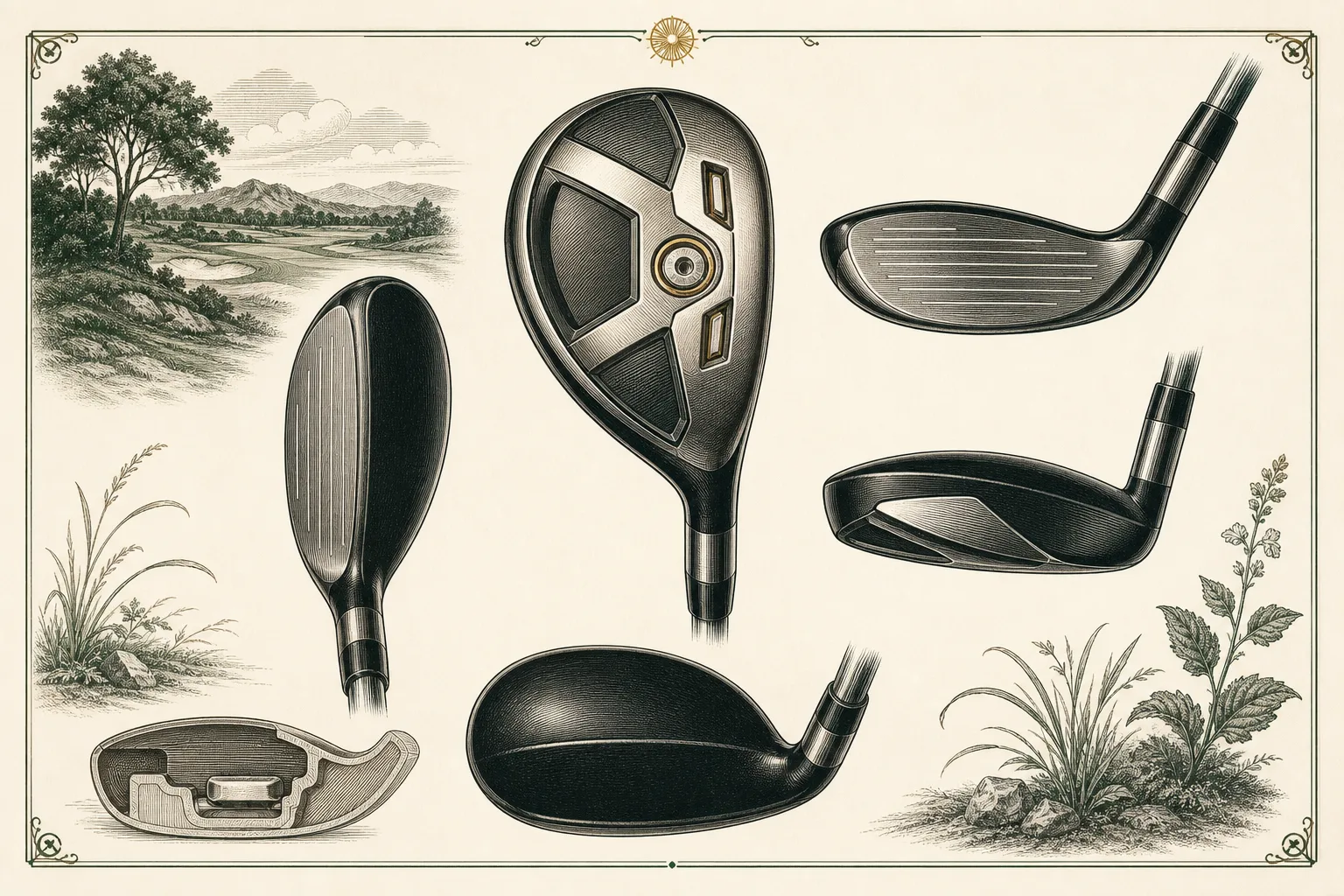
The 2019 Apex Hybrid was built to match Callaway's 2019 Apex iron set, sized and shaped to gap cleanly into that line rather than to stand out on its own. It carries the same forged Face Cup (Carpenter 455 steel) philosophy as the irons and introduced Jailbreak Technology to a Callaway hybrid for the first time, with internal bars connecting crown to sole to stiffen the body and free the face to flex. A compact, toe-high, black-PVD-crown shape with no alignment aids targeted better ball-strikers who wanted an iron-replacement look rather than a bulky game-improvement head. Reviewers found it favored consistency and workability over outright distance, functioning as intended: a long-iron substitute for players who already gamed the Apex irons.
Solidly reviewed (Plugged In Golf, Today's Golfer, Golfalot) as a good iron-replacement tool, but there is no scarcity, tour-win mythology, or forum cult attached to this hybrid specifically — it is a well-executed, forgettable complement to a more famous iron line, replaced two years later by the Apex 21 Hybrid on Callaway's normal cycle.
Best for single-digit-to-mid handicap players already in Apex irons who want a matching, workable long-iron replacement with a compact address look. Higher handicappers wanting a bigger, more visually forgiving head should look at Callaway's Rogue or Big Bertha hybrids from the same period instead.
Went head-to-head with TaylorMade's M6/M5 Rescue and Titleist's TS2/TS3 hybrids in 2019. It replaced the original 2014-era Apex Hybrid conceptually within Callaway's Apex family and was superseded by the Apex 21 Hybrid in 2021; a modern equivalent is the current Apex UW/Apex Hybrid generation paired with Callaway's latest forged irons.
Jailbreak bars and the forged Face Cup extend ball speed further off-center than a traditional players' hybrid, and launch monitor testing showed a strong 1.48 smash factor and near-optimal 40° landing angle at 20°, but the compact, toe-high, alignment-aid-free shape is deliberately aimed at better strikers, not at bailing out poor contact.
Calibrated across the whole catalog — a tour blade scores low here on purpose; it means control, not ease.
2nd Swing pre-owned units run about $48–$80 depending on condition/loft in 2026, down from an original retail near $279; this is consistent with a five-year-old players' hybrid that never carried premium resale demand.
Reading is one thing — hitting is another. Book a bay and see the numbers for yourself before you buy anywhere.
“Tungsten weighting up front lowers spin a touch versus a typical game-improvement hybrid, so it flies a bit more like a long iron.”
The 2019 Apex Hybrid was built to match Callaway's 2019 Apex iron set, sized and shaped to gap cleanly into that line rather than to stand out on its own. It carries the same forged Face Cup (Carpenter 455 steel) philosophy as the irons and introduced Jailbreak Technology to a Callaway hybrid for the first time, with internal bars connecting crown to sole to stiffen the body and free the face to flex. A compact, toe-high, black-PVD-crown shape with no alignment aids targeted better ball-strikers who wanted an iron-replacement look rather than a bulky game-improvement head. Reviewers found it favored consistency and workability over outright distance, functioning as intended: a long-iron substitute for players who already gamed the Apex irons.
Solidly reviewed (Plugged In Golf, Today's Golfer, Golfalot) as a good iron-replacement tool, but there is no scarcity, tour-win mythology, or forum cult attached to this hybrid specifically — it is a well-executed, forgettable complement to a more famous iron line, replaced two years later by the Apex 21 Hybrid on Callaway's normal cycle.
Best for single-digit-to-mid handicap players already in Apex irons who want a matching, workable long-iron replacement with a compact address look. Higher handicappers wanting a bigger, more visually forgiving head should look at Callaway's Rogue or Big Bertha hybrids from the same period instead.
Went head-to-head with TaylorMade's M6/M5 Rescue and Titleist's TS2/TS3 hybrids in 2019. It replaced the original 2014-era Apex Hybrid conceptually within Callaway's Apex family and was superseded by the Apex 21 Hybrid in 2021; a modern equivalent is the current Apex UW/Apex Hybrid generation paired with Callaway's latest forged irons.
Jailbreak bars and the forged Face Cup extend ball speed further off-center than a traditional players' hybrid, and launch monitor testing showed a strong 1.48 smash factor and near-optimal 40° landing angle at 20°, but the compact, toe-high, alignment-aid-free shape is deliberately aimed at better strikers, not at bailing out poor contact.
Calibrated across the whole catalog — a tour blade scores low here on purpose; it means control, not ease.
2nd Swing pre-owned units run about $48–$80 depending on condition/loft in 2026, down from an original retail near $279; this is consistent with a five-year-old players' hybrid that never carried premium resale demand.
Reading is one thing — hitting is another. Book a bay and see the numbers for yourself before you buy anywhere.