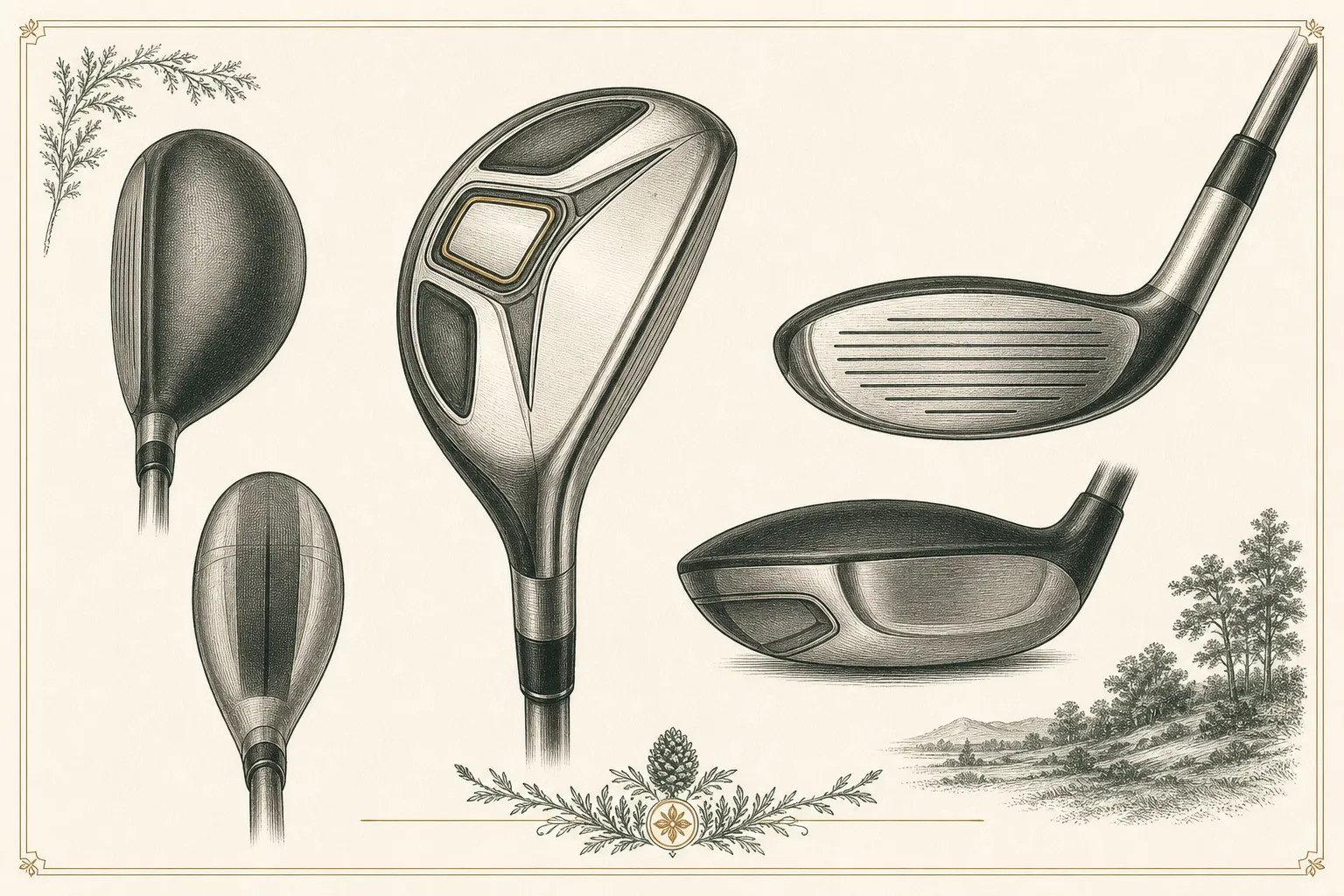
The 2009 Idea A7 Hybrid built on the Idea Pro hybrid lineage with a blend Adams pitched as high performance plus forgiveness: a 41-gram rear weight to boost launch and distance, an improved sole camber for better results from varied lies, and progressive offset that increases with club length. A companion 'a7OS' game-improvement version launched the same August with more forgiveness-first positioning. Today's Golfer's contemporaneous review cited a claim — sourced to that era's coverage — that Adams hybrids were the No. 1 hybrid in play on the PGA Tour for 2008 and 2009, a rare instance of a mid-market Adams hybrid carrying genuine tour credibility rather than being purely a game-improvement product.
Distinguished from Adams' purely game-improvement hybrids by a genuine, sourced tour-usage claim (Today's Golfer: 'ranked the No. 1 hybrid on the PGA Tour for 2008 and 2009') and a tester quote calling it 'the best all-rounder' — real evidence of standing above the commodity tier, though it never developed a lasting collector or cult following the way an iconic blade or driver would.
Good for mid-handicap to better players who want a versatile, tour-tested hybrid with real feel and feedback, not just maximum forgiveness; higher handicappers wanting the most mis-hit protection should look to the a7OS variant instead.
Launched August 2009, competing directly with TaylorMade's Rescue and Callaway's Heavenwood/RAZR hybrids of that period; preceded the a12 (2011) in Adams' hybrid lineage. The 'No. 1 hybrid on Tour' claim reflects broader Idea Pro-family tour adoption around 2008–2009, just before Adams' 2012 acquisition by TaylorMade.
Progressive offset (more in longer clubs, less in shorter) and 41g rear weighting favor a blend of playability and forgiveness rather than maximum MOI; testers praised feel and consistency over sheer mis-hit salvage, placing it below the more overtly forgiveness-first a7OS sibling and well below Adams' true super-game-improvement Idea a3OS/a12 OS models.
Calibrated across the whole catalog — a tour blade scores low here on purpose; it means control, not ease.
2nd Swing pre-owned pricing runs roughly $35–$58 depending on condition and shaft (3 vs. 4 hybrid, stock vs. UST Mamiya/Matrix shafts) against an original ~$199.99 retail — a steep but typical discount for a 15+ year-old hybrid.
Reading is one thing — hitting is another. Book a bay and see the numbers for yourself before you buy anywhere.
The 2009 Idea A7 Hybrid built on the Idea Pro hybrid lineage with a blend Adams pitched as high performance plus forgiveness: a 41-gram rear weight to boost launch and distance, an improved sole camber for better results from varied lies, and progressive offset that increases with club length. A companion 'a7OS' game-improvement version launched the same August with more forgiveness-first positioning. Today's Golfer's contemporaneous review cited a claim — sourced to that era's coverage — that Adams hybrids were the No. 1 hybrid in play on the PGA Tour for 2008 and 2009, a rare instance of a mid-market Adams hybrid carrying genuine tour credibility rather than being purely a game-improvement product.
Distinguished from Adams' purely game-improvement hybrids by a genuine, sourced tour-usage claim (Today's Golfer: 'ranked the No. 1 hybrid on the PGA Tour for 2008 and 2009') and a tester quote calling it 'the best all-rounder' — real evidence of standing above the commodity tier, though it never developed a lasting collector or cult following the way an iconic blade or driver would.
Good for mid-handicap to better players who want a versatile, tour-tested hybrid with real feel and feedback, not just maximum forgiveness; higher handicappers wanting the most mis-hit protection should look to the a7OS variant instead.
Launched August 2009, competing directly with TaylorMade's Rescue and Callaway's Heavenwood/RAZR hybrids of that period; preceded the a12 (2011) in Adams' hybrid lineage. The 'No. 1 hybrid on Tour' claim reflects broader Idea Pro-family tour adoption around 2008–2009, just before Adams' 2012 acquisition by TaylorMade.
Progressive offset (more in longer clubs, less in shorter) and 41g rear weighting favor a blend of playability and forgiveness rather than maximum MOI; testers praised feel and consistency over sheer mis-hit salvage, placing it below the more overtly forgiveness-first a7OS sibling and well below Adams' true super-game-improvement Idea a3OS/a12 OS models.
Calibrated across the whole catalog — a tour blade scores low here on purpose; it means control, not ease.
2nd Swing pre-owned pricing runs roughly $35–$58 depending on condition and shaft (3 vs. 4 hybrid, stock vs. UST Mamiya/Matrix shafts) against an original ~$199.99 retail — a steep but typical discount for a 15+ year-old hybrid.
Reading is one thing — hitting is another. Book a bay and see the numbers for yourself before you buy anywhere.