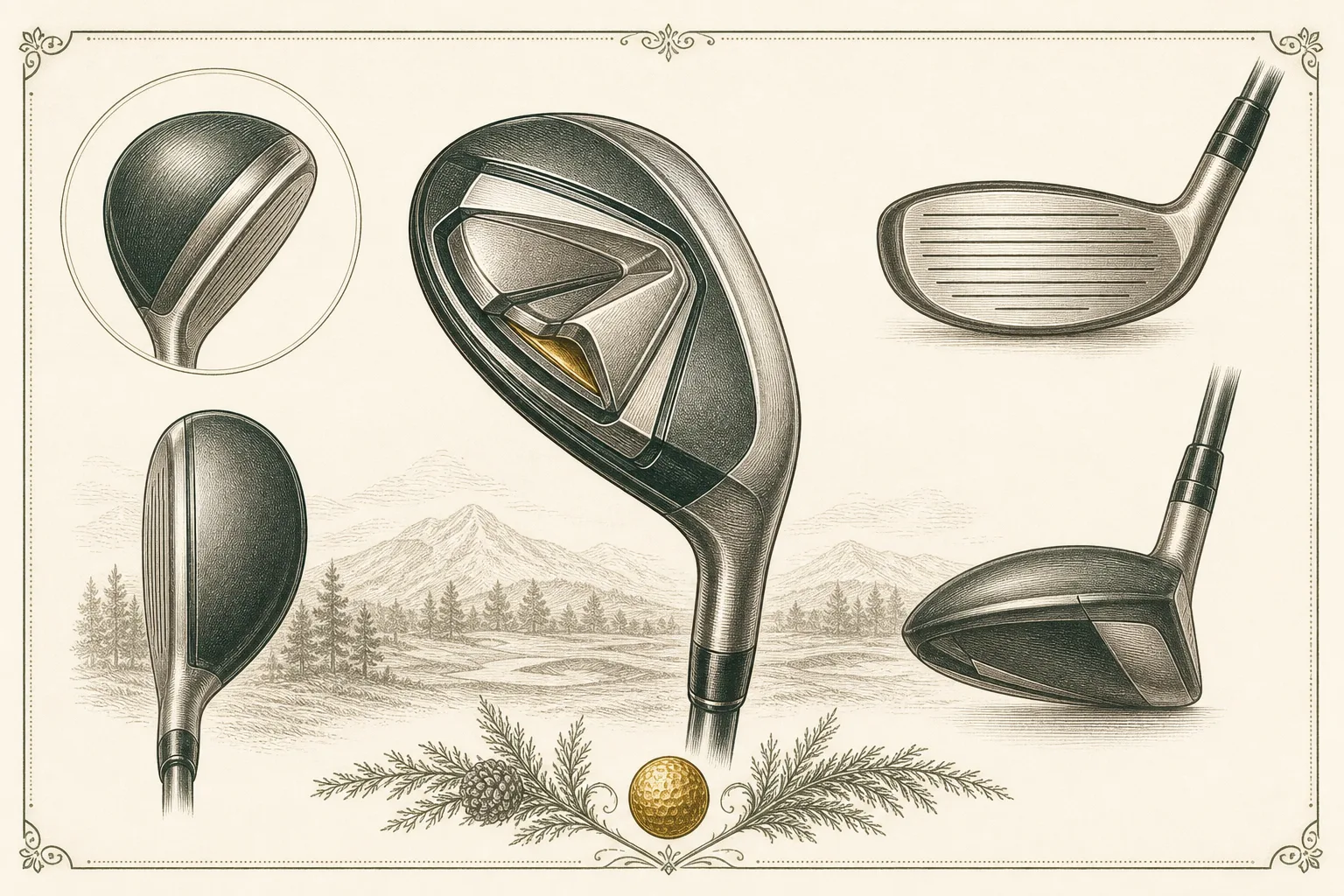
The JPX Fli-Hi, released 2016, was Mizuno's iron-shaped long-iron replacement hybrid, designed to set up and address like an iron rather than a traditional wood-shaped rescue club, with a 'face forward' profile that reduced offset versus a typical hybrid. It targeted golfers who found conventional hybrids visually awkward but still needed help launching long irons, offering an easy, high ball flight with iron-like feedback and a distinctly muted-to-high-pitched impact sound depending on strike quality. It sat alongside Mizuno's broader JPX game-improvement push in the mid-2010s, giving better ball-strikers a hybrid that didn't look like a hybrid.
Reviews (Plugged In Golf, The Hackers Paradise, Golf Monthly, GolfWRX/MyGolfSpy forum threads) describe a solidly reviewed but unspectacular club with mixed reception on looks; no evidence of lasting cult demand, scarcity, or tour pedigree distinguishes it from other mid-2010s iron-shaped hybrids.
Best for golfers who dislike the look of a standard hybrid at address and want a long-iron replacement that still launches easily and forgives mis-hits reasonably well; a good practical choice for mid-to-high handicappers filling the 3-5 iron gap. Better players wanting true iron workability, or golfers who struggle to get standard hybrids airborne and need maximum forgiveness, should look elsewhere.
Launched into the same iron-shaped-hybrid niche as TaylorMade's UDI and Callaway's Big Bertha OS iron-hybrids of the mid-2010s; later succeeded by newer Mizuno iterations (JPX921, JPX923, JPX925 Fli-Hi) that kept refining the same face-forward concept.
Users report it is 'very easy to hit and forgiving when you miss the center of the face,' with the ball launching high, but it is tuned for playability and iron-comparable distances rather than maximum forgiveness; some reviewers found it harder than expected to get airborne compared to wider, more traditional hybrid shapes, and its iron-like address setup demands slightly more precision than a full wood-shaped rescue club.
Calibrated across the whole catalog — a tour blade scores low here on purpose; it means control, not ease.
Used private-party pricing runs roughly $55-$100 on eBay/2nd Swing depending on loft and condition (a 2014-era listing sold around $76-$99 range), consistent with an unremarkable decade-old game-improvement hybrid rather than a collectible.
Reading is one thing — hitting is another. Book a bay and see the numbers for yourself before you buy anywhere.
The JPX Fli-Hi, released 2016, was Mizuno's iron-shaped long-iron replacement hybrid, designed to set up and address like an iron rather than a traditional wood-shaped rescue club, with a 'face forward' profile that reduced offset versus a typical hybrid. It targeted golfers who found conventional hybrids visually awkward but still needed help launching long irons, offering an easy, high ball flight with iron-like feedback and a distinctly muted-to-high-pitched impact sound depending on strike quality. It sat alongside Mizuno's broader JPX game-improvement push in the mid-2010s, giving better ball-strikers a hybrid that didn't look like a hybrid.
Reviews (Plugged In Golf, The Hackers Paradise, Golf Monthly, GolfWRX/MyGolfSpy forum threads) describe a solidly reviewed but unspectacular club with mixed reception on looks; no evidence of lasting cult demand, scarcity, or tour pedigree distinguishes it from other mid-2010s iron-shaped hybrids.
Best for golfers who dislike the look of a standard hybrid at address and want a long-iron replacement that still launches easily and forgives mis-hits reasonably well; a good practical choice for mid-to-high handicappers filling the 3-5 iron gap. Better players wanting true iron workability, or golfers who struggle to get standard hybrids airborne and need maximum forgiveness, should look elsewhere.
Launched into the same iron-shaped-hybrid niche as TaylorMade's UDI and Callaway's Big Bertha OS iron-hybrids of the mid-2010s; later succeeded by newer Mizuno iterations (JPX921, JPX923, JPX925 Fli-Hi) that kept refining the same face-forward concept.
Users report it is 'very easy to hit and forgiving when you miss the center of the face,' with the ball launching high, but it is tuned for playability and iron-comparable distances rather than maximum forgiveness; some reviewers found it harder than expected to get airborne compared to wider, more traditional hybrid shapes, and its iron-like address setup demands slightly more precision than a full wood-shaped rescue club.
Calibrated across the whole catalog — a tour blade scores low here on purpose; it means control, not ease.
Used private-party pricing runs roughly $55-$100 on eBay/2nd Swing depending on loft and condition (a 2014-era listing sold around $76-$99 range), consistent with an unremarkable decade-old game-improvement hybrid rather than a collectible.
Reading is one thing — hitting is another. Book a bay and see the numbers for yourself before you buy anywhere.