“A standard, versatile hybrid - rung-2 neutral flight for a repeating swing and a solid gap-filler between driver and irons.”
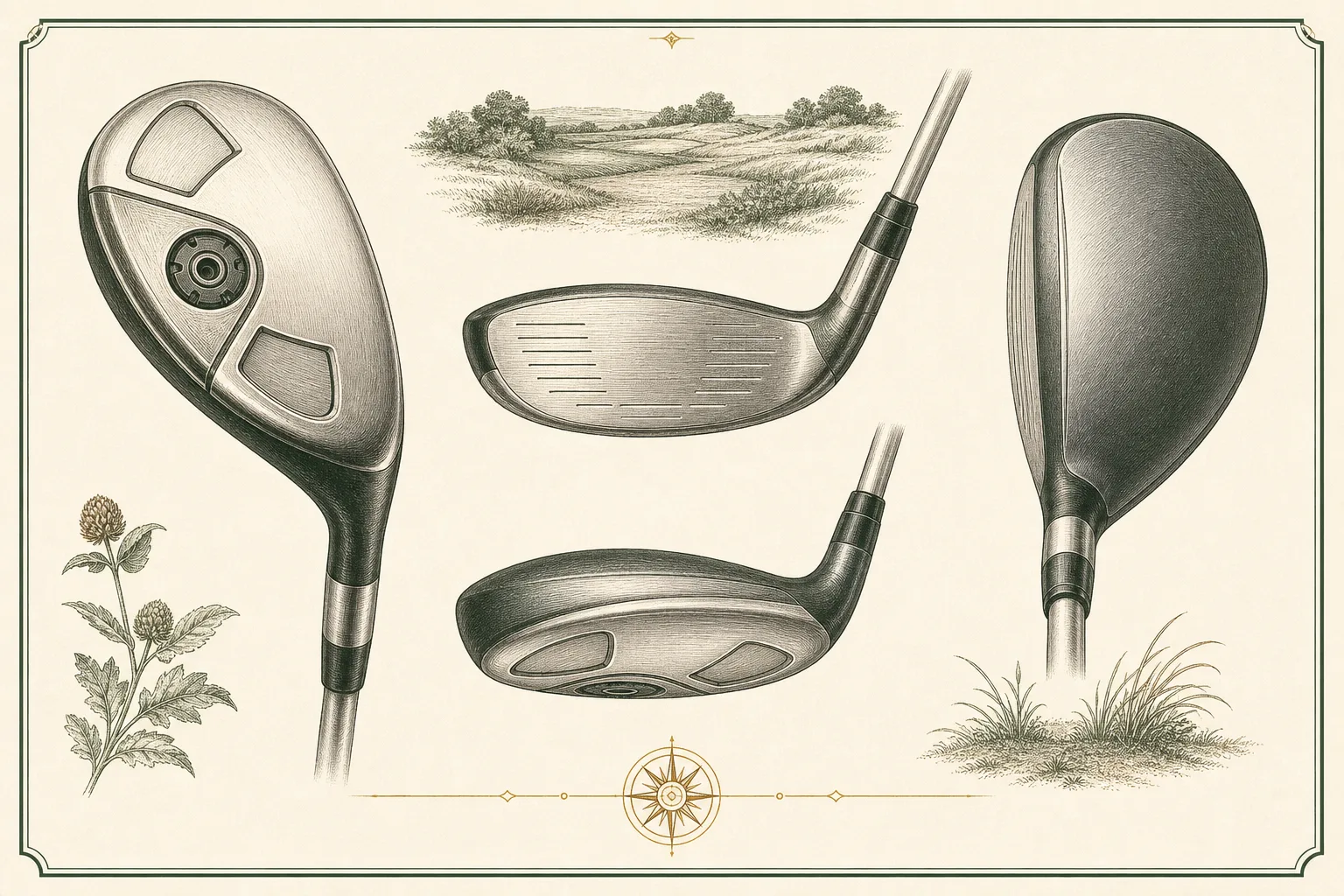
The i25 hybrid (2014) was the most visibly changed piece of the i25 family versus its i20 predecessor - Ping shrank the head and gave it a shallower face and squared-off toe for a distinctly iron-like look at address, rather than the rounder wood-like profile of the i20 hybrid. CG placement varied by loft: farther back in the lower-lofted heads (17°, 19°) to help launch, and moved forward in the higher-lofted ones (22°, 26°) to reduce spin. It launched at $220 with PWR 80 and PWR 90 graphite shaft options and was reviewed as delivering a 'satisfying thwack' with genuinely higher flight and more distance than the i20 it replaced.
A well-reviewed, competent hybrid with no distinguishing award or historical marker beyond being one piece of the broader i25 launch - unlike the i25 fairway's ClubTest Bronze or the i25 driver's 'last numbered driver' footnote, nothing in the record separates this hybrid from Ping's normal two-year refresh cycle. It sold well and disappeared into bags, which is the honest, unremarkable story.
Players who want a hybrid that looks and feels closer to a long iron and can be worked slightly left or right, replacing difficult-to-hit 3- and 4-irons in the bag. A golfer who struggles to get long irons airborne and wants the most forgiving possible rescue shape should look at a rounder, more wood-like hybrid instead.
Replaced the i20 hybrid (2012) as part of the full i25 family launch (driver, fairway, hybrid, irons) and was itself succeeded as Ping moved away from the numbered i-series naming after 2014-16. Competed against TaylorMade's SLDR/RSi hybrids and Titleist's 816H1/H2 in the same window.
Hybrids as a category are inherently more forgiving than long irons, and the i25's per-loft CG tuning (back-and-low for the strong lofts, forward for the weak ones) is a genuine engineering choice aimed at consistent launch across the set, not just marketing. It is not a max-forgiveness rescue club, though - the more iron-like, shallower face and squared toe trade a little of the i20's easier-to-hit wood-like shape for a more workable, players-oriented look.
Calibrated across the whole catalog — a tour blade scores low here on purpose; it means control, not ease.
$40-70 for a clean single hybrid in 2026 - ordinary depreciation for a 10-plus-year-old Ping hybrid with no collectible angle; buyers shop it purely on price against newer Ping and rival hybrids.
Reading is one thing — hitting is another. Book a bay and see the numbers for yourself before you buy anywhere.
“A standard, versatile hybrid - rung-2 neutral flight for a repeating swing and a solid gap-filler between driver and irons.”
The i25 hybrid (2014) was the most visibly changed piece of the i25 family versus its i20 predecessor - Ping shrank the head and gave it a shallower face and squared-off toe for a distinctly iron-like look at address, rather than the rounder wood-like profile of the i20 hybrid. CG placement varied by loft: farther back in the lower-lofted heads (17°, 19°) to help launch, and moved forward in the higher-lofted ones (22°, 26°) to reduce spin. It launched at $220 with PWR 80 and PWR 90 graphite shaft options and was reviewed as delivering a 'satisfying thwack' with genuinely higher flight and more distance than the i20 it replaced.
A well-reviewed, competent hybrid with no distinguishing award or historical marker beyond being one piece of the broader i25 launch - unlike the i25 fairway's ClubTest Bronze or the i25 driver's 'last numbered driver' footnote, nothing in the record separates this hybrid from Ping's normal two-year refresh cycle. It sold well and disappeared into bags, which is the honest, unremarkable story.
Players who want a hybrid that looks and feels closer to a long iron and can be worked slightly left or right, replacing difficult-to-hit 3- and 4-irons in the bag. A golfer who struggles to get long irons airborne and wants the most forgiving possible rescue shape should look at a rounder, more wood-like hybrid instead.
Replaced the i20 hybrid (2012) as part of the full i25 family launch (driver, fairway, hybrid, irons) and was itself succeeded as Ping moved away from the numbered i-series naming after 2014-16. Competed against TaylorMade's SLDR/RSi hybrids and Titleist's 816H1/H2 in the same window.
Hybrids as a category are inherently more forgiving than long irons, and the i25's per-loft CG tuning (back-and-low for the strong lofts, forward for the weak ones) is a genuine engineering choice aimed at consistent launch across the set, not just marketing. It is not a max-forgiveness rescue club, though - the more iron-like, shallower face and squared toe trade a little of the i20's easier-to-hit wood-like shape for a more workable, players-oriented look.
Calibrated across the whole catalog — a tour blade scores low here on purpose; it means control, not ease.
$40-70 for a clean single hybrid in 2026 - ordinary depreciation for a 10-plus-year-old Ping hybrid with no collectible angle; buyers shop it purely on price against newer Ping and rival hybrids.
Reading is one thing — hitting is another. Book a bay and see the numbers for yourself before you buy anywhere.