Hit 215 times in The Clubhouse
“Fourth-gen X-series game-improvement iron with through-bore Tru-Bore feel and a forgiving cavity. A dependable, easy-launching set for mid-to-high handicaps; a fine cheap gamer.”
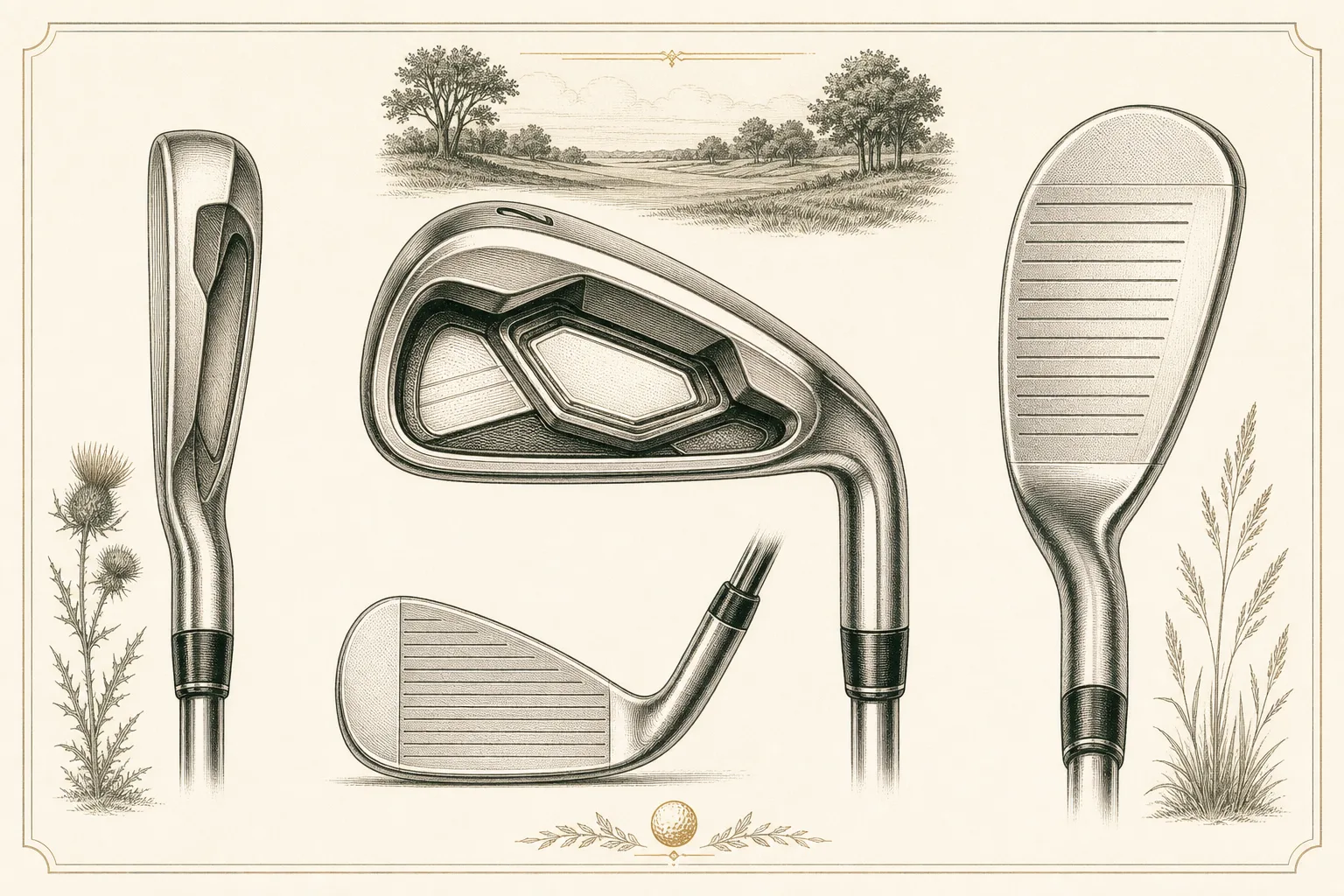
The X-18 was Callaway's mainstream game-improvement iron for the mid-2000s, a competent repackaging of Callaway's existing toolkit rather than a breakthrough: the S2H2 hosel to move weight low and to the perimeter, Tru-Bore construction running the shaft tip through the head to the sole for feel, and Variable Face Thickness tuned to launch long irons higher and control the short irons. Callaway also sold an X-18 Pro Series with a thinner topline, less offset and a narrower sole for better players. It did its job — easy to hit, forgiving, a mid-to-low ball flight — replacing the X-16 and then being quietly replaced by the X-20. It was a good iron for its buyer and its moment, and nothing more.
No cult, and that is the honest truth of it: no lawsuit, no tour-win legend, no forum reverence, no scarcity. It sold in volume to recreational golfers, was superseded on Callaway's roughly two-year refresh cycle, and today is simply an inexpensive, plentiful old game-improvement set. Its value is functional, not collectible.
Built for mid-to-high handicaps (roughly 12-30) and moderate swing speeds who want the ball up in the air and mis-hits punished less. As a cheap first 'real' set or a beater/loaner it is still perfectly usable today. Who should NOT buy it: anyone chasing modern distance or a compact look, or a good player wanting workability.
At launch it went head-to-head with TaylorMade's RAC OS, Ping's G2/G5, and Titleist's DCI/765 game-improvement offerings. Callaway replaced it with the X-20, then the annual X-series churn continued. Against a modern equivalent — a Callaway Rogue ST MAX or Ping G430 — the X-18 is noticeably shorter (weak lofts by today's jacked standards), higher-spinning, and less consistent across the face.
Genuinely forgiving in the way GI irons of its era were engineered to be: wide sole, noticeable progressive offset, deep perimeter weighting via the S2H2/undercut design and a low CG that helps get the ball airborne from thin lies. Off-center and slightly thin strikes hold distance and launch far better than any players' iron. The trade-off is a chunky look at address and limited shot-shaping. The Pro Series version is a notch less forgiving in exchange for a cleaner shape.
Calibrated across the whole catalog — a tour blade scores low here on purpose; it means control, not ease.
This is where honesty matters: reconditioned-retail listings (e.g. 2nd Swing) show $250-450, but those are graded, warrantied store prices. The realistic private-party value in 2026 is far lower — a complete steel set commonly sells for roughly $50-150 on eBay/SidelineSwap, less in rough condition. It does not hold value or appreciate; it is worth what it can still do on the course, not what it is.
The Legends Rack
Callaway's mega-sellers of the early 2000s — the 360-degree undercut channel put these in millions of bags. Who'll love it: everyone who golfed in the Bush administration.
Who it suitsAll
Reading is one thing — hitting is another. Book a bay and see the numbers for yourself before you buy anywhere.
Hit 215 times in The Clubhouse
“Fourth-gen X-series game-improvement iron with through-bore Tru-Bore feel and a forgiving cavity. A dependable, easy-launching set for mid-to-high handicaps; a fine cheap gamer.”
The X-18 was Callaway's mainstream game-improvement iron for the mid-2000s, a competent repackaging of Callaway's existing toolkit rather than a breakthrough: the S2H2 hosel to move weight low and to the perimeter, Tru-Bore construction running the shaft tip through the head to the sole for feel, and Variable Face Thickness tuned to launch long irons higher and control the short irons. Callaway also sold an X-18 Pro Series with a thinner topline, less offset and a narrower sole for better players. It did its job — easy to hit, forgiving, a mid-to-low ball flight — replacing the X-16 and then being quietly replaced by the X-20. It was a good iron for its buyer and its moment, and nothing more.
No cult, and that is the honest truth of it: no lawsuit, no tour-win legend, no forum reverence, no scarcity. It sold in volume to recreational golfers, was superseded on Callaway's roughly two-year refresh cycle, and today is simply an inexpensive, plentiful old game-improvement set. Its value is functional, not collectible.
Built for mid-to-high handicaps (roughly 12-30) and moderate swing speeds who want the ball up in the air and mis-hits punished less. As a cheap first 'real' set or a beater/loaner it is still perfectly usable today. Who should NOT buy it: anyone chasing modern distance or a compact look, or a good player wanting workability.
At launch it went head-to-head with TaylorMade's RAC OS, Ping's G2/G5, and Titleist's DCI/765 game-improvement offerings. Callaway replaced it with the X-20, then the annual X-series churn continued. Against a modern equivalent — a Callaway Rogue ST MAX or Ping G430 — the X-18 is noticeably shorter (weak lofts by today's jacked standards), higher-spinning, and less consistent across the face.
Genuinely forgiving in the way GI irons of its era were engineered to be: wide sole, noticeable progressive offset, deep perimeter weighting via the S2H2/undercut design and a low CG that helps get the ball airborne from thin lies. Off-center and slightly thin strikes hold distance and launch far better than any players' iron. The trade-off is a chunky look at address and limited shot-shaping. The Pro Series version is a notch less forgiving in exchange for a cleaner shape.
Calibrated across the whole catalog — a tour blade scores low here on purpose; it means control, not ease.
This is where honesty matters: reconditioned-retail listings (e.g. 2nd Swing) show $250-450, but those are graded, warrantied store prices. The realistic private-party value in 2026 is far lower — a complete steel set commonly sells for roughly $50-150 on eBay/SidelineSwap, less in rough condition. It does not hold value or appreciate; it is worth what it can still do on the course, not what it is.
The Legends Rack
Callaway's mega-sellers of the early 2000s — the 360-degree undercut channel put these in millions of bags. Who'll love it: everyone who golfed in the Bush administration.
Who it suitsAll
Reading is one thing — hitting is another. Book a bay and see the numbers for yourself before you buy anywhere.