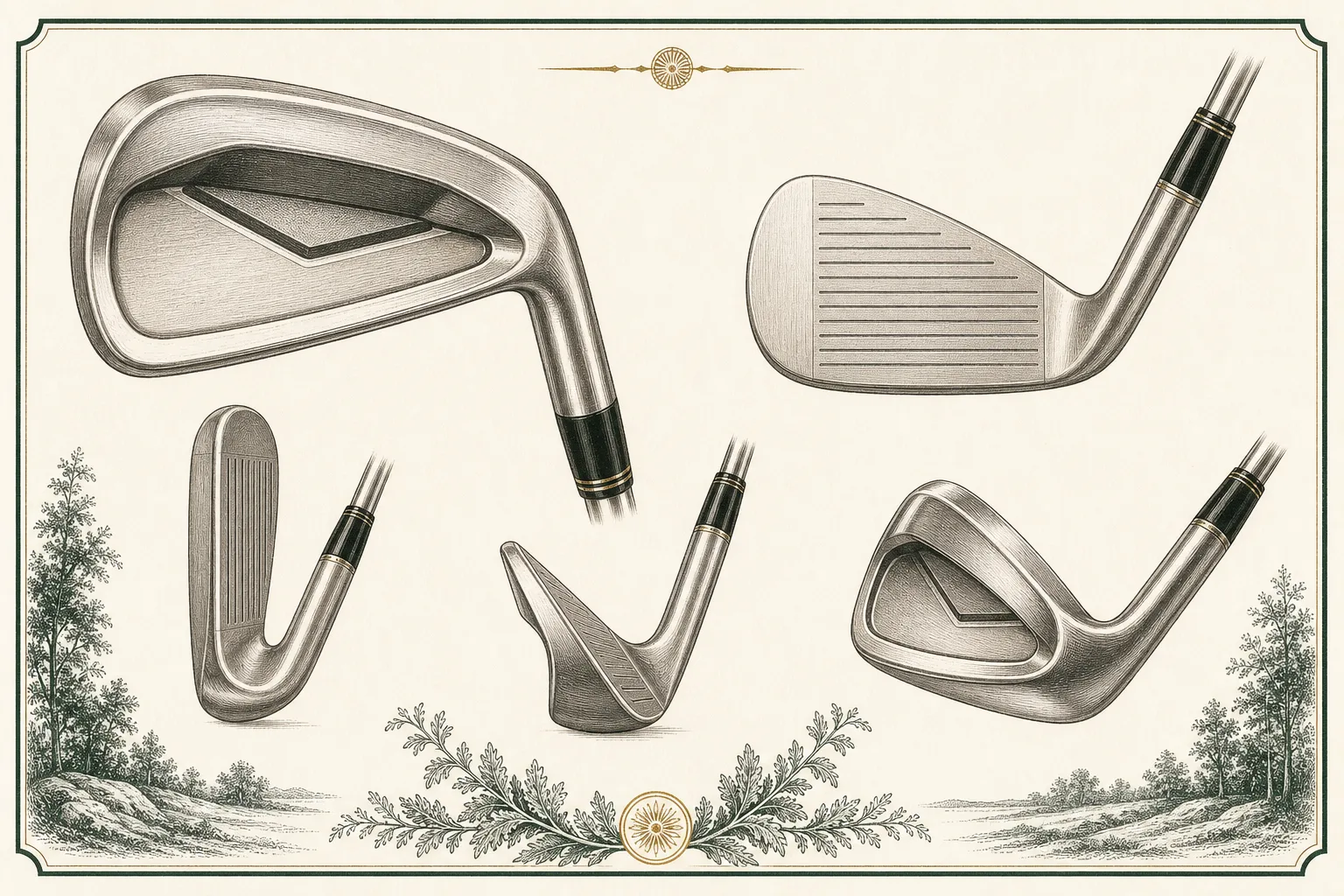
“Apex Edge - the forgiving end of the late-90s Apex family. Rung-1.”
The Apex Edge was forged from soft 1020 carbon steel and laser welded, with a 180-degree undercut channel built into a wide sole to push the center of gravity low and deep for a high, forgiving launch. It arrived as the game-improvement companion to Hogan's more compact Apex/Apex Plus blade-style lines during Spalding's ownership of the Hogan brand, which had bought the company for $14.6 million after Ben Hogan's death in 1997. GolfWRX forum members discussing the set describe it as one of the most forgiving forged irons they've hit, with one poster saying they gained confidence hitting even the 3-iron.
GolfWRX forum threads praise the forgiveness-plus-forged-feel combination directly, but the model does not appear by name in GolfWRX's own 'greatest Ben Hogan irons of all time' retrospective, which favors the 1988 Edge, 1999 Apex Blade, and Apex Plus instead.
Mid-to-high handicappers who want a forged feel but need the wider sweet spot of a true game-improvement cavity, per Today's Golfer's positioning of the set and forum commentary.
Produced under Spalding's ownership of the Ben Hogan brand (1997-2003), which ended when Callaway Golf bought Hogan's assets out of bankruptcy for $169 million in 2003, discontinuing the line by 2008.
A 180-degree undercut channel and wide sole were built specifically to lower and deepen the CG; GolfWRX posters call it 'one of the most forgiving forged irons out there' for a forged set.
Calibrated across the whole catalog — a tour blade scores low here on purpose; it means control, not ease.
2nd Swing currently prices used 3-PW sets from about $155 (below-average condition, steel) up to $450+ (average condition, premium/graphite shaft), against an original retail cited around $700-800, reflecting typical depreciation for a 25+ year old forged game-improvement set.
Reading is one thing — hitting is another. Book a bay and see the numbers for yourself before you buy anywhere.
“Apex Edge - the forgiving end of the late-90s Apex family. Rung-1.”
The Apex Edge was forged from soft 1020 carbon steel and laser welded, with a 180-degree undercut channel built into a wide sole to push the center of gravity low and deep for a high, forgiving launch. It arrived as the game-improvement companion to Hogan's more compact Apex/Apex Plus blade-style lines during Spalding's ownership of the Hogan brand, which had bought the company for $14.6 million after Ben Hogan's death in 1997. GolfWRX forum members discussing the set describe it as one of the most forgiving forged irons they've hit, with one poster saying they gained confidence hitting even the 3-iron.
GolfWRX forum threads praise the forgiveness-plus-forged-feel combination directly, but the model does not appear by name in GolfWRX's own 'greatest Ben Hogan irons of all time' retrospective, which favors the 1988 Edge, 1999 Apex Blade, and Apex Plus instead.
Mid-to-high handicappers who want a forged feel but need the wider sweet spot of a true game-improvement cavity, per Today's Golfer's positioning of the set and forum commentary.
Produced under Spalding's ownership of the Ben Hogan brand (1997-2003), which ended when Callaway Golf bought Hogan's assets out of bankruptcy for $169 million in 2003, discontinuing the line by 2008.
A 180-degree undercut channel and wide sole were built specifically to lower and deepen the CG; GolfWRX posters call it 'one of the most forgiving forged irons out there' for a forged set.
Calibrated across the whole catalog — a tour blade scores low here on purpose; it means control, not ease.
2nd Swing currently prices used 3-PW sets from about $155 (below-average condition, steel) up to $450+ (average condition, premium/graphite shaft), against an original retail cited around $700-800, reflecting typical depreciation for a 25+ year old forged game-improvement set.
Reading is one thing — hitting is another. Book a bay and see the numbers for yourself before you buy anywhere.