“One of the best-selling irons in golf history and among the first with Callaway's Variable Face Thickness face for higher long-iron launch and better short-iron control. A beloved, dependable game-improver; great cheap starter set, but modern lofts and shafts will outdistance it.”
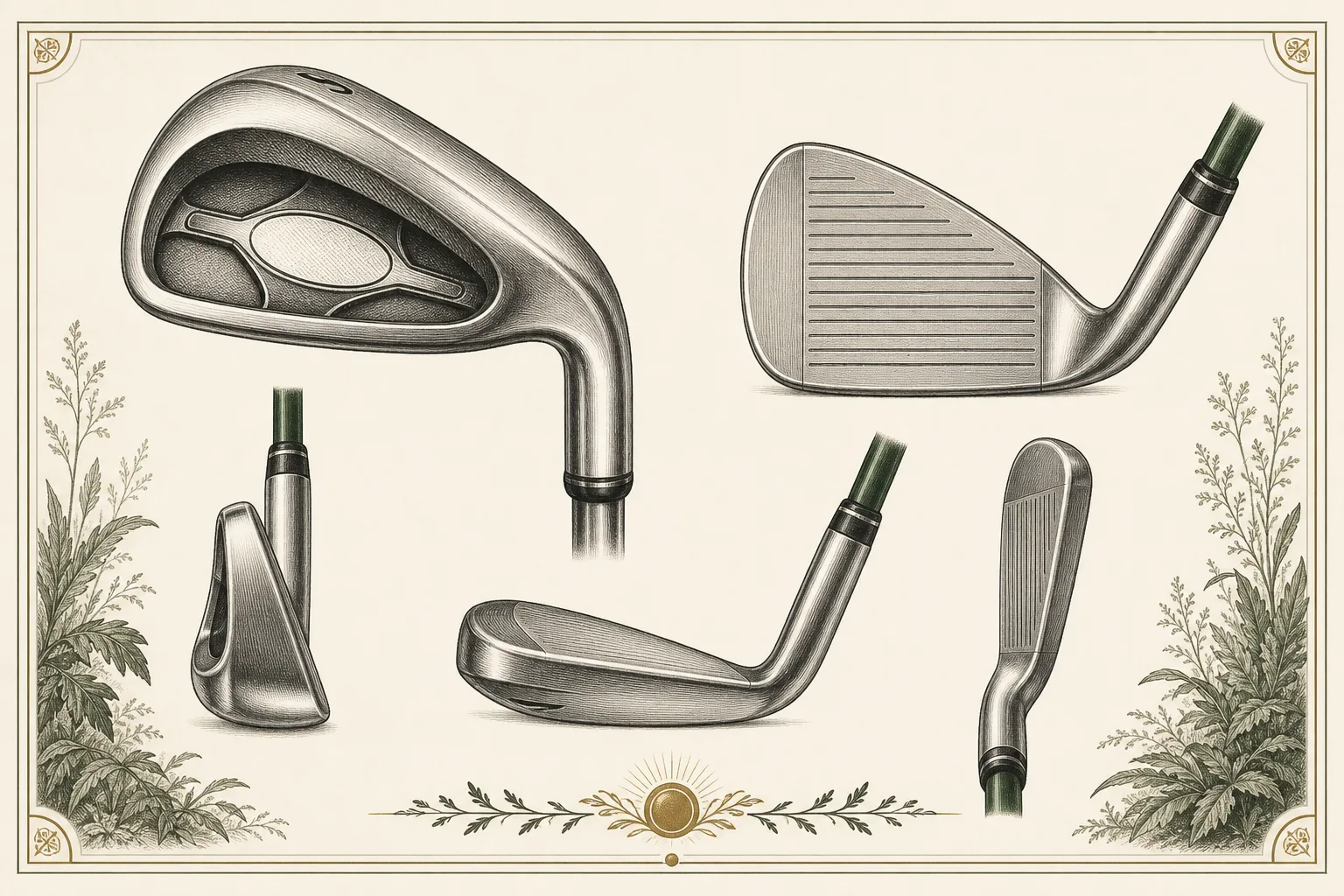
The Steelhead X-14 is the model most golfers actually mean by Callaway's early X-series — a cast 17-4 'Steelhead' stainless cavity that replaced the Big Bertha X-12 and became one of the most widely played, best-liked game-improvement irons of its generation. Callaway kept the X-series forgiveness recipe — 360° undercut perimeter weighting, S2H2 hollow hosel, bore-through shaft, progressive offset — but added Variable Face Thickness (VFT), tuning face thickness iron-by-iron to raise long-iron launch and add short-iron control. The heads were rounded and cleaned up. What set the X-14 apart in owners' memories is feel: a crisp, slightly metallic 'softness' people still describe fondly. It was popular enough that Callaway resurrected its look and name in the 2016 Steelhead XR irons.
Beyond commodity on a genuine, sourced reputation: two-plus decades on, the X-14 is repeatedly called one of the most coveted/beloved GI irons of its era (MyGolfSpy '20 years later' retro review; golfreview.com 4.1/5 across 256 reviews), and Callaway deliberately revived its design and 'Steelhead' name with the 2016 Steelhead XR — an OEM homage that few old GI irons earn. That said it sold in huge volume and is plentiful/cheap, so it's a fondly-remembered notable, not a scarce collectible; its forgiveness score must not be inflated by that affection.
For mid-to-high handicaps who want an easy-launching, forgiving, pleasant-feeling iron and don't need modern distance — it remains a legitimately enjoyable cheap gamer, which is exactly why people still hunt clean sets. Not for players chasing jacked-loft distance, a compact players' look, or shot-shaping; a modern players-distance or GI iron will be longer and more consistent across the face.
Announced late 1999 and widely gamed through 2000–2001 (some sources cite the 2000 season), against Ping's i3/G2, Titleist DCI 962/981, and TaylorMade's early supersteel irons. It sat between the Big Bertha X-12 it replaced and the Steelhead X-16 (2002) that succeeded it, and a Pro Series version offered a thinner topline and less offset for better ball-strikers. Its DNA — and name — returned in the 2016 Steelhead XR. A modern equivalent is a Callaway Rogue ST / Paradym GI iron.
Standard game-improvement forgiveness, and still good today. The undercut 360° perimeter weighting, low CG, wide sole, progressive offset and VFT face launch it easily and hold up on off-center strikes. An 8 is GI class — the X-14's real distinction is feel and consistency, not extra forgiveness beyond its peers. The usual GI trade-offs apply: offset and a fuller topline, weak-by-modern lofts, and limited workability. The prized 'crisp/soft' impact feel is a feel attribute, not a forgiveness one.
Calibrated across the whole catalog — a tour blade scores low here on purpose; it means control, not ease.
Reconditioned-retail (2nd Swing) lists roughly $254–$439 for graded, warrantied sets — that overstates owner value. Realistic 2026 private-party value is far lower: roughly $50–$120 for a complete clean steel set on eBay/SidelineSwap, a touch more for premium graphite or the Pro Series, less in rough shape. It holds value slightly better than most peers because feel-chasers still seek it out, but it's plentiful and does not appreciate.
The Legends Rack
Callaway's mega-sellers of the early 2000s — the 360-degree undercut channel put these in millions of bags. Who'll love it: everyone who golfed in the Bush administration.
Who it suitsAll
Reading is one thing — hitting is another. Book a bay and see the numbers for yourself before you buy anywhere.
“One of the best-selling irons in golf history and among the first with Callaway's Variable Face Thickness face for higher long-iron launch and better short-iron control. A beloved, dependable game-improver; great cheap starter set, but modern lofts and shafts will outdistance it.”
The Steelhead X-14 is the model most golfers actually mean by Callaway's early X-series — a cast 17-4 'Steelhead' stainless cavity that replaced the Big Bertha X-12 and became one of the most widely played, best-liked game-improvement irons of its generation. Callaway kept the X-series forgiveness recipe — 360° undercut perimeter weighting, S2H2 hollow hosel, bore-through shaft, progressive offset — but added Variable Face Thickness (VFT), tuning face thickness iron-by-iron to raise long-iron launch and add short-iron control. The heads were rounded and cleaned up. What set the X-14 apart in owners' memories is feel: a crisp, slightly metallic 'softness' people still describe fondly. It was popular enough that Callaway resurrected its look and name in the 2016 Steelhead XR irons.
Beyond commodity on a genuine, sourced reputation: two-plus decades on, the X-14 is repeatedly called one of the most coveted/beloved GI irons of its era (MyGolfSpy '20 years later' retro review; golfreview.com 4.1/5 across 256 reviews), and Callaway deliberately revived its design and 'Steelhead' name with the 2016 Steelhead XR — an OEM homage that few old GI irons earn. That said it sold in huge volume and is plentiful/cheap, so it's a fondly-remembered notable, not a scarce collectible; its forgiveness score must not be inflated by that affection.
For mid-to-high handicaps who want an easy-launching, forgiving, pleasant-feeling iron and don't need modern distance — it remains a legitimately enjoyable cheap gamer, which is exactly why people still hunt clean sets. Not for players chasing jacked-loft distance, a compact players' look, or shot-shaping; a modern players-distance or GI iron will be longer and more consistent across the face.
Announced late 1999 and widely gamed through 2000–2001 (some sources cite the 2000 season), against Ping's i3/G2, Titleist DCI 962/981, and TaylorMade's early supersteel irons. It sat between the Big Bertha X-12 it replaced and the Steelhead X-16 (2002) that succeeded it, and a Pro Series version offered a thinner topline and less offset for better ball-strikers. Its DNA — and name — returned in the 2016 Steelhead XR. A modern equivalent is a Callaway Rogue ST / Paradym GI iron.
Standard game-improvement forgiveness, and still good today. The undercut 360° perimeter weighting, low CG, wide sole, progressive offset and VFT face launch it easily and hold up on off-center strikes. An 8 is GI class — the X-14's real distinction is feel and consistency, not extra forgiveness beyond its peers. The usual GI trade-offs apply: offset and a fuller topline, weak-by-modern lofts, and limited workability. The prized 'crisp/soft' impact feel is a feel attribute, not a forgiveness one.
Calibrated across the whole catalog — a tour blade scores low here on purpose; it means control, not ease.
Reconditioned-retail (2nd Swing) lists roughly $254–$439 for graded, warrantied sets — that overstates owner value. Realistic 2026 private-party value is far lower: roughly $50–$120 for a complete clean steel set on eBay/SidelineSwap, a touch more for premium graphite or the Pro Series, less in rough shape. It holds value slightly better than most peers because feel-chasers still seek it out, but it's plentiful and does not appreciate.
The Legends Rack
Callaway's mega-sellers of the early 2000s — the 360-degree undercut channel put these in millions of bags. Who'll love it: everyone who golfed in the Bush administration.
Who it suitsAll
Reading is one thing — hitting is another. Book a bay and see the numbers for yourself before you buy anywhere.