“The modern revival brings Ghost Slot Technology to the classic shallow head. A true max-forgiveness fairway that is still one of the easiest woods to launch off a tight lie.”
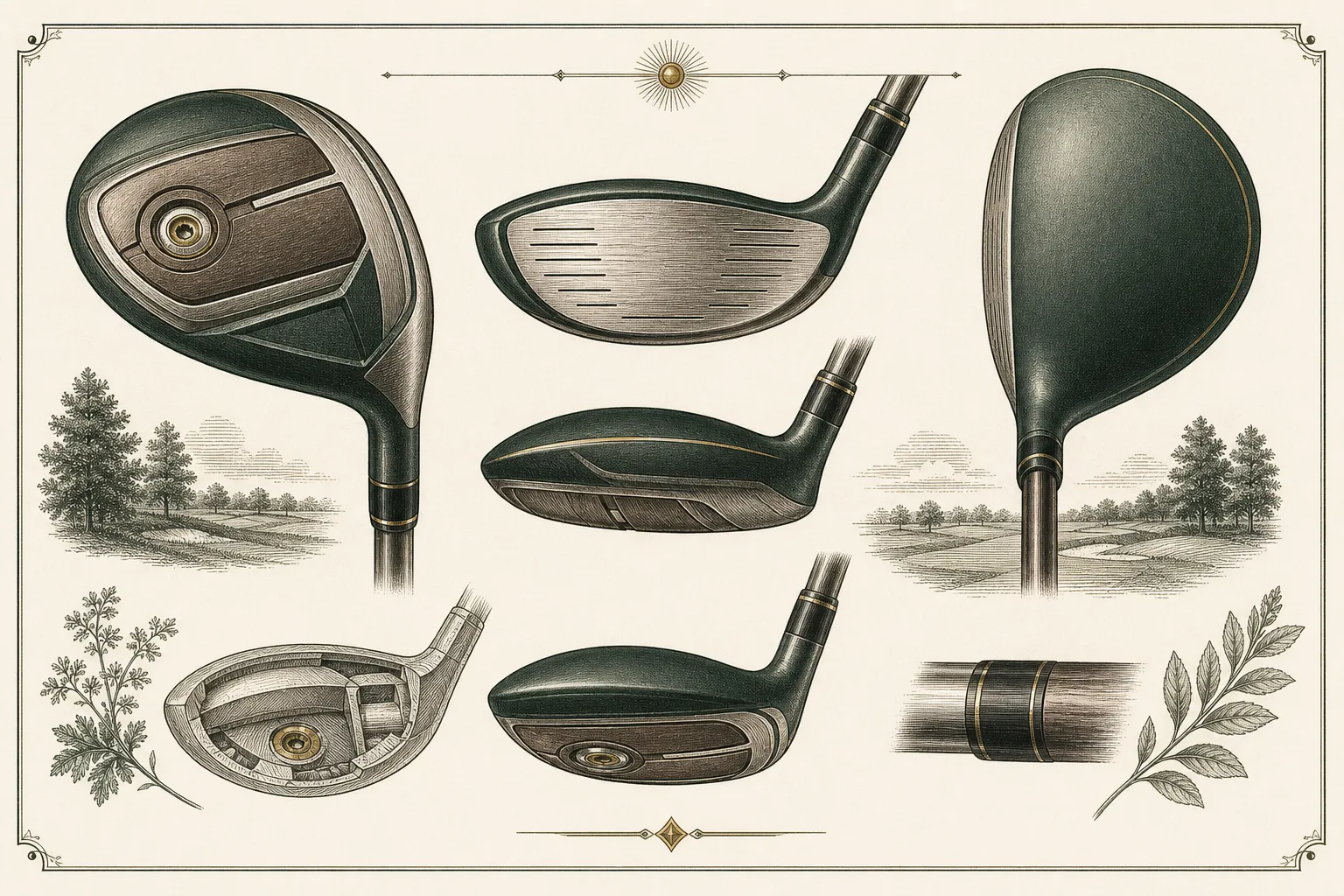
The 2014 Tight Lies revival brought Adams' fifth-generation slot technology -- 'Ghost Slot,' a crown slot hidden under a cosmetic cover -- to the shallow, upside-down tri-sole head shape that built the brand two decades earlier. Released at $199 in lofts of 14.5, 16, 19 and 22 degrees with a stock Mitsubishi Rayon KuroKage shaft, it kept the low face height (about 20% shorter than most rival fairway woods) and matte black crown that made the original so easy to look at address. Testing by golf-gear outlets called it among the easiest-to-hit fairway woods available that year, with test swings getting airborne regardless of strike quality -- strong praise for a club built by an already-declining brand two years after TaylorMade's acquisition.
It earned real, specific praise in contemporary testing for living up to the Tight Lies name's reputation, and it directly extends a genuine cult-classic lineage -- but as a standalone product it launched, sold roughly two years, and was discontinued without generating its own independent following the way the 1990s original did. 'Notable revival of a cult classic, well-reviewed' is the honest label, not cult status in its own right.
Mid-to-high handicap players and slower swingers who want a fairway wood that gets airborne with minimal effort from tee, fairway, or rough -- the exact audience the tri-sole shape was designed for since 1995. A low-handicap player who wants to shape or flight a fairway wood would find the max-launch bias limiting.
Part of TaylorMade-owned Adams' final wave of Tight Lies products (alongside a new titanium fairway wood and Adams' first-ever Tight Lies hybrid), released about two years after TaylorMade completed its 2012 acquisition and roughly three years before Adams was sold off entirely in 2017. It aimed at the same low-CG, high-launch fairway wood niche as Callaway's Big Bertha Alpha 815 and TaylorMade's own SLDR fairway wood of that period.
Ghost Slot technology adds face flex on top of the tri-sole design's already-low CG, and reviewers confirmed it launches easily and consistently from a variety of lies -- genuinely one of the more forgiving fairway woods of its generation. It doesn't reach a 9-10 because the shallow-face profile, while great for launch, still has a smaller physical footprint than a deep-faced, max-forgiveness GI fairway wood.
Calibrated across the whole catalog — a tour blade scores low here on purpose; it means control, not ease.
Realistic 2026 private-party value is roughly $35-$65 for a clean head with original shaft -- a decade-old fairway wood from a discontinued brand, still findable and cheap on eBay/SidelineSwap despite the well-reviewed 'easiest to hit' reputation it earned when new.
Reading is one thing — hitting is another. Book a bay and see the numbers for yourself before you buy anywhere.
“The modern revival brings Ghost Slot Technology to the classic shallow head. A true max-forgiveness fairway that is still one of the easiest woods to launch off a tight lie.”
The 2014 Tight Lies revival brought Adams' fifth-generation slot technology -- 'Ghost Slot,' a crown slot hidden under a cosmetic cover -- to the shallow, upside-down tri-sole head shape that built the brand two decades earlier. Released at $199 in lofts of 14.5, 16, 19 and 22 degrees with a stock Mitsubishi Rayon KuroKage shaft, it kept the low face height (about 20% shorter than most rival fairway woods) and matte black crown that made the original so easy to look at address. Testing by golf-gear outlets called it among the easiest-to-hit fairway woods available that year, with test swings getting airborne regardless of strike quality -- strong praise for a club built by an already-declining brand two years after TaylorMade's acquisition.
It earned real, specific praise in contemporary testing for living up to the Tight Lies name's reputation, and it directly extends a genuine cult-classic lineage -- but as a standalone product it launched, sold roughly two years, and was discontinued without generating its own independent following the way the 1990s original did. 'Notable revival of a cult classic, well-reviewed' is the honest label, not cult status in its own right.
Mid-to-high handicap players and slower swingers who want a fairway wood that gets airborne with minimal effort from tee, fairway, or rough -- the exact audience the tri-sole shape was designed for since 1995. A low-handicap player who wants to shape or flight a fairway wood would find the max-launch bias limiting.
Part of TaylorMade-owned Adams' final wave of Tight Lies products (alongside a new titanium fairway wood and Adams' first-ever Tight Lies hybrid), released about two years after TaylorMade completed its 2012 acquisition and roughly three years before Adams was sold off entirely in 2017. It aimed at the same low-CG, high-launch fairway wood niche as Callaway's Big Bertha Alpha 815 and TaylorMade's own SLDR fairway wood of that period.
Ghost Slot technology adds face flex on top of the tri-sole design's already-low CG, and reviewers confirmed it launches easily and consistently from a variety of lies -- genuinely one of the more forgiving fairway woods of its generation. It doesn't reach a 9-10 because the shallow-face profile, while great for launch, still has a smaller physical footprint than a deep-faced, max-forgiveness GI fairway wood.
Calibrated across the whole catalog — a tour blade scores low here on purpose; it means control, not ease.
Realistic 2026 private-party value is roughly $35-$65 for a clean head with original shaft -- a decade-old fairway wood from a discontinued brand, still findable and cheap on eBay/SidelineSwap despite the well-reviewed 'easiest to hit' reputation it earned when new.
Reading is one thing — hitting is another. Book a bay and see the numbers for yourself before you buy anywhere.