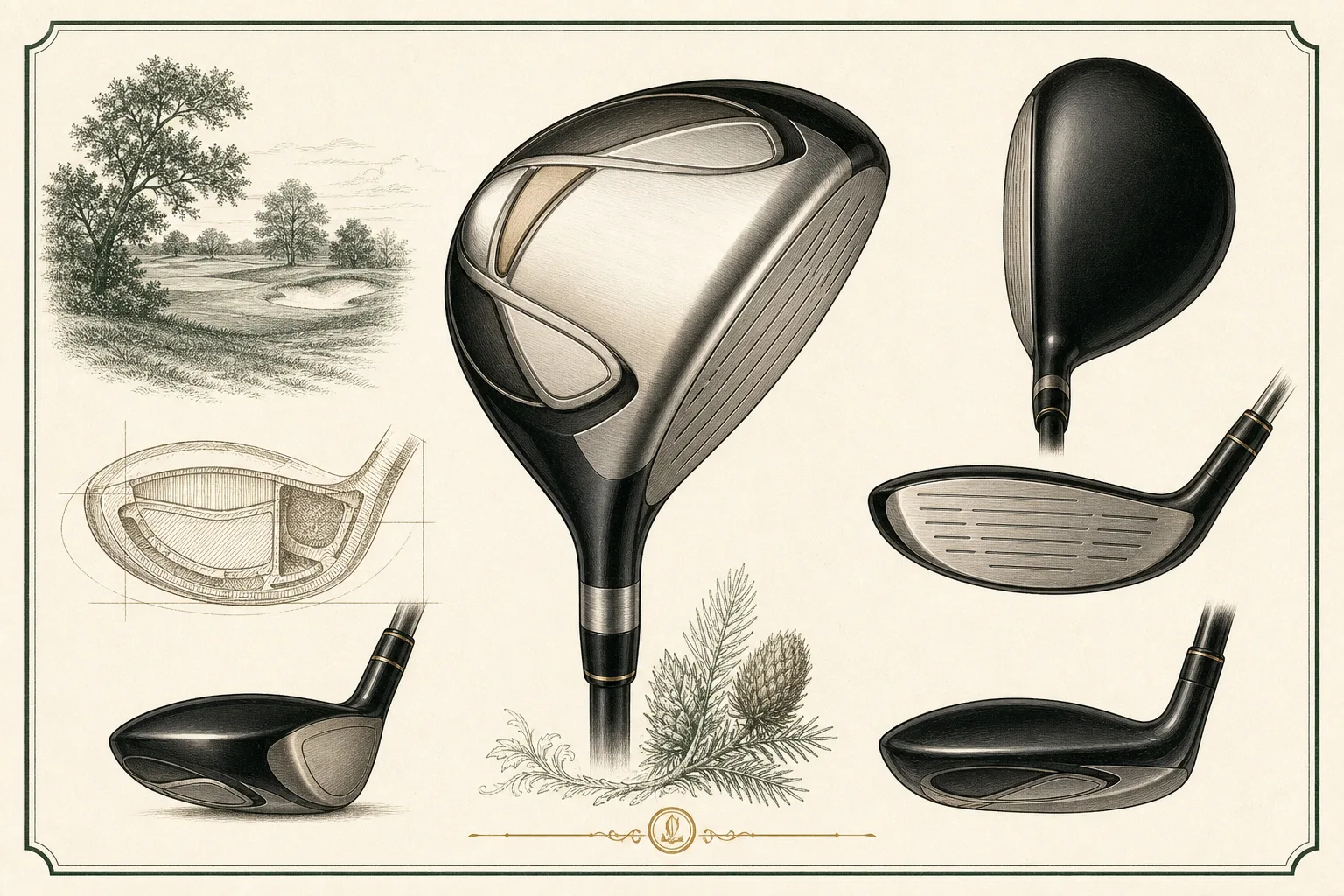
“Fairway companion to the well-regarded MX-700 driver - forgiving, easy-launch. Rung-1.”
The MX-700 fairway wood brought Mizuno's 'Hot Metal' face architecture - first proven on the well-regarded MX-700 driver - down into the fairway class in 2009. Rather than a titanium face, it used an ultra-thin ES230 steel face plasma-welded to a 17-4 stainless steel body, a construction Mizuno's own marketing described as pushing the fairway wood's COR (coefficient of restitution) right up to the legal limit. Today's Golfer's test panel rated it 4.5 out of 5, calling it 'sleek, classy and inviting' at address and praising markedly higher ball speed off the thin face; the same reviewers noted it 'struggled a little' from light rough, where the flatter sole and hot face were less forgiving than off the tee or fairway turf.
Not chased as a collectible, but genuinely notable within Mizuno's own history as an early, well-reviewed example of Mizuno pairing a thin, hot steel face with a fairway wood rather than reserving that speed technology for drivers alone - a template Mizuno kept reusing in later ST-series woods.
A strong fit for golfers across a wide range of swing speeds - reviewers noted it worked for both moderate-swing-speed seniors and faster swingers - who want maximum ball speed and easy launch from the tee or fairway; not the choice for someone who regularly needs to hit long approaches from rough.
Launched in 2009 as the fairway companion to the well-received MX-700 driver, it competed against TaylorMade's Burner and Callaway's FT-9 fairway woods of the same seasons, all racing to build the thinnest legal fairway face for ball speed; retailing under £120, it undercut most of that competition on price.
Today's Golfer found it performed 'similarly from all lies' off the tee and fairway and singled it out as among the easiest fairway woods of its year to hit consistently straight, though the thin face's speed advantage came with reduced forgiveness specifically out of light rough.
Calibrated across the whole catalog — a tour blade scores low here on purpose; it means control, not ease.
Original UK retail sat just under £120; it has since gone fully out of production and out of stock at major used retailers like 2nd Swing, leaving eBay-style listings as the main source, typically well under $75 given its age and steel (not titanium) construction.
Reading is one thing — hitting is another. Book a bay and see the numbers for yourself before you buy anywhere.
“Fairway companion to the well-regarded MX-700 driver - forgiving, easy-launch. Rung-1.”
The MX-700 fairway wood brought Mizuno's 'Hot Metal' face architecture - first proven on the well-regarded MX-700 driver - down into the fairway class in 2009. Rather than a titanium face, it used an ultra-thin ES230 steel face plasma-welded to a 17-4 stainless steel body, a construction Mizuno's own marketing described as pushing the fairway wood's COR (coefficient of restitution) right up to the legal limit. Today's Golfer's test panel rated it 4.5 out of 5, calling it 'sleek, classy and inviting' at address and praising markedly higher ball speed off the thin face; the same reviewers noted it 'struggled a little' from light rough, where the flatter sole and hot face were less forgiving than off the tee or fairway turf.
Not chased as a collectible, but genuinely notable within Mizuno's own history as an early, well-reviewed example of Mizuno pairing a thin, hot steel face with a fairway wood rather than reserving that speed technology for drivers alone - a template Mizuno kept reusing in later ST-series woods.
A strong fit for golfers across a wide range of swing speeds - reviewers noted it worked for both moderate-swing-speed seniors and faster swingers - who want maximum ball speed and easy launch from the tee or fairway; not the choice for someone who regularly needs to hit long approaches from rough.
Launched in 2009 as the fairway companion to the well-received MX-700 driver, it competed against TaylorMade's Burner and Callaway's FT-9 fairway woods of the same seasons, all racing to build the thinnest legal fairway face for ball speed; retailing under £120, it undercut most of that competition on price.
Today's Golfer found it performed 'similarly from all lies' off the tee and fairway and singled it out as among the easiest fairway woods of its year to hit consistently straight, though the thin face's speed advantage came with reduced forgiveness specifically out of light rough.
Calibrated across the whole catalog — a tour blade scores low here on purpose; it means control, not ease.
Original UK retail sat just under £120; it has since gone fully out of production and out of stock at major used retailers like 2nd Swing, leaving eBay-style listings as the main source, typically well under $75 given its age and steel (not titanium) construction.
Reading is one thing — hitting is another. Book a bay and see the numbers for yourself before you buy anywhere.