“A standard, versatile hybrid - rung-2 neutral flight for a repeating swing and a solid gap-filler between driver and irons. Old but honest; buy on price, not hype.”
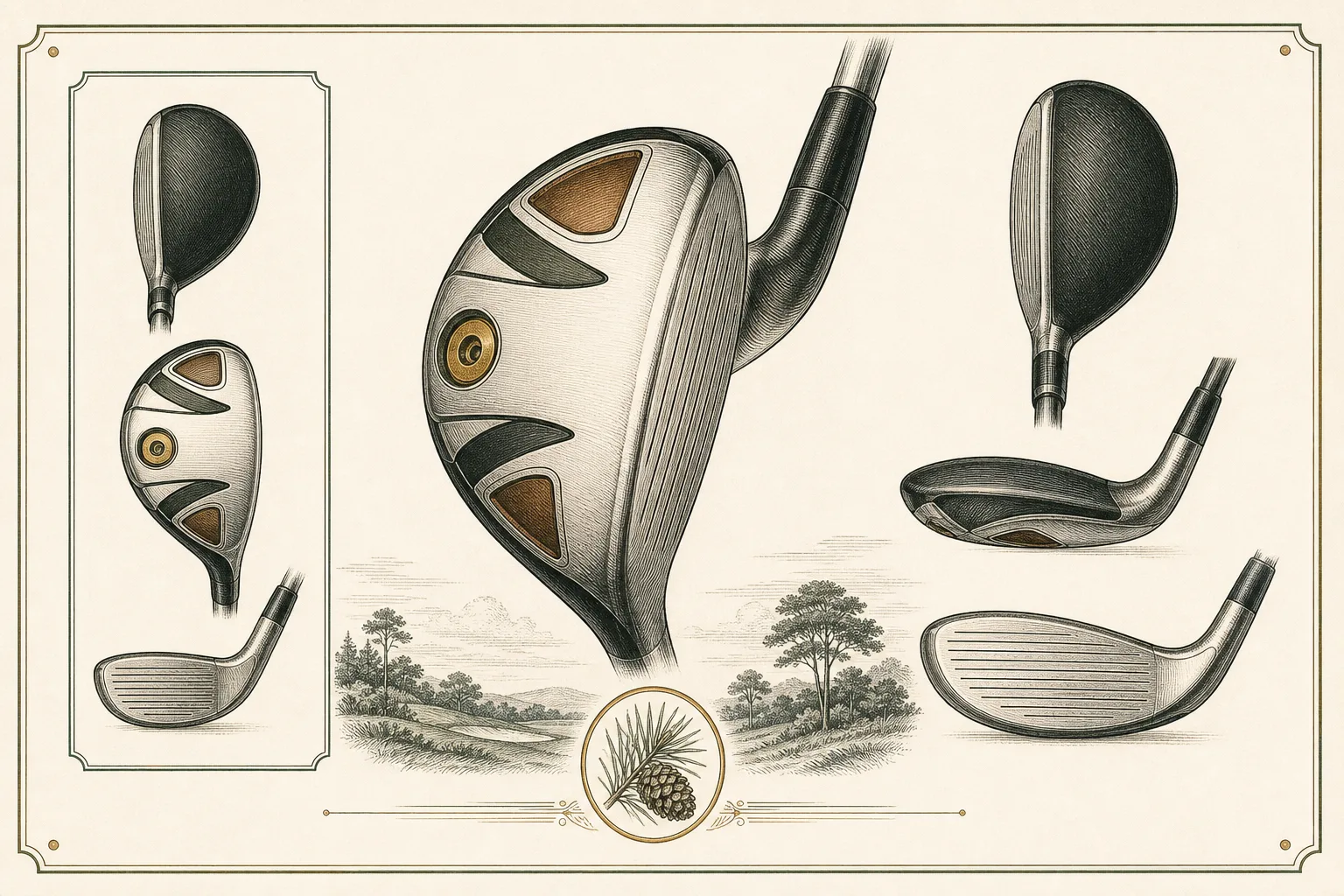
Ping's G10 hybrid arrived in 2007 riding the coattails of the G10 driver's blockbuster launch, sharing the family's 17-4 stainless construction and sloped, high-launching crown. It ran a wide six-loft lineup (15-32 degrees) built to replace long irons from roughly a 1-iron through 6-iron, using a weight pad along the sole/crown junction to push the CG low and back. Independent hitting-session data quoted a roughly 10-yard carry gain, 5 mph more ball speed, and a noticeably steeper landing angle versus the long irons it replaced - solid, quantifiable, unglamorous improvement rather than a design breakthrough. It sold well as a practical long-iron replacement rather than as a headline club, and was superseded by the reshaped G15 hybrid two years later.
No independent cult attaches to the G10 hybrid specifically. Unlike the G10 driver (widely cited as one of Ping's best-selling drivers ever), the hybrid drew positive but unremarkable reviews focused on measured distance/launch gains rather than any lasting reputation. It is a well-executed, honestly ordinary long-iron replacement riding on a famous sibling's name.
Golfers who struggle to launch a 3-5 iron and want an easy, mid-to-high-launching gap filler between fairway wood and irons - a natural companion purchase to the G2/G15 iron sets in the same generation. Better players who prize workability over ease may find the 2007-era CG placement and head shape restrictive compared to a modern hybrid.
Launched alongside Ping's landmark G10 driver and iron set in 2007, riding that family's reputation into utility clubs. It competed against Callaway's Big Bertha hybrids and TaylorMade's Rescue line of the same period, and was replaced in Ping's lineup by the redesigned, higher-MOI G15 hybrid in 2009.
A wide sole and low-back CG via the sole weight pad make it notably easier to launch than the long irons it replaced, and testers reported real forgiveness gains (steeper landing angle, less roll on landing). But the compact, driving-iron-like head trades away some of the forgiveness a full-size, rounder hybrid head offers - mid-pack for its category, behind hybrids designed purely around maximum MOI.
Calibrated across the whole catalog — a tour blade scores low here on purpose; it means control, not ease.
Ping G10 hybrids are a cheap, plentiful used buy in 2026 - typically $25-50 each on eBay/2nd Swing depending on loft and shaft condition, reflecting a 19-year-old model with no collector demand. It is bought purely to fill a bag gap, not for nostalgia.
Reading is one thing — hitting is another. Book a bay and see the numbers for yourself before you buy anywhere.
“A standard, versatile hybrid - rung-2 neutral flight for a repeating swing and a solid gap-filler between driver and irons. Old but honest; buy on price, not hype.”
Ping's G10 hybrid arrived in 2007 riding the coattails of the G10 driver's blockbuster launch, sharing the family's 17-4 stainless construction and sloped, high-launching crown. It ran a wide six-loft lineup (15-32 degrees) built to replace long irons from roughly a 1-iron through 6-iron, using a weight pad along the sole/crown junction to push the CG low and back. Independent hitting-session data quoted a roughly 10-yard carry gain, 5 mph more ball speed, and a noticeably steeper landing angle versus the long irons it replaced - solid, quantifiable, unglamorous improvement rather than a design breakthrough. It sold well as a practical long-iron replacement rather than as a headline club, and was superseded by the reshaped G15 hybrid two years later.
No independent cult attaches to the G10 hybrid specifically. Unlike the G10 driver (widely cited as one of Ping's best-selling drivers ever), the hybrid drew positive but unremarkable reviews focused on measured distance/launch gains rather than any lasting reputation. It is a well-executed, honestly ordinary long-iron replacement riding on a famous sibling's name.
Golfers who struggle to launch a 3-5 iron and want an easy, mid-to-high-launching gap filler between fairway wood and irons - a natural companion purchase to the G2/G15 iron sets in the same generation. Better players who prize workability over ease may find the 2007-era CG placement and head shape restrictive compared to a modern hybrid.
Launched alongside Ping's landmark G10 driver and iron set in 2007, riding that family's reputation into utility clubs. It competed against Callaway's Big Bertha hybrids and TaylorMade's Rescue line of the same period, and was replaced in Ping's lineup by the redesigned, higher-MOI G15 hybrid in 2009.
A wide sole and low-back CG via the sole weight pad make it notably easier to launch than the long irons it replaced, and testers reported real forgiveness gains (steeper landing angle, less roll on landing). But the compact, driving-iron-like head trades away some of the forgiveness a full-size, rounder hybrid head offers - mid-pack for its category, behind hybrids designed purely around maximum MOI.
Calibrated across the whole catalog — a tour blade scores low here on purpose; it means control, not ease.
Ping G10 hybrids are a cheap, plentiful used buy in 2026 - typically $25-50 each on eBay/2nd Swing depending on loft and shaft condition, reflecting a 19-year-old model with no collector demand. It is bought purely to fill a bag gap, not for nostalgia.
Reading is one thing — hitting is another. Book a bay and see the numbers for yourself before you buy anywhere.