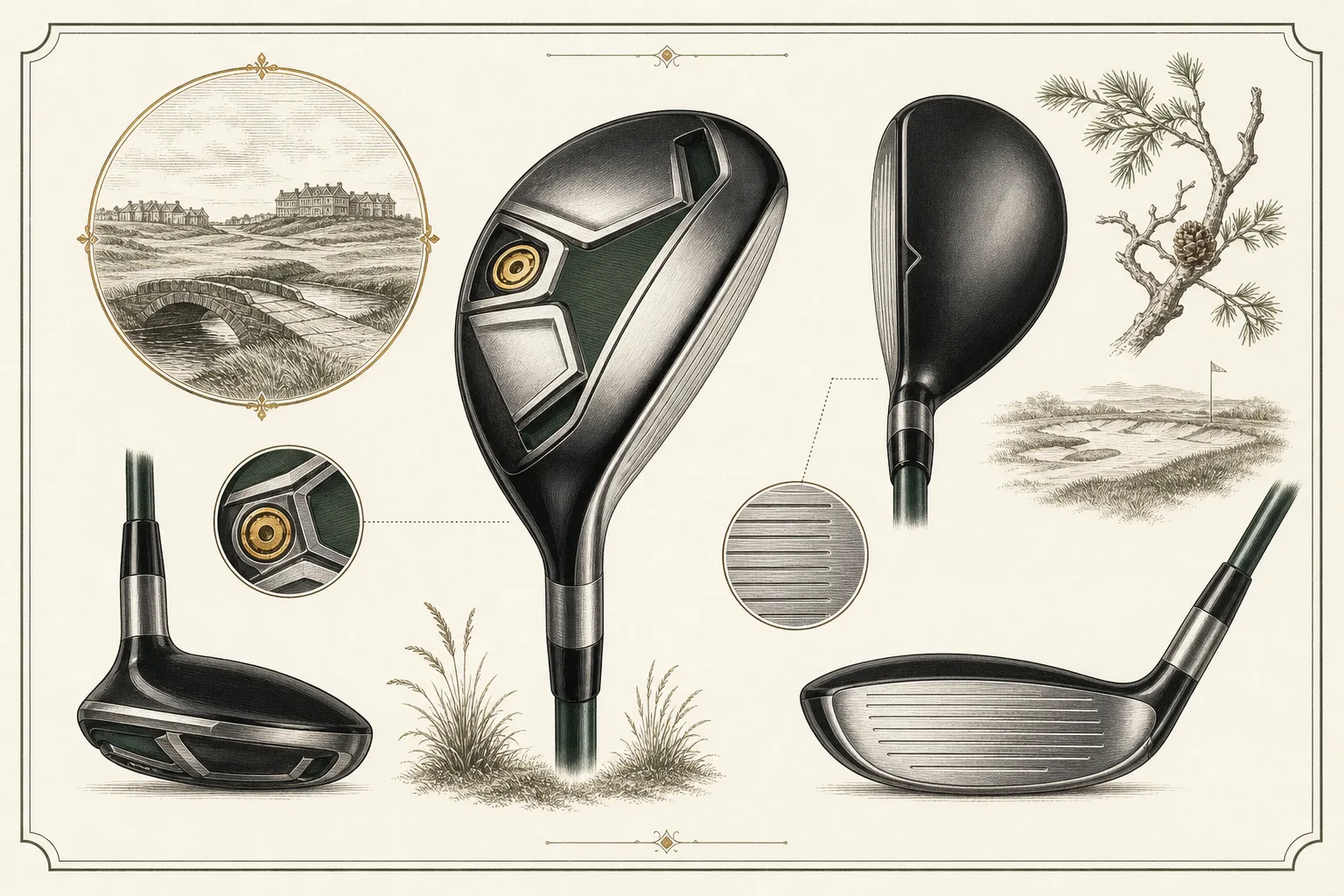
The 2011 X Hybrid was Callaway's volume game-improvement hybrid ahead of the X Hot generation, built with a modified X Series sole meant to slide through rough and tight lies alike, and offered in a notably larger head than most rivals of the day. Reviewers consistently described it as louder and more powerful-sounding at impact than competitors, in keeping with Callaway's house sound signature of the era, and it launched the ball very high — high enough that some testers flagged the trajectory as a negative for windy courses while others praised it for near-automatic launch from bad lies.
Described in contemporary reviews as sitting squarely 'in the middle of the pack' among hybrids — an honest, competent mid-market club with no distinguishing cult following, superseded within two years by the X Hot Hybrid.
Suited to mid-to-high handicappers needing an easy-launching long-iron replacement, especially from poor lies; low-handicappers wanting a flatter, more penetrating flight or a smaller profile should look elsewhere.
Sold alongside Callaway's RAZR X hybrids in the same period and reviewed alongside PGA.com's 2011 club test; replaced by the X Hot Hybrid in 2013. A modern equivalent in the Callaway line is the Rogue ST Max hybrid.
Reviewers called it 'very easy to hit,' crediting extra perimeter weighting for holding line well on heel and toe misses; the tradeoff is an exceptionally high ball flight that some testers considered too high, ballooning in wind.
Calibrated across the whole catalog — a tour blade scores low here on purpose; it means control, not ease.
An older, low-demand model by 2026; realistic private-party/eBay value is roughly $15-30, reflecting both its age and the lack of any collector interest.
Reading is one thing — hitting is another. Book a bay and see the numbers for yourself before you buy anywhere.
The 2011 X Hybrid was Callaway's volume game-improvement hybrid ahead of the X Hot generation, built with a modified X Series sole meant to slide through rough and tight lies alike, and offered in a notably larger head than most rivals of the day. Reviewers consistently described it as louder and more powerful-sounding at impact than competitors, in keeping with Callaway's house sound signature of the era, and it launched the ball very high — high enough that some testers flagged the trajectory as a negative for windy courses while others praised it for near-automatic launch from bad lies.
Described in contemporary reviews as sitting squarely 'in the middle of the pack' among hybrids — an honest, competent mid-market club with no distinguishing cult following, superseded within two years by the X Hot Hybrid.
Suited to mid-to-high handicappers needing an easy-launching long-iron replacement, especially from poor lies; low-handicappers wanting a flatter, more penetrating flight or a smaller profile should look elsewhere.
Sold alongside Callaway's RAZR X hybrids in the same period and reviewed alongside PGA.com's 2011 club test; replaced by the X Hot Hybrid in 2013. A modern equivalent in the Callaway line is the Rogue ST Max hybrid.
Reviewers called it 'very easy to hit,' crediting extra perimeter weighting for holding line well on heel and toe misses; the tradeoff is an exceptionally high ball flight that some testers considered too high, ballooning in wind.
Calibrated across the whole catalog — a tour blade scores low here on purpose; it means control, not ease.
An older, low-demand model by 2026; realistic private-party/eBay value is roughly $15-30, reflecting both its age and the lack of any collector interest.
Reading is one thing — hitting is another. Book a bay and see the numbers for yourself before you buy anywhere.