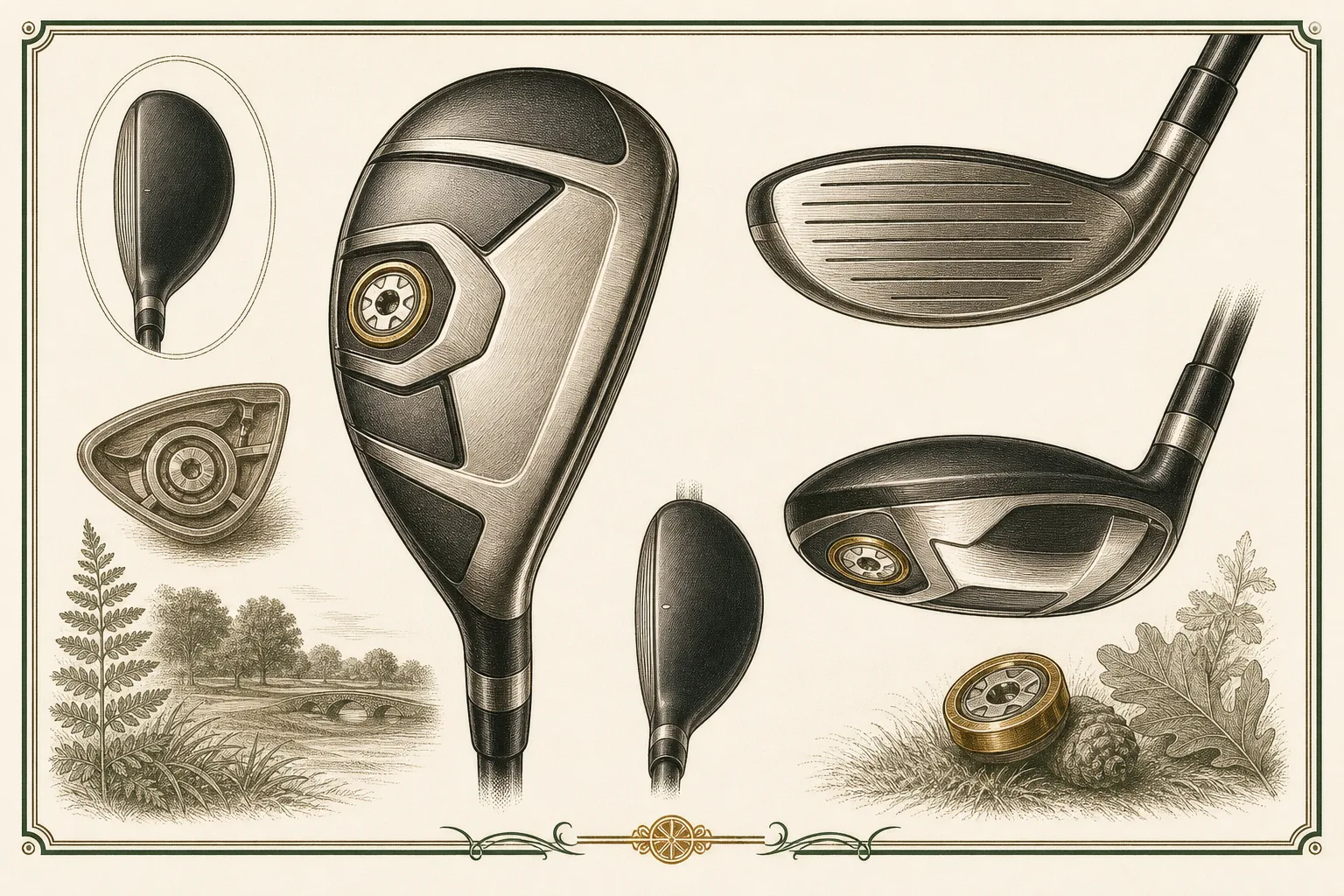
“Standalone hybrid version of the a12 family with Velocity Slot ball-speed help. A standard-rung rescue that plays easy for mid swing speeds, an Adams core strength.”
Released in 2011, the Idea a12 Hybrid carried Adams Golf's 'Velocity Slot' — a chamber cut into both the crown and sole just behind the face, letting the face flex more for faster ball speed — into the mainline (non-OS) hybrid. Adams positioned it as a direct successor to the a7, claiming higher launch and more ball speed without an increase in spin, and cited internal testing showing the a12/a12 OS averaging 223–224 yards versus 218 for competitor hybrids and 215 for 'a leading long iron.' It sits in the mid-2010s stretch of Adams' hybrid lineage between the tour-leaning a7 and the oversized, max-forgiveness a12 OS variant sold alongside it.
A well-regarded, functional mid-market hybrid still occasionally praised in blog write-ups over a decade later ('why a 14-year-old hybrid still works'), but with no forum cult following, collector demand, or tour pedigree distinct from its OS sibling — a solidly built commodity rather than a sought-after model.
Good for mid-handicap golfers who want a versatile, easy-to-launch long-iron replacement without an oversized clubhead; higher handicappers chasing maximum forgiveness should look at the a12 OS instead, and better players wanting more workability may prefer a smaller-headed tour hybrid.
Used a12 hybrids trade cheaply against an original ~$179 MSRP — Golf Club Index sales data on the OS sibling shows an average resale near $60 (range $1–$220), and 2nd Swing/eBay listings for the broader Idea a-series hybrids commonly sit in the $30–$70 band for played condition.
Launched in 2011, succeeding the a7 (2009) hybrid in Adams' lineup and competing with TaylorMade's Rescue and Callaway's RAZR hybrids of that period; the Idea line was largely folded into Adams' Speedline/Super S hybrids by 2012–2013 after Adams was acquired by TaylorMade in 2012.
The Velocity Slot flexes the face across a wider area and perimeter weighting keeps CG low, giving above-average forgiveness for a standard (non-OS) hybrid profile, though it is deliberately less extreme than the wider-soled, higher-MOI a12 OS variant built for maximum forgiveness.
Calibrated across the whole catalog — a tour blade scores low here on purpose; it means control, not ease.
Reading is one thing — hitting is another. Book a bay and see the numbers for yourself before you buy anywhere.