“Popular rung-1 hybrid line with lofts spanning long-iron to mid-iron replacements. Easy to launch, hard to punish.”
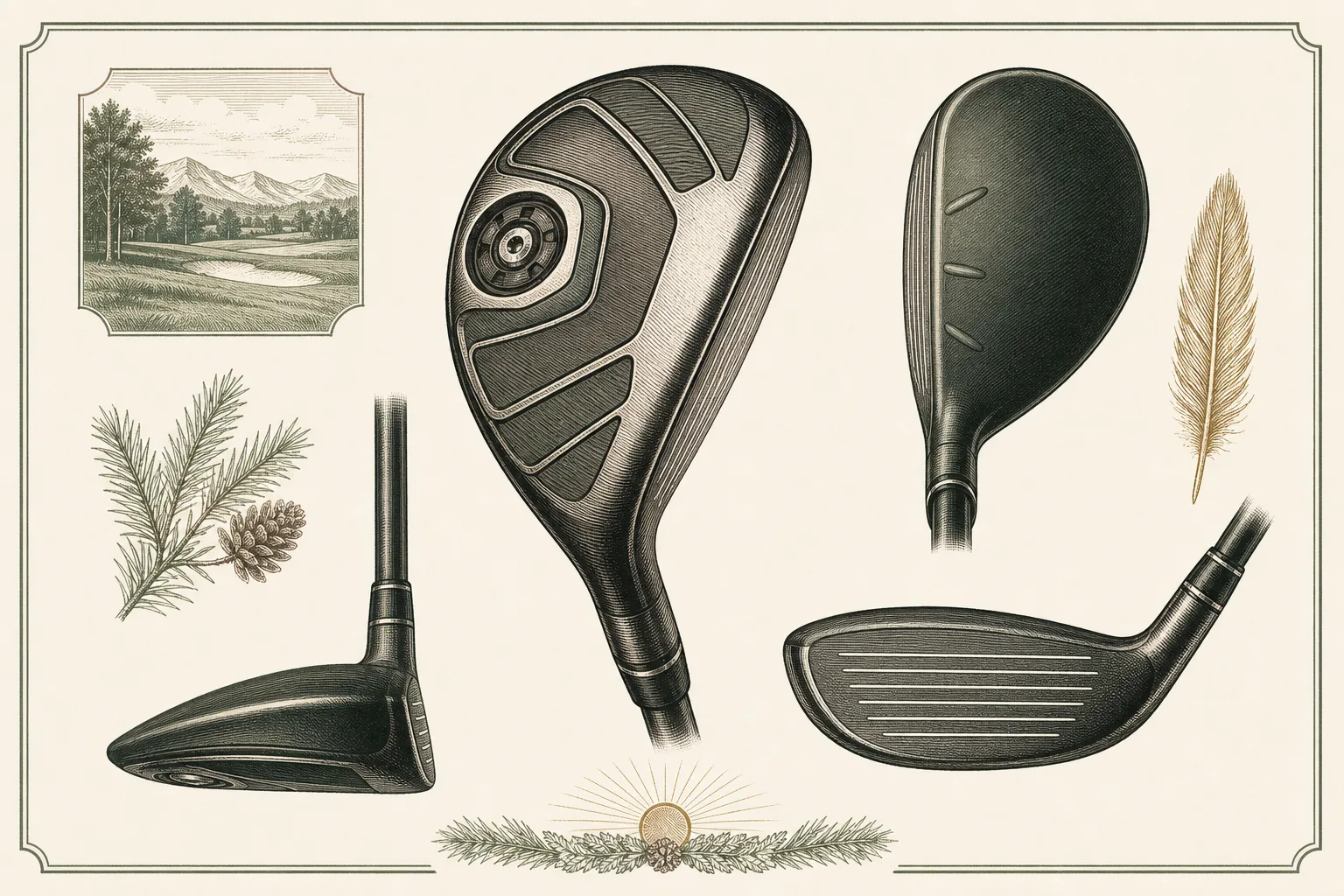
The G30 hybrid shared its family name with the G30 driver, the club that introduced Ping's dimpled Turbulator crown to reduce aerodynamic drag, but Golf Digest reported directly from Ping's engineering team that the hybrid deliberately does NOT carry Turbulators: at hybrid-sized heads the ridges provide no measurable performance benefit and only add unwanted mass, so Ping left them off. Instead the G30 hybrid relies on a 17-4 stainless steel head with a heat-treated H900 face for extra spring-like effect, internal heel-and-toe weight pads to raise MOI, and a low sole weight to keep the CG low and back for an easy, high launch. Reviewers responded strongly to the result, repeatedly calling it the best-sounding hybrid Ping had made and praising how little difference there was in outcome between a pured strike and a mis-hit.
It earned unusually strong, repeated critical praise -- described as 'the best-sounding PING hybrid, and among the best by any maker,' with reviewers naming consistency as its defining trait -- without ever becoming a scarce or actively-hunted club. That is genuine, sourced acclaim rather than manufactured hype, even though it stayed a mainstream, mass-produced product.
A strong fit for golfers of nearly any skill level who want a dependable, forgiving long-game club that performs consistently regardless of contact quality -- reviewers explicitly recommended it across handicap levels. There is little reason for a better player to avoid it either, since its forgiveness came without a meaningful workability penalty for this category.
Launched in 2014-2015 as part of the broader G30 family, the generation where Ping introduced Turbulator aerodynamics on its drivers; the hybrid's explicit lack of Turbulators is a documented engineering choice rather than an oversight, distinguishing it clearly from the driver despite sharing a model name. It replaced the G25 hybrid and preceded Ping's G family (2016) and i-series hybrids that followed.
Heel-and-toe internal weight pads plus a low sole weight give it real forgiveness on off-center strikes, and multiple reviewers specifically praised how similar good swings, bad swings, pure strikes and mis-hits all ended up in outcome -- an unusually consistent result for a hybrid of its generation, even without the Turbulator crown its driver sibling used for aerodynamic help.
Calibrated across the whole catalog — a tour blade scores low here on purpose; it means control, not ease.
Readily available and affordable used in 2026, typically $60-110 depending on loft and shaft across 2nd Swing, Golf Avenue and Golfbidder -- priced as a strong, dependable used hybrid rather than anything scarce.
Reading is one thing — hitting is another. Book a bay and see the numbers for yourself before you buy anywhere.
“Popular rung-1 hybrid line with lofts spanning long-iron to mid-iron replacements. Easy to launch, hard to punish.”
The G30 hybrid shared its family name with the G30 driver, the club that introduced Ping's dimpled Turbulator crown to reduce aerodynamic drag, but Golf Digest reported directly from Ping's engineering team that the hybrid deliberately does NOT carry Turbulators: at hybrid-sized heads the ridges provide no measurable performance benefit and only add unwanted mass, so Ping left them off. Instead the G30 hybrid relies on a 17-4 stainless steel head with a heat-treated H900 face for extra spring-like effect, internal heel-and-toe weight pads to raise MOI, and a low sole weight to keep the CG low and back for an easy, high launch. Reviewers responded strongly to the result, repeatedly calling it the best-sounding hybrid Ping had made and praising how little difference there was in outcome between a pured strike and a mis-hit.
It earned unusually strong, repeated critical praise -- described as 'the best-sounding PING hybrid, and among the best by any maker,' with reviewers naming consistency as its defining trait -- without ever becoming a scarce or actively-hunted club. That is genuine, sourced acclaim rather than manufactured hype, even though it stayed a mainstream, mass-produced product.
A strong fit for golfers of nearly any skill level who want a dependable, forgiving long-game club that performs consistently regardless of contact quality -- reviewers explicitly recommended it across handicap levels. There is little reason for a better player to avoid it either, since its forgiveness came without a meaningful workability penalty for this category.
Launched in 2014-2015 as part of the broader G30 family, the generation where Ping introduced Turbulator aerodynamics on its drivers; the hybrid's explicit lack of Turbulators is a documented engineering choice rather than an oversight, distinguishing it clearly from the driver despite sharing a model name. It replaced the G25 hybrid and preceded Ping's G family (2016) and i-series hybrids that followed.
Heel-and-toe internal weight pads plus a low sole weight give it real forgiveness on off-center strikes, and multiple reviewers specifically praised how similar good swings, bad swings, pure strikes and mis-hits all ended up in outcome -- an unusually consistent result for a hybrid of its generation, even without the Turbulator crown its driver sibling used for aerodynamic help.
Calibrated across the whole catalog — a tour blade scores low here on purpose; it means control, not ease.
Readily available and affordable used in 2026, typically $60-110 depending on loft and shaft across 2nd Swing, Golf Avenue and Golfbidder -- priced as a strong, dependable used hybrid rather than anything scarce.
Reading is one thing — hitting is another. Book a bay and see the numbers for yourself before you buy anywhere.