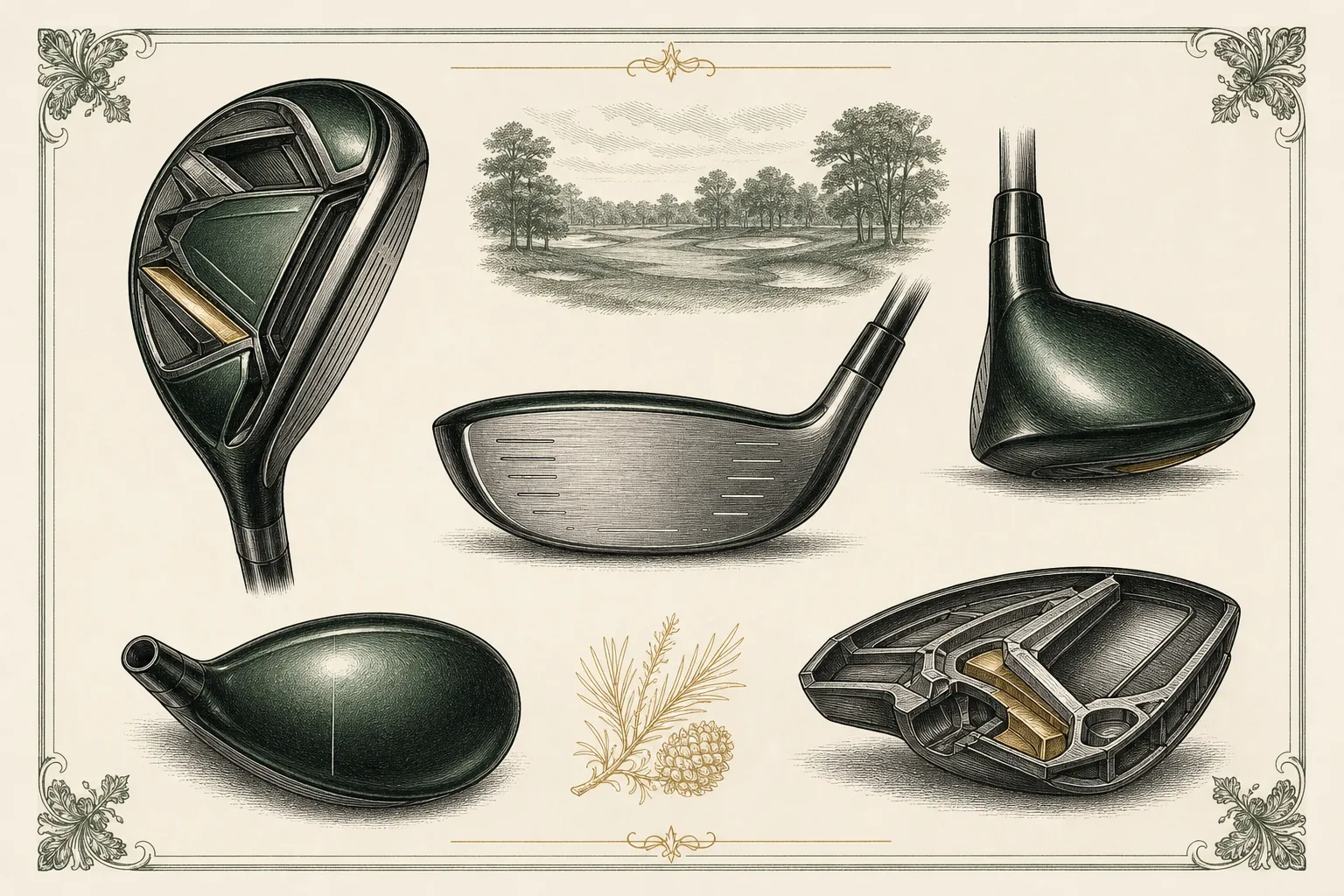
“Easy-launching, adjustable hybrid from Nike's last year in clubs. A forgiving rung-1 rescue for most bags.”
Launched January 2016 alongside the Vapor Fly driver, this hybrid slimmed the FlightWeight titanium crown 30% versus the 2015 Vapor model to drop CG and raise MOI, and added a HyperFlight face thinned around the perimeter for ball speed retention on off-center hits. Nike worked with tour ambassador Francesco Molinari on the profile, aiming for a refined shape that played more like a long-iron replacement than a bulky rescue club. In lab testing it tied Callaway's XR OS hybrid for the highest ball speed in its review group. Seven months after it hit shelves, Nike stunned the golf industry by announcing on August 3, 2016 that it was exiting the golf equipment business entirely - clubs, balls and bags - making this FlexLoft-adjustable hybrid, quietly, the last hybrid Nike Golf ever sold.
No collector cult exists for it - no forum reverence, no scarcity premium. Its notability is historical rather than cultural: it is documented in equipment press as part of Nike's final Vapor Fly launch before the company's abrupt August 2016 exit from clubmaking, a footnote of timing rather than a hunted club.
Mid-to-high handicappers and moderate swing speeds (roughly 70-100 mph per its fitting band) who want an easy-launching long-iron replacement. Better players chasing a low, penetrating hybrid flight or tour-level workability should look elsewhere in the 2016 field.
Went head-to-head with the Callaway XR OS hybrid, TaylorMade M2, and Titleist 816H1 in the 2016 hybrid class. Because Nike exited equipment just months after launch, it never received a true successor - the Vapor Fly line simply stopped rather than being replaced by a next-generation Nike hybrid.
Genuinely forgiving for its category: the lightened, lowered crown and HyperFlight face spread ball speed retention across a wider area of the face than the 2015 Vapor hybrid it replaced, and the FlexLoft 2 hosel lets a fitter dial in one of four stock lofts (17/20/23/26) plus face angle. It is not a max-forgiveness iron-replacement in the way a modern super-hybrid is, but among 2016 hybrids it graded well for mis-hit tolerance.
Calibrated across the whole catalog — a tour blade scores low here on purpose; it means control, not ease.
Cheap and plentiful: as an orphaned-brand hybrid it typically sells for $30-60 in decent used condition in 2026, well below what its reviewed performance would suggest, simply because there is no ongoing Nike equipment brand to sustain demand.
Reading is one thing — hitting is another. Book a bay and see the numbers for yourself before you buy anywhere.
“Easy-launching, adjustable hybrid from Nike's last year in clubs. A forgiving rung-1 rescue for most bags.”
Launched January 2016 alongside the Vapor Fly driver, this hybrid slimmed the FlightWeight titanium crown 30% versus the 2015 Vapor model to drop CG and raise MOI, and added a HyperFlight face thinned around the perimeter for ball speed retention on off-center hits. Nike worked with tour ambassador Francesco Molinari on the profile, aiming for a refined shape that played more like a long-iron replacement than a bulky rescue club. In lab testing it tied Callaway's XR OS hybrid for the highest ball speed in its review group. Seven months after it hit shelves, Nike stunned the golf industry by announcing on August 3, 2016 that it was exiting the golf equipment business entirely - clubs, balls and bags - making this FlexLoft-adjustable hybrid, quietly, the last hybrid Nike Golf ever sold.
No collector cult exists for it - no forum reverence, no scarcity premium. Its notability is historical rather than cultural: it is documented in equipment press as part of Nike's final Vapor Fly launch before the company's abrupt August 2016 exit from clubmaking, a footnote of timing rather than a hunted club.
Mid-to-high handicappers and moderate swing speeds (roughly 70-100 mph per its fitting band) who want an easy-launching long-iron replacement. Better players chasing a low, penetrating hybrid flight or tour-level workability should look elsewhere in the 2016 field.
Went head-to-head with the Callaway XR OS hybrid, TaylorMade M2, and Titleist 816H1 in the 2016 hybrid class. Because Nike exited equipment just months after launch, it never received a true successor - the Vapor Fly line simply stopped rather than being replaced by a next-generation Nike hybrid.
Genuinely forgiving for its category: the lightened, lowered crown and HyperFlight face spread ball speed retention across a wider area of the face than the 2015 Vapor hybrid it replaced, and the FlexLoft 2 hosel lets a fitter dial in one of four stock lofts (17/20/23/26) plus face angle. It is not a max-forgiveness iron-replacement in the way a modern super-hybrid is, but among 2016 hybrids it graded well for mis-hit tolerance.
Calibrated across the whole catalog — a tour blade scores low here on purpose; it means control, not ease.
Cheap and plentiful: as an orphaned-brand hybrid it typically sells for $30-60 in decent used condition in 2026, well below what its reviewed performance would suggest, simply because there is no ongoing Nike equipment brand to sustain demand.
Reading is one thing — hitting is another. Book a bay and see the numbers for yourself before you buy anywhere.