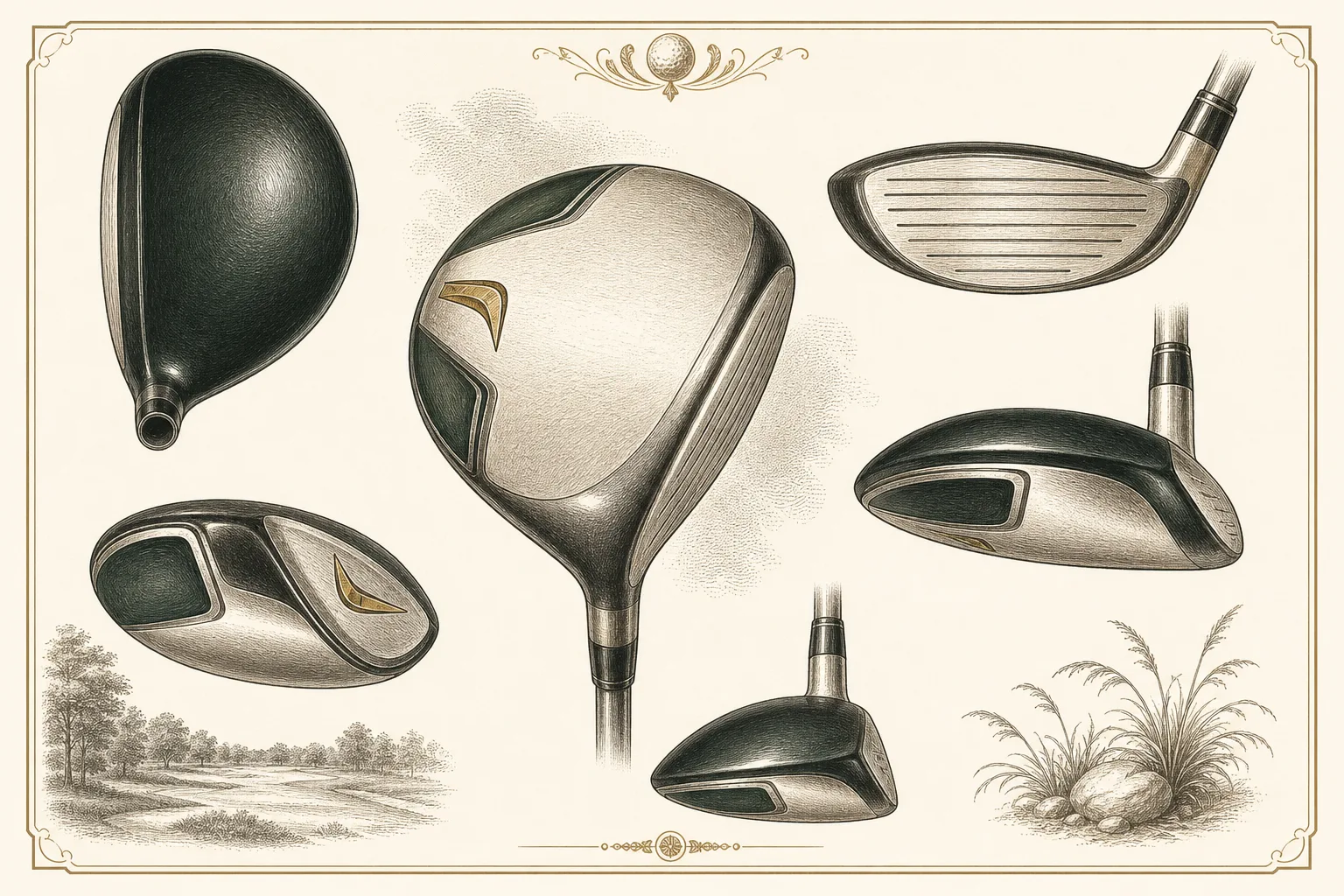
“Composite-crown fairway matching the FT-3 driver. Solid in its day; a value option now.”
Callaway's FT-3 Fairway carried the driver's Fusion Technology — a carbon-composite crown fused to a steel face and body — into a fairway wood, paired with a tungsten-infused sole plate under Callaway's Opti-Fit weighting system to pull the center of gravity low and deep. A lower leading edge than earlier FT fairways widened the usable hitting area, and a dual-runner sole was meant to reduce the head snagging or twisting through turf on a slightly mis-struck shot. It shipped as the practical, less-hyped companion to the FT-3 driver — same technology story, none of the Masters-winning spotlight.
It rode entirely on the FT-3 driver's marketing wave and drew comparatively little independent review coverage of its own; there is no distinct legend, tour-win story, or collector interest attached specifically to the fairway wood.
Mid-handicap players wanting an easy-launching 2000s-era fairway wood off tee or turf, ideally as an affordable used addition rather than a primary gamer. A low-handicap player wanting workability, or anyone wanting modern ball speeds, should look at a current fairway wood instead.
Released in 2006 alongside the FT-3 driver, competing with Titleist's 906F, TaylorMade's r7 fairway woods, and Nike's SasQuatch fairway line in the tungsten-sole-weighted fairway wood category that dominated the mid-2000s.
Tungsten sole weighting and a lower CG genuinely help launch and turf interaction for a mid-2000s fairway wood, and the dual-runner sole was specifically engineered to resist twisting on off-center strikes — solid, real forgiveness for its category and era, though a fairway wood's smaller head keeps it below driver-level forgiveness scores.
Calibrated across the whole catalog — a tour blade scores low here on purpose; it means control, not ease.
Realistic 2026 private-party pricing for a single FT-3 fairway wood runs about $25–$50 depending on loft and shaft condition — cheap, plentiful, and carrying no premium from its association with the driver's major-winning reputation.
Reading is one thing — hitting is another. Book a bay and see the numbers for yourself before you buy anywhere.
“Composite-crown fairway matching the FT-3 driver. Solid in its day; a value option now.”
Callaway's FT-3 Fairway carried the driver's Fusion Technology — a carbon-composite crown fused to a steel face and body — into a fairway wood, paired with a tungsten-infused sole plate under Callaway's Opti-Fit weighting system to pull the center of gravity low and deep. A lower leading edge than earlier FT fairways widened the usable hitting area, and a dual-runner sole was meant to reduce the head snagging or twisting through turf on a slightly mis-struck shot. It shipped as the practical, less-hyped companion to the FT-3 driver — same technology story, none of the Masters-winning spotlight.
It rode entirely on the FT-3 driver's marketing wave and drew comparatively little independent review coverage of its own; there is no distinct legend, tour-win story, or collector interest attached specifically to the fairway wood.
Mid-handicap players wanting an easy-launching 2000s-era fairway wood off tee or turf, ideally as an affordable used addition rather than a primary gamer. A low-handicap player wanting workability, or anyone wanting modern ball speeds, should look at a current fairway wood instead.
Released in 2006 alongside the FT-3 driver, competing with Titleist's 906F, TaylorMade's r7 fairway woods, and Nike's SasQuatch fairway line in the tungsten-sole-weighted fairway wood category that dominated the mid-2000s.
Tungsten sole weighting and a lower CG genuinely help launch and turf interaction for a mid-2000s fairway wood, and the dual-runner sole was specifically engineered to resist twisting on off-center strikes — solid, real forgiveness for its category and era, though a fairway wood's smaller head keeps it below driver-level forgiveness scores.
Calibrated across the whole catalog — a tour blade scores low here on purpose; it means control, not ease.
Realistic 2026 private-party pricing for a single FT-3 fairway wood runs about $25–$50 depending on loft and shaft condition — cheap, plentiful, and carrying no premium from its association with the driver's major-winning reputation.
Reading is one thing — hitting is another. Book a bay and see the numbers for yourself before you buy anywhere.