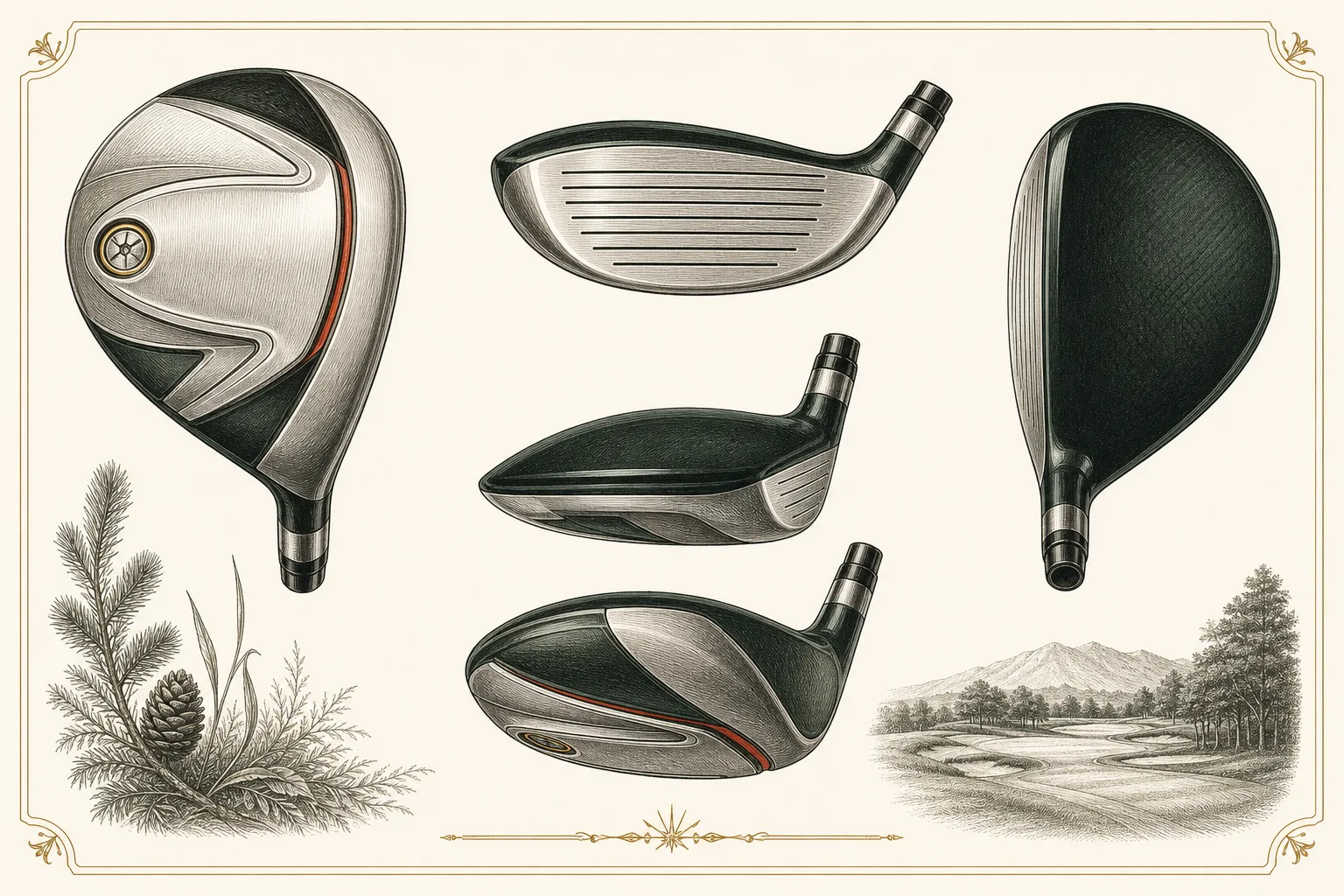
The Redline family was Adams Golf's early-2000s move into fully titanium fairway wood construction, extending the design lessons of the original Tight Lies into an all-titanium head with a strategically positioned, perimeter-placed tungsten weighting scheme to raise MOI and resist twisting on off-center hits. It came at a pivotal moment for Adams: the company had ridden the Tight Lies boom of the mid-1990s to real scale, gone public in 1998, weathered a post-IPO stock collapse and the DVD/infomercial-era backlash, and by the early 2000s was rebuilding its lineup around modern metalwood technology rather than one novelty shape. Redline (and its RPM/RPM Titanium variants) represented Adams broadening beyond the Tight Lies silhouette into a more conventional, if still forgiving, fairway wood shape.
Solidly liked in its day — golfreview.com users rated it 4.5/5 across dozens of reviews — but it never generated the brand-defining buzz of Tight Lies; it was a competent, well-regarded mid-2000s fairway wood that faded from conversation once Adams moved on to Insight, Idea, and Speedline generations.
A solid, affordable option today for a mid-to-high handicap player wanting an easy-launching, forgiving titanium fairway wood at a bargain price, or as a beater/backup club. Golfers wanting current-generation ball speed and forgiveness (VST-slot or carbon-crown modern fairways) should not expect this early-2000s titanium head to keep pace.
Competed against early titanium fairway woods from Callaway (Steelhead/ERC), TaylorMade, and Titleist in the 2003-2004 window; Adams followed it with RPM and RPM Titanium variants and later the Insight/Idea and Speedline lines as the company scaled through the 2000s before its 2012 acquisition by TaylorMade. The roster lists this entry's year_start as 2004, one year later than the 2003 introduction date found in club history sources — likely reflecting a following model-year refresh rather than a factual error.
Full titanium construction lets Adams push CG low and perimeter weight for the era, and user reviews consistently praised the ease of launch and consistency on off-center hits typical of early-2000s titanium fairway woods; it will not match a modern slot-technology fairway wood's forgiveness envelope but was strong for its time.
Calibrated across the whole catalog — a tour blade scores low here on purpose; it means control, not ease.
Cheap and plentiful today: complete Redline fairway woods (including RPM/RPM Titanium variants) commonly sell for roughly $30-$80 on eBay and similar marketplaces in 2026, consistent with a 20+ year old mid-tier fairway wood with no collector premium.
Reading is one thing — hitting is another. Book a bay and see the numbers for yourself before you buy anywhere.
The Redline family was Adams Golf's early-2000s move into fully titanium fairway wood construction, extending the design lessons of the original Tight Lies into an all-titanium head with a strategically positioned, perimeter-placed tungsten weighting scheme to raise MOI and resist twisting on off-center hits. It came at a pivotal moment for Adams: the company had ridden the Tight Lies boom of the mid-1990s to real scale, gone public in 1998, weathered a post-IPO stock collapse and the DVD/infomercial-era backlash, and by the early 2000s was rebuilding its lineup around modern metalwood technology rather than one novelty shape. Redline (and its RPM/RPM Titanium variants) represented Adams broadening beyond the Tight Lies silhouette into a more conventional, if still forgiving, fairway wood shape.
Solidly liked in its day — golfreview.com users rated it 4.5/5 across dozens of reviews — but it never generated the brand-defining buzz of Tight Lies; it was a competent, well-regarded mid-2000s fairway wood that faded from conversation once Adams moved on to Insight, Idea, and Speedline generations.
A solid, affordable option today for a mid-to-high handicap player wanting an easy-launching, forgiving titanium fairway wood at a bargain price, or as a beater/backup club. Golfers wanting current-generation ball speed and forgiveness (VST-slot or carbon-crown modern fairways) should not expect this early-2000s titanium head to keep pace.
Competed against early titanium fairway woods from Callaway (Steelhead/ERC), TaylorMade, and Titleist in the 2003-2004 window; Adams followed it with RPM and RPM Titanium variants and later the Insight/Idea and Speedline lines as the company scaled through the 2000s before its 2012 acquisition by TaylorMade. The roster lists this entry's year_start as 2004, one year later than the 2003 introduction date found in club history sources — likely reflecting a following model-year refresh rather than a factual error.
Full titanium construction lets Adams push CG low and perimeter weight for the era, and user reviews consistently praised the ease of launch and consistency on off-center hits typical of early-2000s titanium fairway woods; it will not match a modern slot-technology fairway wood's forgiveness envelope but was strong for its time.
Calibrated across the whole catalog — a tour blade scores low here on purpose; it means control, not ease.
Cheap and plentiful today: complete Redline fairway woods (including RPM/RPM Titanium variants) commonly sell for roughly $30-$80 on eBay and similar marketplaces in 2026, consistent with a 20+ year old mid-tier fairway wood with no collector premium.
Reading is one thing — hitting is another. Book a bay and see the numbers for yourself before you buy anywhere.