“A standard, versatile fairway wood - rung-2 neutral flight for a repeating swing and a solid gap-filler between driver and irons. Old but honest; buy on price, not hype.”
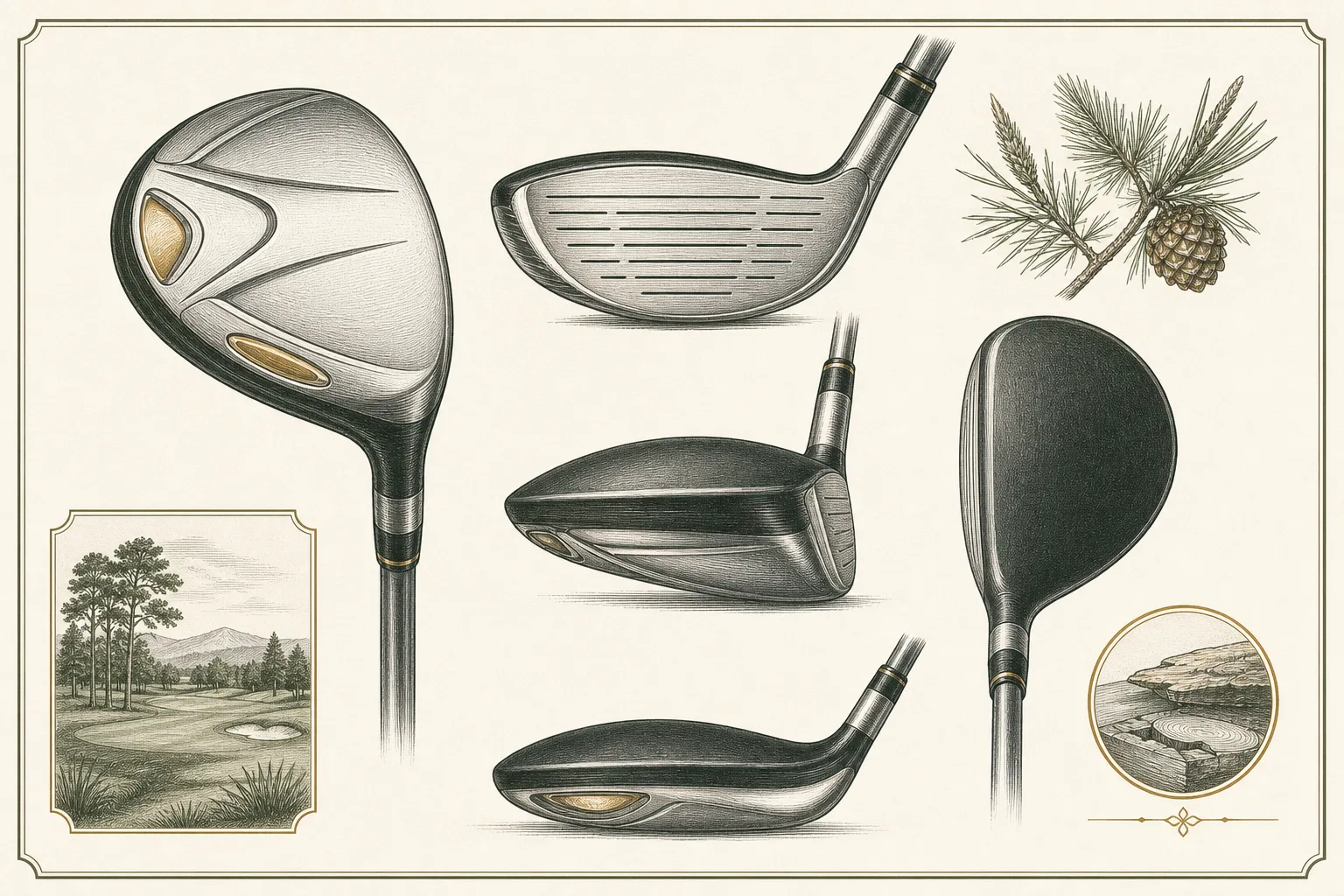
The G2 fairway wood shared its launch year and design language with the G2 driver and irons, using a variable-width sole (thinner near the face, thicker toward the back) to move weight away from the face for a higher launch, a deeper face for a larger effective hitting area, and a progressive groove pattern tuned per loft for spin and lift. Golf Monthly's 2004 review praised its compact, classic Ping look and called it popular for good reason. It was color-coded through Ping's lie-angle fitting system (green for anti-slice, orange for anti-hook, black standard) exactly like the rest of the G2 family and the Eye 2 before it, making it as much a fitting-system product as a standalone design.
A competent, well-reviewed fairway wood in 2004 with no distinguishing claim beyond that - no sales-record data, no tour-win story, and no enthusiast following persists for it today. Honestly ordinary: a solid gap-filler from a strong product family, nothing more.
Mid-swing-speed players wanting an easy, versatile gap club between driver and irons, particularly ones who benefit from Ping's lie-angle fitting to correct a hook or slice tendency. Better players wanting a compact, low-spin players' fairway wood for shot-shaping will find it launches higher and spins more than modern low-spin options.
Part of the original 2004 G-series launch alongside the G2 driver and irons, replacing Ping's earlier i3 fairway woods; it competed against Callaway's Great Big Bertha II and TaylorMade's R7 fairway woods of the same window before Ping moved to the G5 platform in 2005.
The variable-thickness sole and high-MOI, perimeter-weighted head were engineered for forgiveness typical of mid-2000s game-improvement fairway woods, and the color-dot lie fitting system helps correct directional misses at the fitting stage rather than through raw head forgiveness alone - solid but a clear generation behind the later G15/G20 fairway woods in this same catalog.
Calibrated across the whole catalog — a tour blade scores low here on purpose; it means control, not ease.
Used G2 fairway woods sell for roughly $30-60 in 2026 - inexpensive, functional, and priced as a 20-year-old commodity club with no appreciation, consistent with the rest of the original G2 family.
Reading is one thing — hitting is another. Book a bay and see the numbers for yourself before you buy anywhere.
“A standard, versatile fairway wood - rung-2 neutral flight for a repeating swing and a solid gap-filler between driver and irons. Old but honest; buy on price, not hype.”
The G2 fairway wood shared its launch year and design language with the G2 driver and irons, using a variable-width sole (thinner near the face, thicker toward the back) to move weight away from the face for a higher launch, a deeper face for a larger effective hitting area, and a progressive groove pattern tuned per loft for spin and lift. Golf Monthly's 2004 review praised its compact, classic Ping look and called it popular for good reason. It was color-coded through Ping's lie-angle fitting system (green for anti-slice, orange for anti-hook, black standard) exactly like the rest of the G2 family and the Eye 2 before it, making it as much a fitting-system product as a standalone design.
A competent, well-reviewed fairway wood in 2004 with no distinguishing claim beyond that - no sales-record data, no tour-win story, and no enthusiast following persists for it today. Honestly ordinary: a solid gap-filler from a strong product family, nothing more.
Mid-swing-speed players wanting an easy, versatile gap club between driver and irons, particularly ones who benefit from Ping's lie-angle fitting to correct a hook or slice tendency. Better players wanting a compact, low-spin players' fairway wood for shot-shaping will find it launches higher and spins more than modern low-spin options.
Part of the original 2004 G-series launch alongside the G2 driver and irons, replacing Ping's earlier i3 fairway woods; it competed against Callaway's Great Big Bertha II and TaylorMade's R7 fairway woods of the same window before Ping moved to the G5 platform in 2005.
The variable-thickness sole and high-MOI, perimeter-weighted head were engineered for forgiveness typical of mid-2000s game-improvement fairway woods, and the color-dot lie fitting system helps correct directional misses at the fitting stage rather than through raw head forgiveness alone - solid but a clear generation behind the later G15/G20 fairway woods in this same catalog.
Calibrated across the whole catalog — a tour blade scores low here on purpose; it means control, not ease.
Used G2 fairway woods sell for roughly $30-60 in 2026 - inexpensive, functional, and priced as a 20-year-old commodity club with no appreciation, consistent with the rest of the original G2 family.
Reading is one thing — hitting is another. Book a bay and see the numbers for yourself before you buy anywhere.