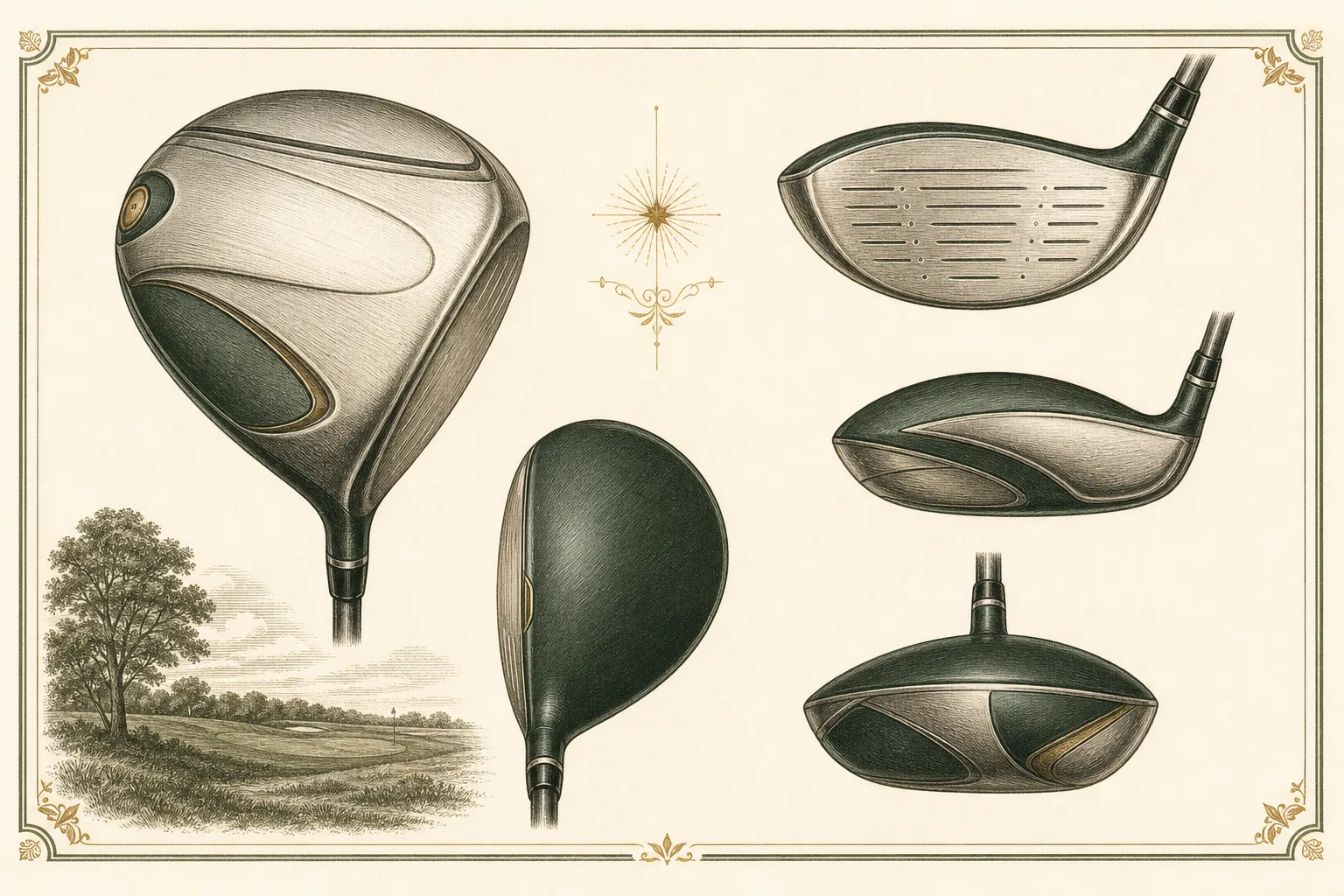
“Named for Ely Reeves Callaway; an intentionally non-conforming hi-COR 'hot face' launched under R&A rules abroad. A collector/controversy piece -- illegal for USGA rounds, so treat as a novelty, not a gamer.”
The most notorious driver Callaway ever built. Named for founder Ely Reeves Callaway, the 2000 ERC used a thin forged-titanium ~300cc face tuned for a spring-like 'trampoline' effect whose coefficient of restitution (COR) exceeded the USGA's 0.83 limit. In April 2000 the USGA ruled it non-conforming for U.S. play. Rather than back down, Ely Callaway leaned in, marketing it to American recreational golfers as a legal-everywhere-but-USGA-events distance club and framing it as growing the game by offering a choice. The R&A allowed it internationally, so it conformed everywhere except the USA and Mexico. The stance triggered lawsuits (including against the Royal Canadian Golf Association) and made the ERC the definitive 'illegal driver' story of its era.
Genuinely famous for being banned. The ERC's non-conforming COR, the USGA fight, Ely Callaway's public crusade and the ensuing lawsuits are documented across independent mainstream and golf media (ESPN, CNN Money, Golf Business News, Callaway's own releases) — not just enthusiast forums. It is the archetypal 'outlawed driver,' a rules-history landmark whose notoriety, like the Ping Eye 2's, gives it lasting recognition well beyond its playing merits.
A collector's / novelty club, and a genuine trap for competitive players: because its COR exceeds 0.83 it is NON-CONFORMING for USGA (and thus most U.S. tournament and handicap) play. Fine for a casual non-posted round or the trophy shelf; do not gamer it in anything that counts. A modern player wanting real, legal distance and forgiveness should choose any current 460cc driver instead.
Landed in 2000 as the flashpoint of the COR/'spring-like effect' war between the USGA and manufacturers. It was followed in 2001 by the ERC II (also non-conforming in the U.S. but otherwise R&A-legal), and the whole saga pushed the USGA/R&A toward a unified COR limit later in the decade. Its notoriety sits alongside the Ping Eye 2 groove affair as one of golf's defining equipment-rules fights. Modern legal equivalent: any conforming Callaway driver at the 0.83 COR ceiling.
The ERC was about ball SPEED, not forgiveness. Its ~300cc forged head and hot, thin face added distance via the spring effect, but 300cc is small by modern standards and the design chased COR, not MOI. Off-center hits still lose real speed and the sweet spot is modest next to a 460cc head. A 5 reflects a mid-size early-2000s head that is easy enough to hit but was never engineered for maximum forgiveness — its whole reason for existing was illegal distance.
Calibrated across the whole catalog — a tour blade scores low here on purpose; it means control, not ease.
A modest novelty premium over contemporaries: clean private-party ERC (and ERC II) drivers typically run roughly $40-90 in 2026, with the 'illegal driver' story sustaining demand better than a plain 2000 titanium head. Non-conforming status caps any competitive value, and reconditioned-retail listings above this band are grading markup. It sells on notoriety, not performance.
Reading is one thing — hitting is another. Book a bay and see the numbers for yourself before you buy anywhere.
“Named for Ely Reeves Callaway; an intentionally non-conforming hi-COR 'hot face' launched under R&A rules abroad. A collector/controversy piece -- illegal for USGA rounds, so treat as a novelty, not a gamer.”
The most notorious driver Callaway ever built. Named for founder Ely Reeves Callaway, the 2000 ERC used a thin forged-titanium ~300cc face tuned for a spring-like 'trampoline' effect whose coefficient of restitution (COR) exceeded the USGA's 0.83 limit. In April 2000 the USGA ruled it non-conforming for U.S. play. Rather than back down, Ely Callaway leaned in, marketing it to American recreational golfers as a legal-everywhere-but-USGA-events distance club and framing it as growing the game by offering a choice. The R&A allowed it internationally, so it conformed everywhere except the USA and Mexico. The stance triggered lawsuits (including against the Royal Canadian Golf Association) and made the ERC the definitive 'illegal driver' story of its era.
Genuinely famous for being banned. The ERC's non-conforming COR, the USGA fight, Ely Callaway's public crusade and the ensuing lawsuits are documented across independent mainstream and golf media (ESPN, CNN Money, Golf Business News, Callaway's own releases) — not just enthusiast forums. It is the archetypal 'outlawed driver,' a rules-history landmark whose notoriety, like the Ping Eye 2's, gives it lasting recognition well beyond its playing merits.
A collector's / novelty club, and a genuine trap for competitive players: because its COR exceeds 0.83 it is NON-CONFORMING for USGA (and thus most U.S. tournament and handicap) play. Fine for a casual non-posted round or the trophy shelf; do not gamer it in anything that counts. A modern player wanting real, legal distance and forgiveness should choose any current 460cc driver instead.
Landed in 2000 as the flashpoint of the COR/'spring-like effect' war between the USGA and manufacturers. It was followed in 2001 by the ERC II (also non-conforming in the U.S. but otherwise R&A-legal), and the whole saga pushed the USGA/R&A toward a unified COR limit later in the decade. Its notoriety sits alongside the Ping Eye 2 groove affair as one of golf's defining equipment-rules fights. Modern legal equivalent: any conforming Callaway driver at the 0.83 COR ceiling.
The ERC was about ball SPEED, not forgiveness. Its ~300cc forged head and hot, thin face added distance via the spring effect, but 300cc is small by modern standards and the design chased COR, not MOI. Off-center hits still lose real speed and the sweet spot is modest next to a 460cc head. A 5 reflects a mid-size early-2000s head that is easy enough to hit but was never engineered for maximum forgiveness — its whole reason for existing was illegal distance.
Calibrated across the whole catalog — a tour blade scores low here on purpose; it means control, not ease.
A modest novelty premium over contemporaries: clean private-party ERC (and ERC II) drivers typically run roughly $40-90 in 2026, with the 'illegal driver' story sustaining demand better than a plain 2000 titanium head. Non-conforming status caps any competitive value, and reconditioned-retail listings above this band are grading markup. It sells on notoriety, not performance.
Reading is one thing — hitting is another. Book a bay and see the numbers for yourself before you buy anywhere.