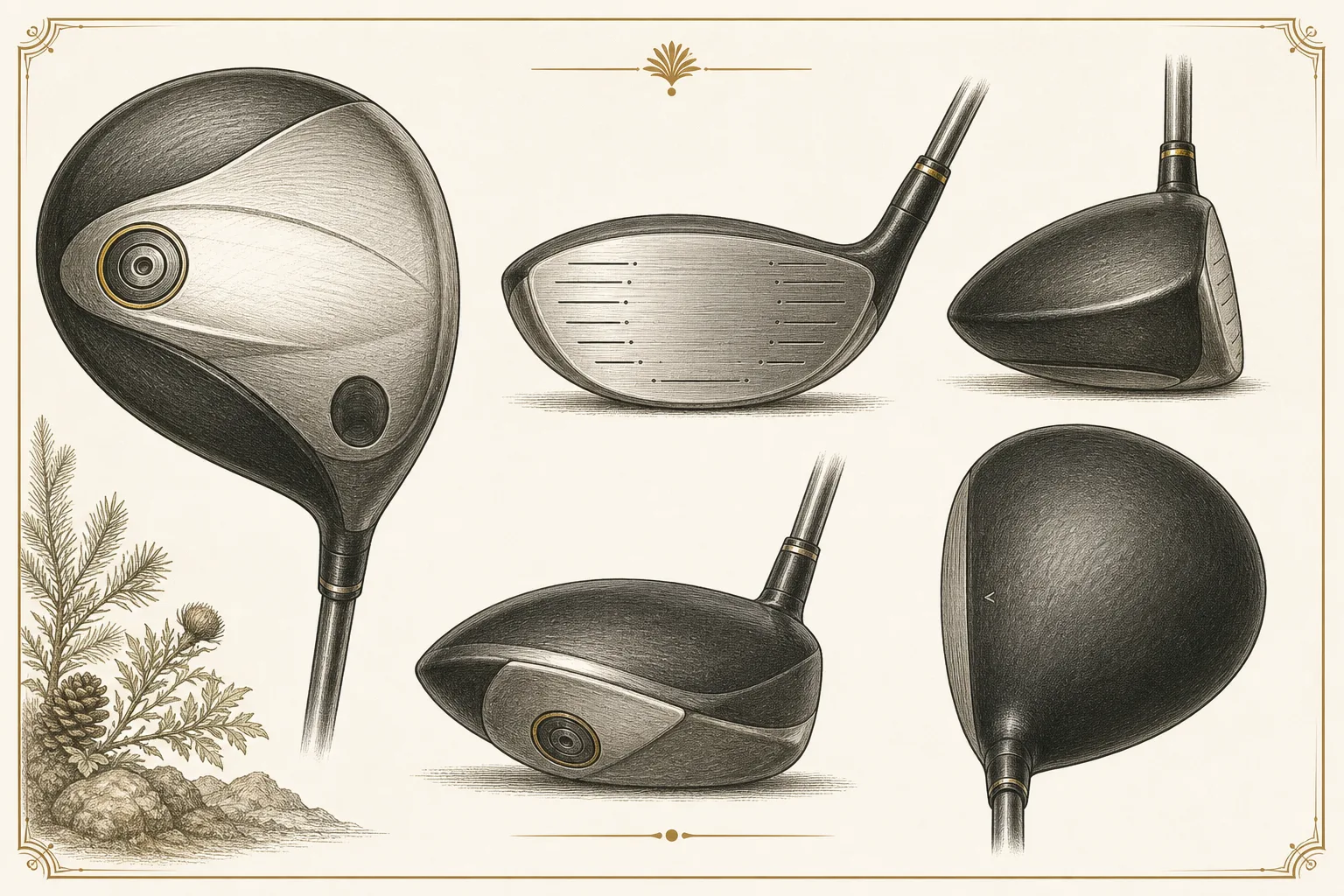
The ERC II was Callaway's forged-titanium driver built to exceed the USGA's spring-like-effect (COR) limit, and it became one of the biggest equipment controversies in golf history. Announced in October 2000 with limited shipments beginning early 2001, its thin, thermoformed titanium face was engineered to flex more than the rules allowed, producing extra ball speed the USGA measured as a genuine trampoline effect. Callaway chose to sell it in the U.S. anyway for recreational play, triggering a public fight with the USGA, a widely covered CNN Money story on how the 'outlawed' status boosted sales, and a position paper from Arnold Palmer on whether amateurs should use non-conforming clubs.
Independently documented by CNN Money ('Outlawed driver boosts sales'), ESPN, Golf Digest, and Callaway's own press releases as a genuine cultural flashpoint — non-conforming status drove a sales spike rather than suppressing it, and the club remains referenced today (including in modern head-to-head YouTube comparisons against current Callaway drivers) as the emblem of the early-2000s COR wars.
A collector or recreational golfer who plays only casual, non-competitive rounds and wants a piece of golf-equipment history to hit; not legal for any USGA/R&A-sanctioned competition or handicap-posting round, which rules it out as a primary gamer for club or league play.
Part of the early-2000s COR controversy alongside other high-COR Japan/limited-market drivers; the USGA's 1998 pendulum test for spring-like effect made it and similar hot-faced drivers non-conforming, a rules fight that shaped equipment regulation into the mid-2000s. Modern conforming equivalents from Callaway are the Epic/Paradym/Ai Smoke lines.
Callaway marketed it as its 'hottest and most forgiving driver ever' at the time, with a variable-thickness forged face and thru-bore shaft aiding stability, but by modern game-improvement standards the head is small (roughly 300cc-class titanium shape typical of 2001) and offers only moderate forgiveness on off-center hits compared to today's 460cc MOI-optimized drivers.
Calibrated across the whole catalog — a tour blade scores low here on purpose; it means control, not ease.
Realistic 2026 private-party/eBay pricing is low, roughly $40-$90 for a clean head with stock shaft, reflecting its status as a non-tournament-legal novelty rather than a performance upgrade; prices are driven by collector/nostalgia interest, not playability demand.
Reading is one thing — hitting is another. Book a bay and see the numbers for yourself before you buy anywhere.
The ERC II was Callaway's forged-titanium driver built to exceed the USGA's spring-like-effect (COR) limit, and it became one of the biggest equipment controversies in golf history. Announced in October 2000 with limited shipments beginning early 2001, its thin, thermoformed titanium face was engineered to flex more than the rules allowed, producing extra ball speed the USGA measured as a genuine trampoline effect. Callaway chose to sell it in the U.S. anyway for recreational play, triggering a public fight with the USGA, a widely covered CNN Money story on how the 'outlawed' status boosted sales, and a position paper from Arnold Palmer on whether amateurs should use non-conforming clubs.
Independently documented by CNN Money ('Outlawed driver boosts sales'), ESPN, Golf Digest, and Callaway's own press releases as a genuine cultural flashpoint — non-conforming status drove a sales spike rather than suppressing it, and the club remains referenced today (including in modern head-to-head YouTube comparisons against current Callaway drivers) as the emblem of the early-2000s COR wars.
A collector or recreational golfer who plays only casual, non-competitive rounds and wants a piece of golf-equipment history to hit; not legal for any USGA/R&A-sanctioned competition or handicap-posting round, which rules it out as a primary gamer for club or league play.
Part of the early-2000s COR controversy alongside other high-COR Japan/limited-market drivers; the USGA's 1998 pendulum test for spring-like effect made it and similar hot-faced drivers non-conforming, a rules fight that shaped equipment regulation into the mid-2000s. Modern conforming equivalents from Callaway are the Epic/Paradym/Ai Smoke lines.
Callaway marketed it as its 'hottest and most forgiving driver ever' at the time, with a variable-thickness forged face and thru-bore shaft aiding stability, but by modern game-improvement standards the head is small (roughly 300cc-class titanium shape typical of 2001) and offers only moderate forgiveness on off-center hits compared to today's 460cc MOI-optimized drivers.
Calibrated across the whole catalog — a tour blade scores low here on purpose; it means control, not ease.
Realistic 2026 private-party/eBay pricing is low, roughly $40-$90 for a clean head with stock shaft, reflecting its status as a non-tournament-legal novelty rather than a performance upgrade; prices are driven by collector/nostalgia interest, not playability demand.
Reading is one thing — hitting is another. Book a bay and see the numbers for yourself before you buy anywhere.