“A driving-iron crossover - low, penetrating flight for stronger players who want an iron-like ball flight off the deck or tee. Not a forgiveness club. Last of the G-branded crossovers before Ping folded the line into the i-Series.”
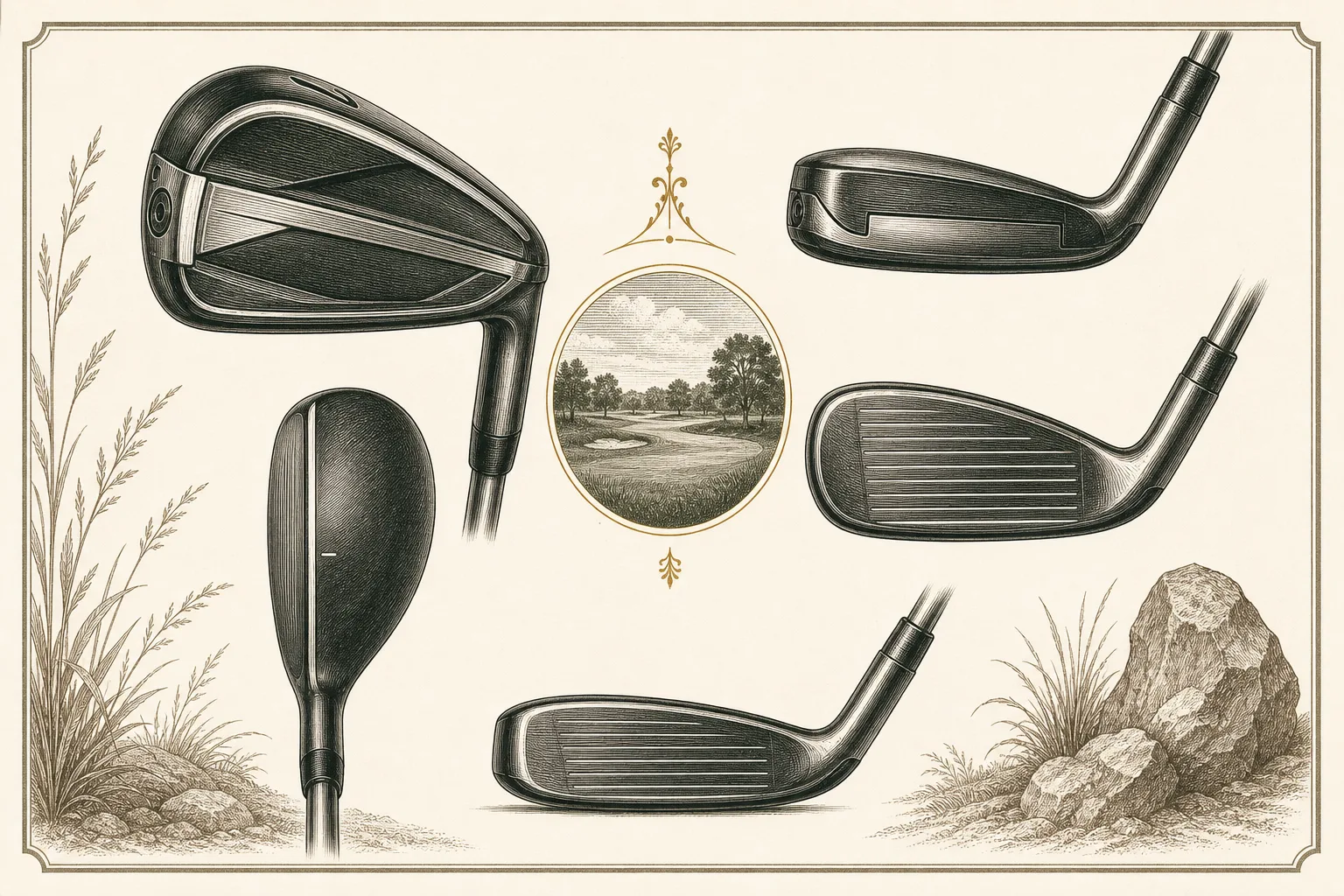
The G425 Crossover was Ping's driving-iron-styled utility club for players who wanted an iron look and flight rather than a hybrid's wood-like head. A hollow body with a thin maraging-steel face insert kept ball speed up, while a two-weight system - a larger tungsten weight in the toe and a smaller one in the hosel - raised MOI about 6.5% over the G410 Crossover it replaced. That weighting made it, per several testers, unusually easy to launch for a driving-iron-shaped club, with a high, low-spin flight. It came in three lofts (18, 20, 22.5) tuned for 2-4 iron replacement, and it was the last driving iron Ping released under its mainline 'G' badge before shifting utility-iron development to the separate i-series (iCrossover) line.
Real, positive trade-press reception (Golf Monthly, Plugged In Golf) specifically for being unusually easy to launch relative to other driving irons, plus a genuine niche historical footnote as the last G-branded Ping crossover - but no cult mythology or scarcity attaches to it; it's a well-liked, small-category product.
Stronger, faster-swinging players (roughly 7-iron speed or above) who want a low, penetrating, iron-like ball flight off the tee or deck instead of a hybrid's higher, softer-landing shot. Golfers seeking maximum forgiveness or extra height should choose the G425 Hybrid or Max Fairway instead.
Replaced the G410 Crossover with a 6.5%-higher-MOI head, launching alongside the rest of the 2021 G425 family. It was the last driving iron sold under Ping's mainline 'G' numbering - subsequent Ping utility-iron development moved to the separate i-series (iCrossover) line.
Forgiving for what it is - a compact, iron-profile driving iron, not a full hybrid. The toe/hosel tungsten weighting and hollow maraging face raise MOI ~6.5% over the G410 Crossover and make it notably easy to launch for its category, but the head is still much smaller than a true rescue club like the G425 Hybrid; extreme heel or toe strikes still cost more distance than they would in a full-size hybrid.
Calibrated across the whole catalog — a tour blade scores low here on purpose; it means control, not ease.
MSRP was $250 at launch. Used private-party prices in 2026 for a clean example run roughly $90-$140 depending on loft and shaft; it is a thin secondhand market (driving irons are a small category), so retailer listings (2nd Swing) sometimes ask $150-$180 for warrantied or premium-shaft copies.
Reading is one thing — hitting is another. Book a bay and see the numbers for yourself before you buy anywhere.
“A driving-iron crossover - low, penetrating flight for stronger players who want an iron-like ball flight off the deck or tee. Not a forgiveness club. Last of the G-branded crossovers before Ping folded the line into the i-Series.”
The G425 Crossover was Ping's driving-iron-styled utility club for players who wanted an iron look and flight rather than a hybrid's wood-like head. A hollow body with a thin maraging-steel face insert kept ball speed up, while a two-weight system - a larger tungsten weight in the toe and a smaller one in the hosel - raised MOI about 6.5% over the G410 Crossover it replaced. That weighting made it, per several testers, unusually easy to launch for a driving-iron-shaped club, with a high, low-spin flight. It came in three lofts (18, 20, 22.5) tuned for 2-4 iron replacement, and it was the last driving iron Ping released under its mainline 'G' badge before shifting utility-iron development to the separate i-series (iCrossover) line.
Real, positive trade-press reception (Golf Monthly, Plugged In Golf) specifically for being unusually easy to launch relative to other driving irons, plus a genuine niche historical footnote as the last G-branded Ping crossover - but no cult mythology or scarcity attaches to it; it's a well-liked, small-category product.
Stronger, faster-swinging players (roughly 7-iron speed or above) who want a low, penetrating, iron-like ball flight off the tee or deck instead of a hybrid's higher, softer-landing shot. Golfers seeking maximum forgiveness or extra height should choose the G425 Hybrid or Max Fairway instead.
Replaced the G410 Crossover with a 6.5%-higher-MOI head, launching alongside the rest of the 2021 G425 family. It was the last driving iron sold under Ping's mainline 'G' numbering - subsequent Ping utility-iron development moved to the separate i-series (iCrossover) line.
Forgiving for what it is - a compact, iron-profile driving iron, not a full hybrid. The toe/hosel tungsten weighting and hollow maraging face raise MOI ~6.5% over the G410 Crossover and make it notably easy to launch for its category, but the head is still much smaller than a true rescue club like the G425 Hybrid; extreme heel or toe strikes still cost more distance than they would in a full-size hybrid.
Calibrated across the whole catalog — a tour blade scores low here on purpose; it means control, not ease.
MSRP was $250 at launch. Used private-party prices in 2026 for a clean example run roughly $90-$140 depending on loft and shaft; it is a thin secondhand market (driving irons are a small category), so retailer listings (2nd Swing) sometimes ask $150-$180 for warrantied or premium-shaft copies.
Reading is one thing — hitting is another. Book a bay and see the numbers for yourself before you buy anywhere.