“A classic forged blade for elite players who want maximum feel and shot control. Rung 4 is rare air: only for a repeatable center strike.”
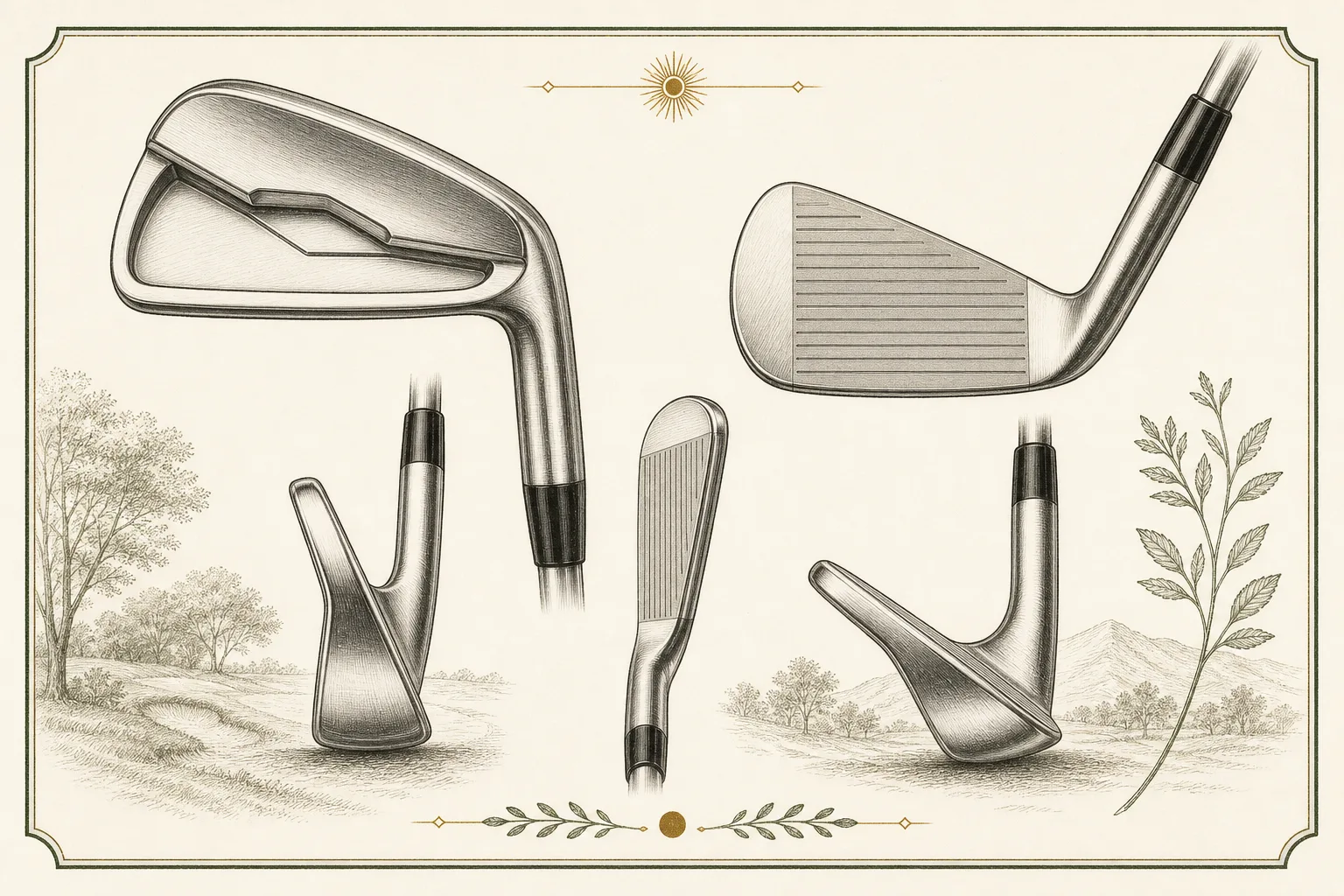
The 2014 Apex MB was Callaway's tour blade under the revived Apex name — a classically shaped, one-piece muscleback aimed squarely at the best ball-strikers. Callaway forged it from soft 1020 carbon steel, which it billed as its softest muscleback to that point, and kept everything thin: thin soles, a thin face, thin toplines, finished in a clean satin chrome consistent with the rest of the Apex family. Progressive CG positioning let the short irons fly a touch lower and more controlled. There is no distance gimmick and no forgiveness aid here — the whole point is feel, feedback and shot-shaping precision. It sat at the sharp end of Callaway's 2014 forged range, above the Apex Pro cavity, for players who want the ball to do exactly what they tell it to.
Notable within the blade niche rather than a broad cult: as Callaway's softest-to-date 1020 forged muscleback it earned real respect from better players and reviewers for feel, but blades are low-volume, demanding tools and this one lacks the tour-legend mythology or scarcity premium of a true cult classic. It is a well-made, well-liked blade — respected by the people who can use it, ignored by everyone else.
For low-single-digit handicaps and better (roughly 0-5) with repeatable, center-face contact and the speed to launch a long-iron blade — precisely the golfer who wants maximum feedback and shot control and accepts the punishment. Reviewers were blunt that these are demanding irons that require precision. Anyone outside that band should not buy them; the Apex Pro or standard Apex is the sane step down.
At launch it competed with the purest blades of 2014 — Titleist 714 MB, Mizuno MP-4/MP-64, TaylorMade Tour Preferred MB and Nike's forged blades — and sat at the top of Callaway's Apex forged trio (above the Apex Pro cavity and the distance-biased Apex). The Apex MB name has continued in later Callaway blade releases (e.g. the 2024 Apex MB). A modern equivalent is the Callaway Apex MB 24 or Titleist 620 MB.
Very low, by design. This is a thin-soled, thin-topline, minimal-offset one-piece muscleback: the sweet spot is small and mis-hits are punished immediately with lost distance and harsh feedback. Progressive CG adds a sliver of playability in the short irons, and 1020 steel softens the feel of a pure strike, but none of that is forgiveness. A 3 (rather than 2) reflects only that it is a modern, slightly refined blade rather than a vintage razor.
Calibrated across the whole catalog — a tour blade scores low here on purpose; it means control, not ease.
A niche, lower-volume blade, so listings are thinner and prices firmer per condition. Realistic 2026 private-party value for a complete set is roughly $200-400 depending on shaft, flex and face/groove wear, with clean Dynamic Gold sets toward the top. Dealer/reconditioned prices run higher but are graded/warrantied. Blades hold value reasonably because supply is limited, but the buyer pool is small.
Reading is one thing — hitting is another. Book a bay and see the numbers for yourself before you buy anywhere.
“A classic forged blade for elite players who want maximum feel and shot control. Rung 4 is rare air: only for a repeatable center strike.”
The 2014 Apex MB was Callaway's tour blade under the revived Apex name — a classically shaped, one-piece muscleback aimed squarely at the best ball-strikers. Callaway forged it from soft 1020 carbon steel, which it billed as its softest muscleback to that point, and kept everything thin: thin soles, a thin face, thin toplines, finished in a clean satin chrome consistent with the rest of the Apex family. Progressive CG positioning let the short irons fly a touch lower and more controlled. There is no distance gimmick and no forgiveness aid here — the whole point is feel, feedback and shot-shaping precision. It sat at the sharp end of Callaway's 2014 forged range, above the Apex Pro cavity, for players who want the ball to do exactly what they tell it to.
Notable within the blade niche rather than a broad cult: as Callaway's softest-to-date 1020 forged muscleback it earned real respect from better players and reviewers for feel, but blades are low-volume, demanding tools and this one lacks the tour-legend mythology or scarcity premium of a true cult classic. It is a well-made, well-liked blade — respected by the people who can use it, ignored by everyone else.
For low-single-digit handicaps and better (roughly 0-5) with repeatable, center-face contact and the speed to launch a long-iron blade — precisely the golfer who wants maximum feedback and shot control and accepts the punishment. Reviewers were blunt that these are demanding irons that require precision. Anyone outside that band should not buy them; the Apex Pro or standard Apex is the sane step down.
At launch it competed with the purest blades of 2014 — Titleist 714 MB, Mizuno MP-4/MP-64, TaylorMade Tour Preferred MB and Nike's forged blades — and sat at the top of Callaway's Apex forged trio (above the Apex Pro cavity and the distance-biased Apex). The Apex MB name has continued in later Callaway blade releases (e.g. the 2024 Apex MB). A modern equivalent is the Callaway Apex MB 24 or Titleist 620 MB.
Very low, by design. This is a thin-soled, thin-topline, minimal-offset one-piece muscleback: the sweet spot is small and mis-hits are punished immediately with lost distance and harsh feedback. Progressive CG adds a sliver of playability in the short irons, and 1020 steel softens the feel of a pure strike, but none of that is forgiveness. A 3 (rather than 2) reflects only that it is a modern, slightly refined blade rather than a vintage razor.
Calibrated across the whole catalog — a tour blade scores low here on purpose; it means control, not ease.
A niche, lower-volume blade, so listings are thinner and prices firmer per condition. Realistic 2026 private-party value for a complete set is roughly $200-400 depending on shaft, flex and face/groove wear, with clean Dynamic Gold sets toward the top. Dealer/reconditioned prices run higher but are graded/warrantied. Blades hold value reasonably because supply is limited, but the buyer pool is small.
Reading is one thing — hitting is another. Book a bay and see the numbers for yourself before you buy anywhere.