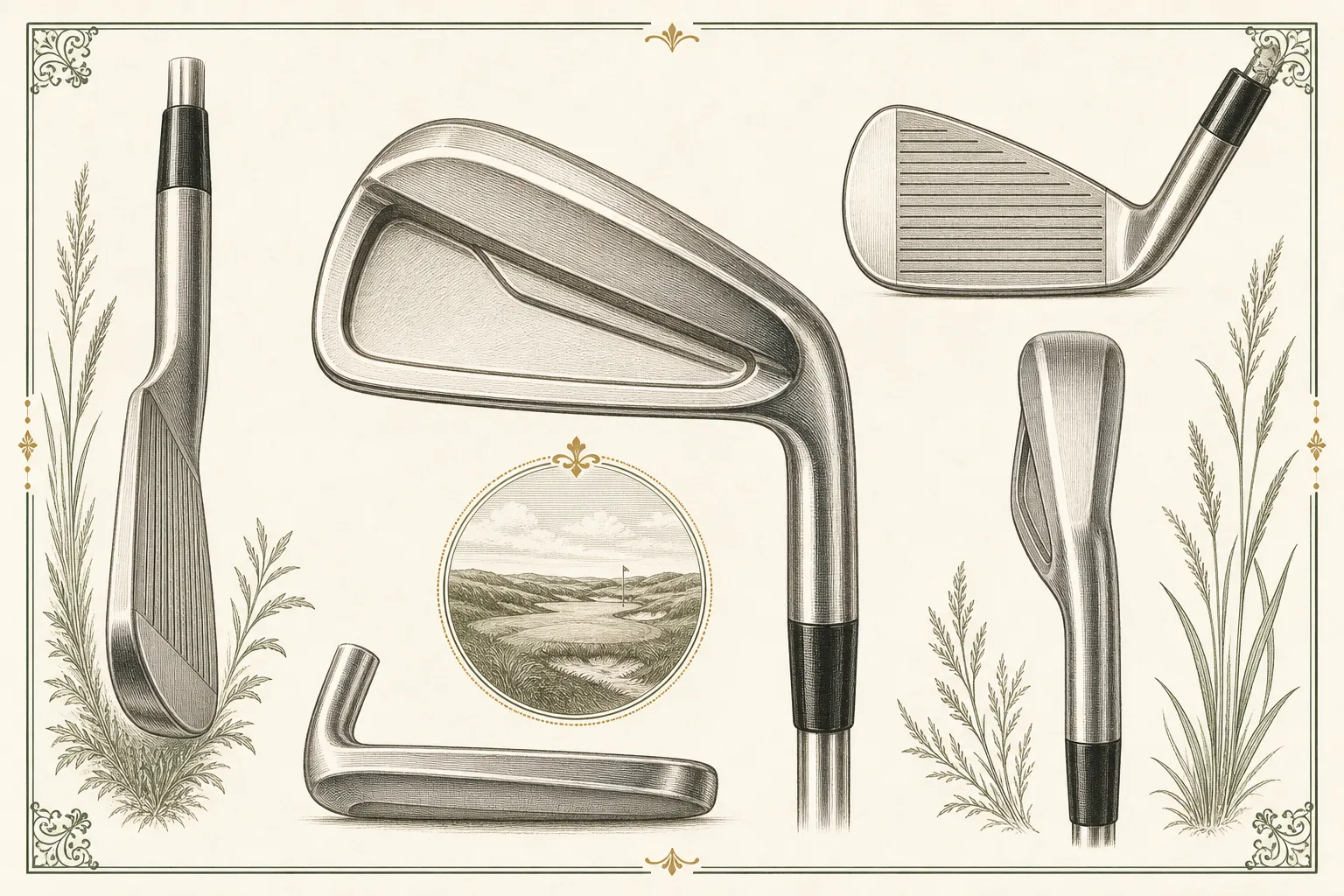
“The classic Hogan Apex is a legend of forged feel and a genuine cult club. Rung-4 blade era; cheap used and beloved, but unforgiving of a wandering strike.”
This early-2000s Apex forged blade sits at the tail of the classic Hogan line, after the celebrated 1999 set and into the Spalding, then Callaway, ownership years. It keeps the forged soft-carbon-steel muscleback DNA and the compact players shape, but this era is where the Apex name began branching toward more playable and game-improvement variants (the 2003 Apex 50 and the 2004 Apex FTX, which mixed a cavity long iron with a blade short iron). The pure-blade version of these years is a legend of forged feel, cheap on the used market and beloved by purists, while being utterly unforgiving of a wandering strike. Its DB lofts (24-28-32 up to 48) run a touch different from the late-90s set, reflecting the line's drift as ownership and design changed hands.
The Apex forged-blade name carries real reverence, but the early-2000s post-independence versions are respected rather than obsessively collected the way the 1970s and 1999 sets are, GolfWRX's greatest-Hogan-irons coverage and Pitchmarks' history center the earlier blades and the branching Apex 50/FTX, not these as the peak. So notable and genuinely liked, a rung below the true cult-classic 1999, and honestly the era where the storied Apex name started to dilute.
For low-handicap, tour-caliber ball-strikers wanting classic forged feel and control from a compact head (DB guidance around 78-90 mph 7-iron in stiff/x-flex). Buyers should confirm which exact variant they are getting, a pure Apex blade of this era versus the more forgiving Apex 50 or the Apex FTX blade/cavity combo, since the name spanned several designs. Mid-to-high handicaps and distance-seekers should look elsewhere entirely.
The transitional early-2000s Apex, made after the original company's sale to Spalding (1997) and into Callaway's later ownership of the mark, competing against Titleist 690/695 forgings, Mizuno MP blades and Wilson Staff. Within the family it follows the 1999 Apex and runs alongside the more game-improvement Apex 50 (2003) and Apex FTX (2004) that show the line broadening. Its modern heir is the revived brand's Fort Worth MB blade.
A forged blade, so still firmly at the unforgiving end, thin sole, minimal offset, small sweet spot, harsh feedback on mishits. It earns a 3 rather than a 2 only because the early-2000s Apex line began nudging weight lower and spawned more playable variants around it (Apex 50/FTX); the true pure blade of these years remains a low-handicap-only instrument that gives feel, not help.
Calibrated across the whole catalog — a tour blade scores low here on purpose; it means control, not ease.
Cheap and plentiful, and unlike the 1999 set it does not command a strong collector premium, its value is functional feel, not scarcity. Realistic 2026 private-party value for a clean complete set is roughly $80-180 depending on the exact variant, shaft and condition; the more coveted pure-blade and matched sets sit at the top, worn or mixed sets below. Reconditioned-retail listings will read higher than a private sale actually clears.
Reading is one thing — hitting is another. Book a bay and see the numbers for yourself before you buy anywhere.