“Refined one-piece forged blade with new 20V grooves for flier control: a pure feel-and-control tool strictly for low-handicap, consistent ball-strikers.”
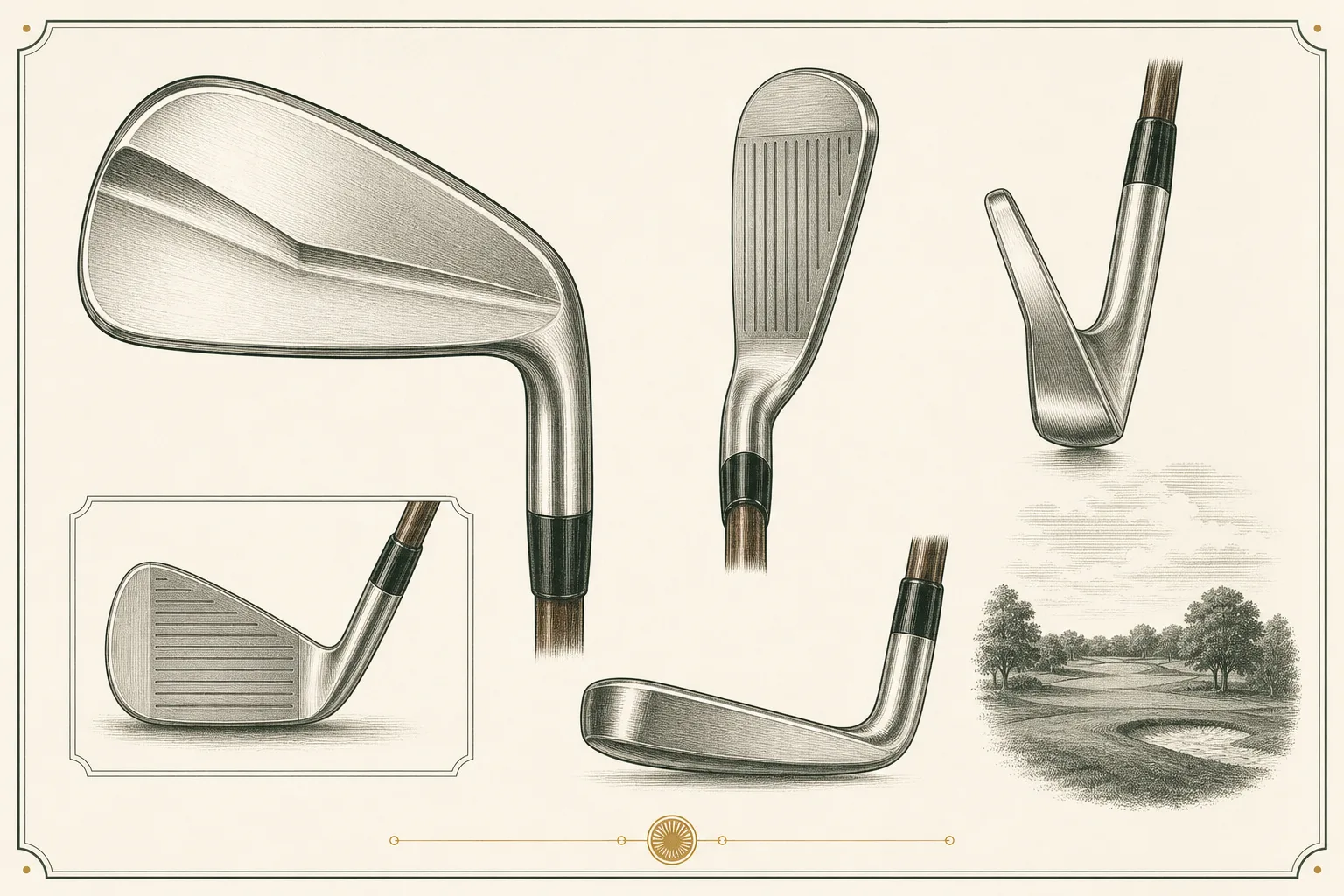
Recreational golfers got their first chance to buy the 2020 Callaway Apex MB in fall 2020, after it had already spent time in Callaway's Tour van. It's a compact, thin-topline muscleback blade with virtually no offset, forged from 1025 carbon steel, built off direct input from Tour players including Phil Mickelson and Henrik Stenson. A weight positioned directly behind the center of the face lets Callaway swing-weight each length without moving the center of gravity. The stock 20V grooves are tuned to hold spin out of the rough. On tour it found a narrower audience than Callaway's cavity-back options: players like Marc Leishman, Erik van Rooyen and Matt Wallace gamed it, while bigger names such as Xander Schauffele and Jon Rahm stuck with cavity-back Apex irons.
A well-reviewed, tour-tested blade with no independent cult narrative of its own -- it sits in the shadow of both the more storied 2018 Apex MB (which enthusiasts specifically call out as a future classic) and the more decorated Apex TCB that followed it. Reviews are positive but describe it in workmanlike terms ('do no harm,' per MyGolfSpy) rather than as an object of pursuit.
Elite ball strikers and tour-level amateurs seeking maximum feedback and shot-shaping, particularly in the shorter irons where mis-hits are less costly. Not a fit for recreational golfers or anyone whose strike isn't centered and repeatable -- a cavity-back Apex or Apex Pro will serve almost everyone else better.
Released into the same 2020-21 window as Titleist's 620 MB and Mizuno's MP-20 MB, the three major blade options for tour-level players at the time. It was superseded within about a year by the Apex MB 21, itself soon followed by the Apex TCB, showing how quickly Callaway iterated its tour-blade line compared to the multi-year gaps typical of Titleist's or Mizuno's blade cycles.
A genuine muscleback blade: thin topline, essentially no offset, and no perimeter weighting beyond the small internal swing-weight mass behind the face. It rewards centered strikes and punishes mis-hits like any blade of this type -- reviews explicitly warn it 'is not going to help your score unless you are a very strong ball striker.'
Calibrated across the whole catalog — a tour blade scores low here on purpose; it means control, not ease.
Retailed around $1,295 in 2020. Realistic 2026 private-party value for a clean steel 3-PW/4-PW set runs roughly $280-$430; reconditioned-retail listings typically price comparable condition $100-$200 higher for warranty and grading.
Reading is one thing — hitting is another. Book a bay and see the numbers for yourself before you buy anywhere.
“Refined one-piece forged blade with new 20V grooves for flier control: a pure feel-and-control tool strictly for low-handicap, consistent ball-strikers.”
Recreational golfers got their first chance to buy the 2020 Callaway Apex MB in fall 2020, after it had already spent time in Callaway's Tour van. It's a compact, thin-topline muscleback blade with virtually no offset, forged from 1025 carbon steel, built off direct input from Tour players including Phil Mickelson and Henrik Stenson. A weight positioned directly behind the center of the face lets Callaway swing-weight each length without moving the center of gravity. The stock 20V grooves are tuned to hold spin out of the rough. On tour it found a narrower audience than Callaway's cavity-back options: players like Marc Leishman, Erik van Rooyen and Matt Wallace gamed it, while bigger names such as Xander Schauffele and Jon Rahm stuck with cavity-back Apex irons.
A well-reviewed, tour-tested blade with no independent cult narrative of its own -- it sits in the shadow of both the more storied 2018 Apex MB (which enthusiasts specifically call out as a future classic) and the more decorated Apex TCB that followed it. Reviews are positive but describe it in workmanlike terms ('do no harm,' per MyGolfSpy) rather than as an object of pursuit.
Elite ball strikers and tour-level amateurs seeking maximum feedback and shot-shaping, particularly in the shorter irons where mis-hits are less costly. Not a fit for recreational golfers or anyone whose strike isn't centered and repeatable -- a cavity-back Apex or Apex Pro will serve almost everyone else better.
Released into the same 2020-21 window as Titleist's 620 MB and Mizuno's MP-20 MB, the three major blade options for tour-level players at the time. It was superseded within about a year by the Apex MB 21, itself soon followed by the Apex TCB, showing how quickly Callaway iterated its tour-blade line compared to the multi-year gaps typical of Titleist's or Mizuno's blade cycles.
A genuine muscleback blade: thin topline, essentially no offset, and no perimeter weighting beyond the small internal swing-weight mass behind the face. It rewards centered strikes and punishes mis-hits like any blade of this type -- reviews explicitly warn it 'is not going to help your score unless you are a very strong ball striker.'
Calibrated across the whole catalog — a tour blade scores low here on purpose; it means control, not ease.
Retailed around $1,295 in 2020. Realistic 2026 private-party value for a clean steel 3-PW/4-PW set runs roughly $280-$430; reconditioned-retail listings typically price comparable condition $100-$200 higher for warranty and grading.
Reading is one thing — hitting is another. Book a bay and see the numbers for yourself before you buy anywhere.