“A rung-4 Endo-forged blade with the classic Bridgestone soft feel that collectors still chase. Holds value for a reason, but it punishes mishits mercilessly. Only for players who strike it dead center.”
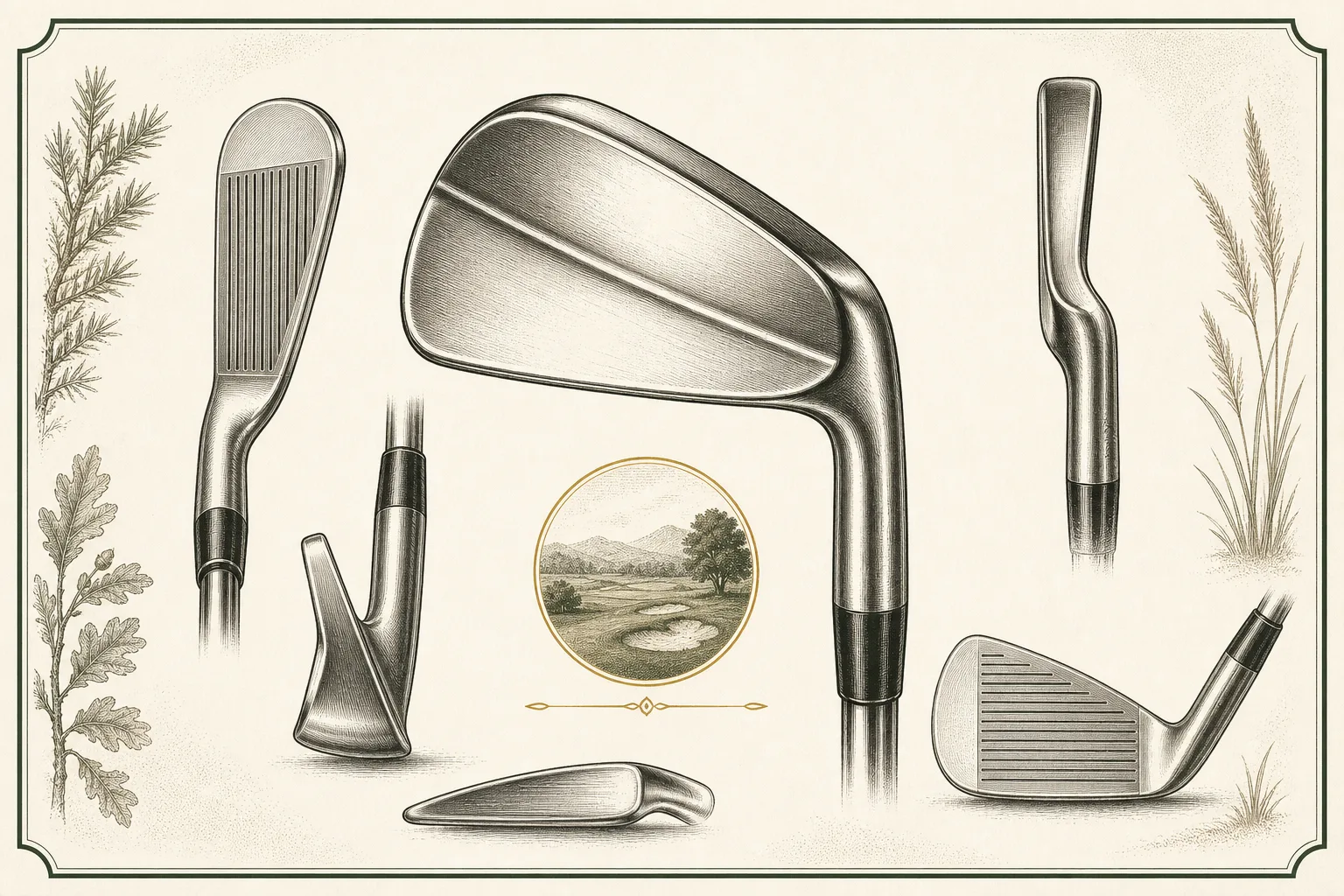
The 2008 J36 Blade was Bridgestone's successor to the J33 and its most tour-validated muscle-back: Stuart Appleby gamed it on the PGA Tour. Endo-forged from 1020 mild carbon steel, it was warm-forged and pressed four times at 1600 tons for a uniform grain structure and the soft-but-crisp feel Endo blades are known for. Where the J33 chased pure blade purity, the J36 added subtle playability: progressive offset through the set, a tapered sole for shotmaking versatility, and trailing-edge relief to perform from varied lies. It anchored a three-model family (Blade, Cavity Back, Pocket Cavity) built for combo sets. A penetrating, flatter trajectory and premium feel made it a favorite of the era's better players, though it punishes mishits like any true blade.
A well-regarded Endo-forged blade with a dedicated but niche following rather than broad cult status. Its credibility rests on real evidence: Stuart Appleby gamed the J36 Blade on the PGA Tour, and Golf Monthly reviewed the full J36 family (Blade, Cavity, Pocket Cavity) favorably for feel. But it never generated the sustained 'still-hunting-these' fervor of a cult iron; it is respected by blade enthusiasts and traded steadily, which is 'notable,' not 'cult classic.' Cult status is deliberately withheld because the independent evidence supports esteem, not obsession.
Low-handicap and better players who flush it and want soft Endo-forged feel with a flatter, more controllable trajectory. The progressive offset makes the long irons marginally more accessible than the J33's, but this is not a mid-handicap iron; a mishitter will lose distance and dispersion immediately.
Released in 2008 as the successor to the J33 line, sold alongside the J36 Cavity Back and J36 Pocket Cavity so players could build a combo set. Its rivals were the Mizuno MP-67/MP-68, Titleist 710 MB and TaylorMade Tour Preferred blades. Bridgestone's blade lineage then ran J38 (2011) and J15 MB (2015) before the modern 220 MB revived the single-piece-forged formula.
A muscle-back blade, so fundamentally unforgiving, but scored a notch above the J33 (2) because the J36 added genuinely playability-minded touches: progressive offset through the set, a tapered sole for shotmaking versatility, and trailing-edge relief to perform from varied lies. These help turf interaction and long-iron launch slightly, but the compact head, thin topline and thin sole still punish off-center strikes hard. Still a rung-4 blade for elite ball-strikers.
Calibrated across the whole catalog — a tour blade scores low here on purpose; it means control, not ease.
Realistic 2026 private-party value for a clean 4-PW blade set is roughly $150-$300, typically with Dynamic Gold shafts; original MSRP was ~$999. Slightly firmer than the J33 because tour provenance (Appleby) and the four-times-pressed Endo forging keep blade collectors interested, but groove wear and the narrow buyer pool cap upside. Reconditioned-retail single-iron listings on 2nd Swing/eBay run higher per club than a full private-party set implies.
Reading is one thing — hitting is another. Book a bay and see the numbers for yourself before you buy anywhere.
“A rung-4 Endo-forged blade with the classic Bridgestone soft feel that collectors still chase. Holds value for a reason, but it punishes mishits mercilessly. Only for players who strike it dead center.”
The 2008 J36 Blade was Bridgestone's successor to the J33 and its most tour-validated muscle-back: Stuart Appleby gamed it on the PGA Tour. Endo-forged from 1020 mild carbon steel, it was warm-forged and pressed four times at 1600 tons for a uniform grain structure and the soft-but-crisp feel Endo blades are known for. Where the J33 chased pure blade purity, the J36 added subtle playability: progressive offset through the set, a tapered sole for shotmaking versatility, and trailing-edge relief to perform from varied lies. It anchored a three-model family (Blade, Cavity Back, Pocket Cavity) built for combo sets. A penetrating, flatter trajectory and premium feel made it a favorite of the era's better players, though it punishes mishits like any true blade.
A well-regarded Endo-forged blade with a dedicated but niche following rather than broad cult status. Its credibility rests on real evidence: Stuart Appleby gamed the J36 Blade on the PGA Tour, and Golf Monthly reviewed the full J36 family (Blade, Cavity, Pocket Cavity) favorably for feel. But it never generated the sustained 'still-hunting-these' fervor of a cult iron; it is respected by blade enthusiasts and traded steadily, which is 'notable,' not 'cult classic.' Cult status is deliberately withheld because the independent evidence supports esteem, not obsession.
Low-handicap and better players who flush it and want soft Endo-forged feel with a flatter, more controllable trajectory. The progressive offset makes the long irons marginally more accessible than the J33's, but this is not a mid-handicap iron; a mishitter will lose distance and dispersion immediately.
Released in 2008 as the successor to the J33 line, sold alongside the J36 Cavity Back and J36 Pocket Cavity so players could build a combo set. Its rivals were the Mizuno MP-67/MP-68, Titleist 710 MB and TaylorMade Tour Preferred blades. Bridgestone's blade lineage then ran J38 (2011) and J15 MB (2015) before the modern 220 MB revived the single-piece-forged formula.
A muscle-back blade, so fundamentally unforgiving, but scored a notch above the J33 (2) because the J36 added genuinely playability-minded touches: progressive offset through the set, a tapered sole for shotmaking versatility, and trailing-edge relief to perform from varied lies. These help turf interaction and long-iron launch slightly, but the compact head, thin topline and thin sole still punish off-center strikes hard. Still a rung-4 blade for elite ball-strikers.
Calibrated across the whole catalog — a tour blade scores low here on purpose; it means control, not ease.
Realistic 2026 private-party value for a clean 4-PW blade set is roughly $150-$300, typically with Dynamic Gold shafts; original MSRP was ~$999. Slightly firmer than the J33 because tour provenance (Appleby) and the four-times-pressed Endo forging keep blade collectors interested, but groove wear and the narrow buyer pool cap upside. Reconditioned-retail single-iron listings on 2nd Swing/eBay run higher per club than a full private-party set implies.
Reading is one thing — hitting is another. Book a bay and see the numbers for yourself before you buy anywhere.