“Tungsten in the heel to lower CG and add a draw bias — a real forgiveness idea, but a member bringing this in is buying nostalgia, not performance.”
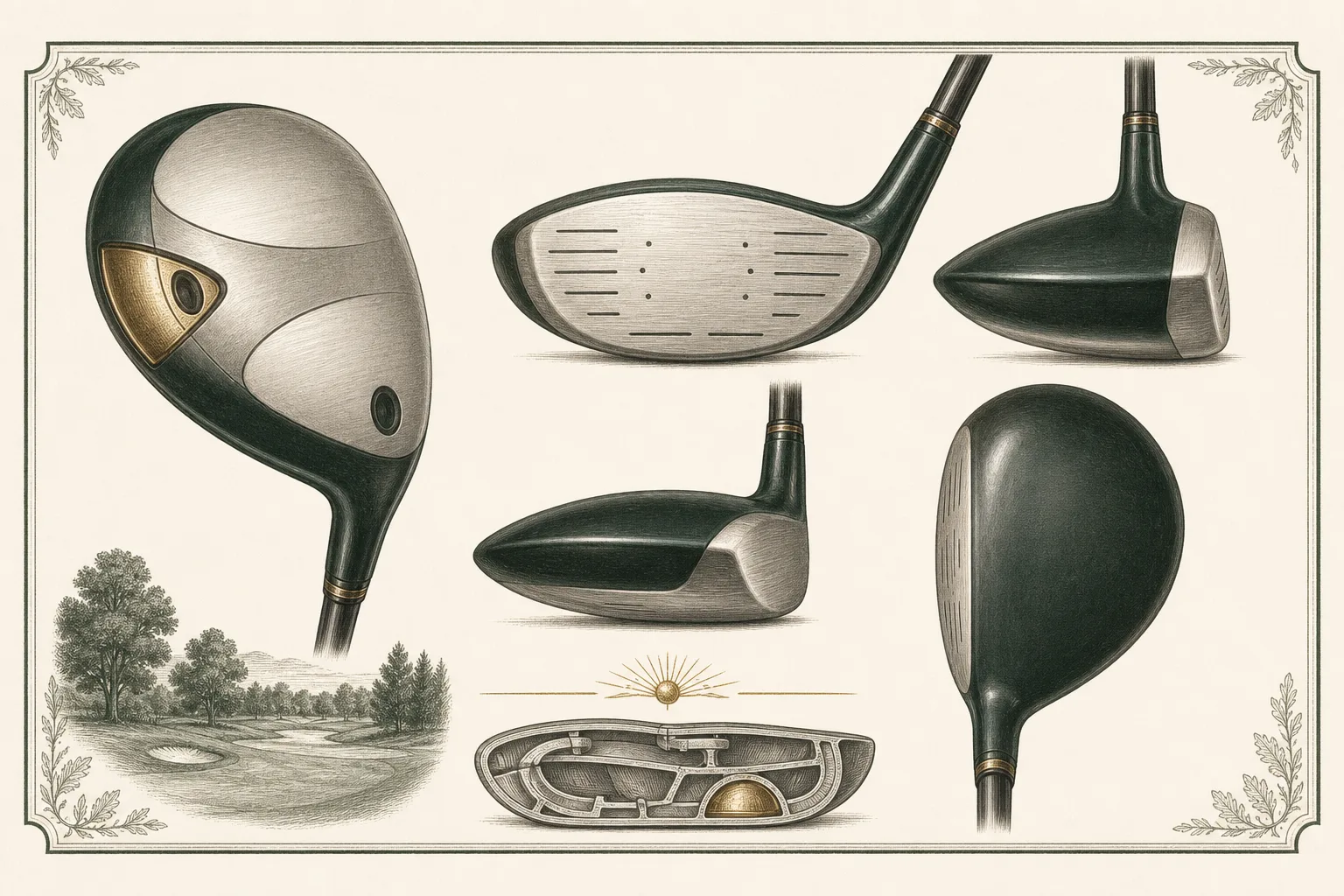
The Hawk Eye fairway wood paired a titanium head with a tungsten 'Gravity screw' set into the sole, using the density difference between the two metals to push the center of gravity unusually low and deep for a 1999 fairway wood. At 250cc and roughly 300 grams, it was light enough to swing fast while the low CG boosted launch and cut backspin for a stronger, higher-carrying trajectory than steel fairway woods of the same period. Callaway sold it across a wide loft spread (13° through 24°) to cover everything from a 2-wood-style tee club down to a long-iron replacement, and it was reported as a strong commercial seller in Callaway's late-1990s metalwood push.
It has no forum revival or price premium today, but the tungsten-in-titanium sole-weighting approach was a genuine, specifically-cited engineering step (distinct from Callaway's earlier steel/titanium fairway woods) and the club is remembered in gear retrospectives as a strong seller of its era rather than a forgettable filler release.
Mid-to-high handicappers and moderate swing speeds needing help getting long clubs airborne — the whole point of the low-CG tungsten design. Better players wanting a lower, more penetrating fairway-wood flight or more workability should look to a smaller-headed, higher-CG design instead; this club is built specifically to launch high and land soft.
Part of Callaway's Big Bertha metalwood lineup between the original titanium Great Big Bertha driver era and the following year's Hawk Eye VFT refresh; it competed with Titleist's 975F and TaylorMade's original Rescue-era fairway woods. Its tungsten-sole low-CG concept is the direct conceptual ancestor of the tungsten-weighted, ultra-low-CG fairway woods every major OEM sells today.
The tungsten sole weight and resulting low, deep CG genuinely aid launch and reduce backspin-related ballooning, and the larger-than-typical 250cc head for the period widens the forgiving zone versus the smaller-headed steel fairway woods it replaced. It predates the truly forgiving cast-titanium and multi-material fairway woods of the 2010s+, so it earns a strong but not maximal score.
Calibrated across the whole catalog — a tour blade scores low here on purpose; it means control, not ease.
As a 25+ year old fairway wood it is now inexpensive commodity stock: reconditioned-retail listings (2nd Swing) show heavily worn examples at just $26–$40 against an original ~$300 MSRP, and realistic private-party prices on eBay/SidelineSwap run similarly low, roughly $20–$40, reflecting age and superseded technology rather than any collectibility.
Reading is one thing — hitting is another. Book a bay and see the numbers for yourself before you buy anywhere.