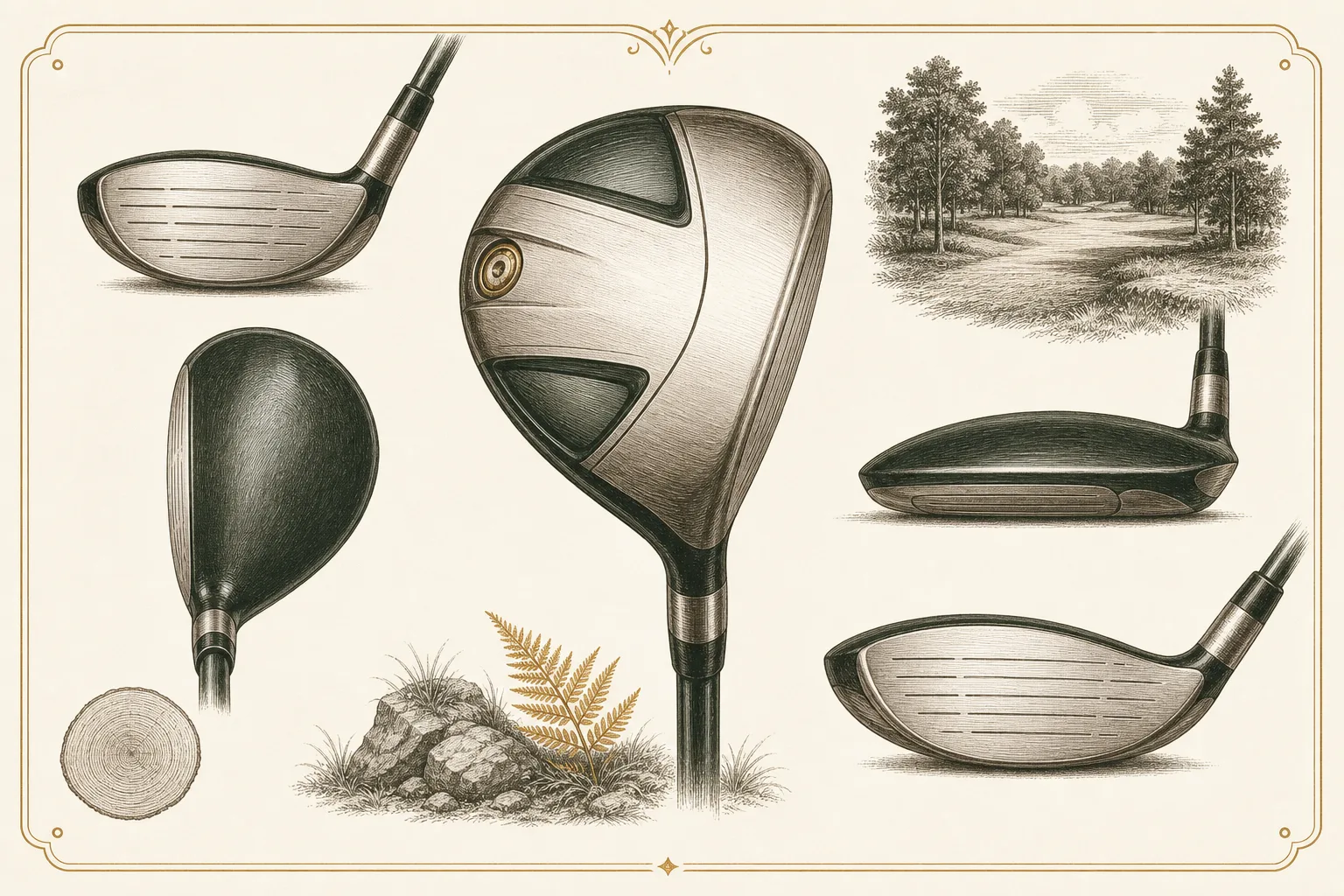
“The HiBore crown carried into the fairways, dropping CG for a high, easy launch off the deck. XL/XLS versions tracked the driver line; a top-of-ladder, easy-up fairway.”
Cleveland took the inverted 'HiBore' crown that made its 2006 driver a genuine talking point and ported the geometry straight into the fairway line the same year. Flipping the crown down and in let engineers build a head that looks smaller at address than rival fairways while still carrying a face area roughly 10% larger than conventional woods, with 57 grams of freed-up weight pushed to the rear/perimeter for a low, deep CG. It was never the star of the HiBore family the way the driver was, but it did the same job off the deck: get a mid-to-high handicapper's long shots up in the air fast. XL and XLS fairway variants followed the driver naming ladder as the line evolved into 2008-09.
Rides the coattails of the original HiBore driver's genuinely industry-influencing inverted-crown design, and reviewers (golfreview.com users rate it 4.1/5 across 15 reviews) liked it, but the fairway wood itself never generated forum chase or resale premium — it is remembered as 'the fairway that matched the famous driver,' not as a standout object in its own right.
Mid-to-high handicappers who struggle to get fairway woods airborne from the turf. The polarizing 'satellite dish' look at address (reviewers were split on it) means better ball-strikers who dislike a scooped-back profile should look at a more conventional shallow-faced fairway instead.
Launched alongside the original HiBore driver into a mid-2000s market where TaylorMade's Burner and Callaway's Big Bertha/Fusion fairways were the mainstream competition; Cleveland's angle was the inverted-crown story rather than raw COR. It sat at the top of Cleveland's own fairway ladder before being folded into the XL/XLS naming as the driver line iterated through 2008-09. A modern equivalent is any current max-forgiveness GI fairway (e.g. Callaway Rogue ST Max), which achieves a similar low/deep CG with far more advanced multi-material construction.
The inverted crown does real work here: dropping the CG lower and deeper than a conventional fairway wood of its era makes off-the-deck strikes launch higher and hold line better on thin or slightly fat contact. Not a max-forgiveness modern GI fairway, but well above average for 2006-09 — the whole design brief was forgiveness, not shot-shaping.
Calibrated across the whole catalog — a tour blade scores low here on purpose; it means control, not ease.
A 20-year-old commodity fairway wood: realistic 2026 private-party prices run roughly $20-45 for a clean head/shaft combo on eBay or SidelineSwap-type marketplaces, with reconditioned-retail listings (2nd Swing, Golf Avenue) sitting somewhat higher for graded/warrantied examples. It is bought as a cheap, easy-launch loft option, not collected.
Reading is one thing — hitting is another. Book a bay and see the numbers for yourself before you buy anywhere.