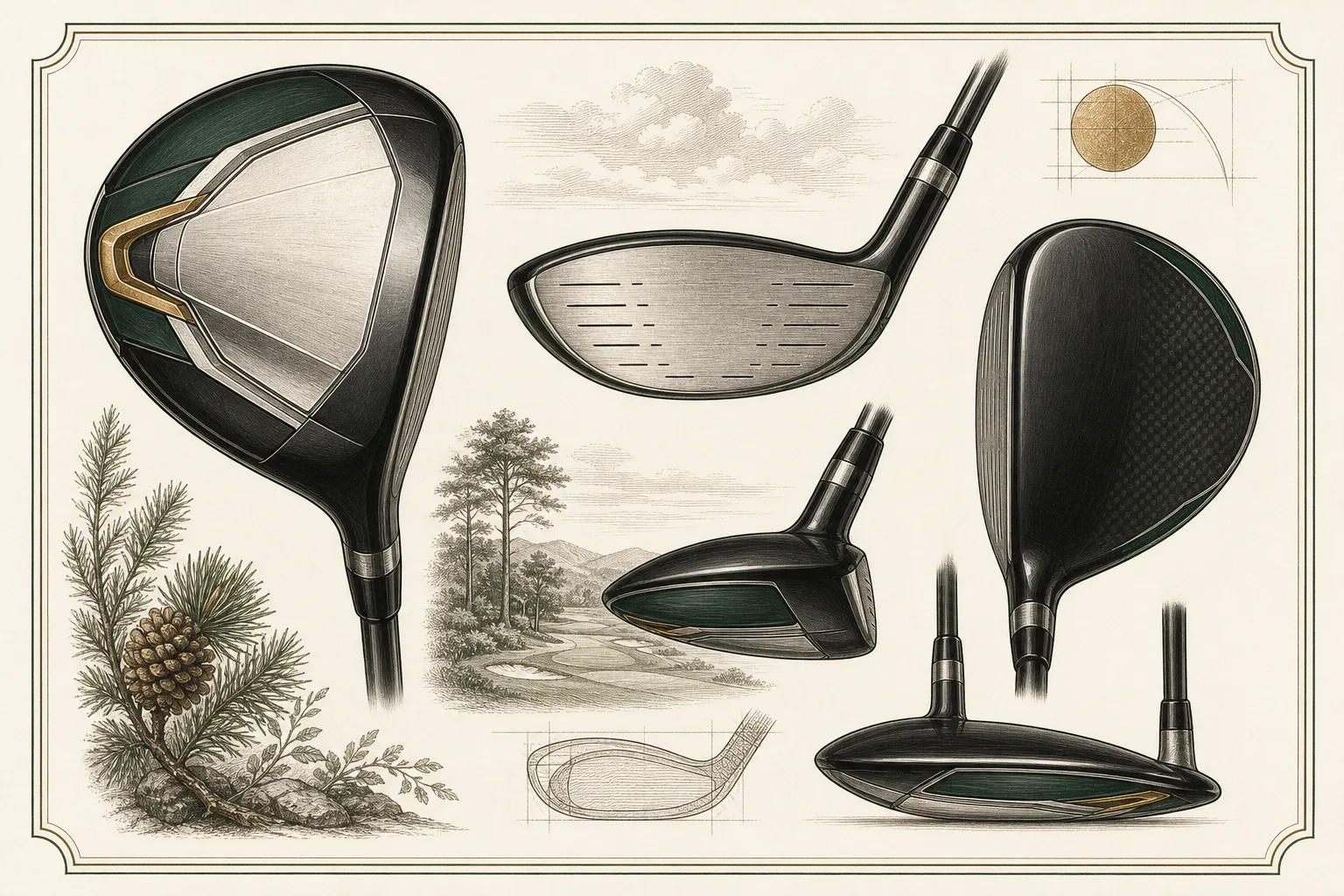
“Callaway's first real adjustable-hosel fairway (OptiFit: open/square/closed) — a narrow two-loft lineup, so a member wanting a 7- or 9-wood equivalent has to look elsewhere in the family.”
The RAZR Fit fairway wood brought Callaway's first real adjustable-hosel system, OptiFit, to the fairway category in 2012, riding alongside the RAZR Fit driver's launch. OptiFit lets the head rotate to open, square, or closed face-angle settings (three positions, a simpler approach than rival multi-position hosels of the day) to correct a player's typical ball-flight bias. It kept Callaway's existing Variable Face Thickness (VFT) technology, precision-shaping the face wall to enlarge the effective sweet spot, in an all-stainless-steel head offered in just two lofts, a 15-degree 3-wood and an 18-degree 5-wood. Reviewers found it a genuinely solid, forgiving performer that held distance well on off-center strikes, without a headline technology story to match the driver it launched beside.
A competent, well-reviewed fairway wood with no lasting reputation of its own: it borrowed its two headline features (VFT and OptiFit) from other 2012 Callaway products, was sold in volume as part of a mainstream annual release, and was superseded within a year or two by the RAZR Fit Xtreme fairway. No scarcity, no tour-win story tied specifically to the fairway (unlike its driver sibling), and no forum-hunted afterlife.
Mid-to-low handicappers who want a workable, adjustable fairway wood that still forgives a mis-hit; the OptiFit face-angle adjustment is useful for a player who consistently fights a fade or draw off the deck. It is dated technology by current standards, so a golfer chasing today's ball speeds should look at a modern fairway wood instead — this one is best suited to nostalgia, a beater bag, or a tight budget.
Launched in 2012 alongside the RAZR Fit driver as Callaway's entry into hosel-adjustable fairway woods, competing with TaylorMade's RocketBallz and Titleist's 910F of the same period. Callaway replaced it with the RAZR Fit Xtreme fairway the following year, continuing its typical one-to-two-year refresh cadence.
Genuinely forgiving for its era: VFT was specifically engineered to widen the sweet spot and hold ball speed on mis-hits, and period reviews praised how little off-center strikes cost in distance or direction. It is not a max-forgiveness design by 2020s standards, but for a 2012 better-player-leaning fairway wood it performed well outside the center of the face.
Calibrated across the whole catalog — a tour blade scores low here on purpose; it means control, not ease.
A 2012 fairway wood with no collectible interest: realistic private-party value in 2026 is roughly $25-$50 for a complete head-and-shaft in playable condition (original MSRP $250), often bundled into job-lot used-club sales rather than sold individually.
Reading is one thing — hitting is another. Book a bay and see the numbers for yourself before you buy anywhere.
“Callaway's first real adjustable-hosel fairway (OptiFit: open/square/closed) — a narrow two-loft lineup, so a member wanting a 7- or 9-wood equivalent has to look elsewhere in the family.”
The RAZR Fit fairway wood brought Callaway's first real adjustable-hosel system, OptiFit, to the fairway category in 2012, riding alongside the RAZR Fit driver's launch. OptiFit lets the head rotate to open, square, or closed face-angle settings (three positions, a simpler approach than rival multi-position hosels of the day) to correct a player's typical ball-flight bias. It kept Callaway's existing Variable Face Thickness (VFT) technology, precision-shaping the face wall to enlarge the effective sweet spot, in an all-stainless-steel head offered in just two lofts, a 15-degree 3-wood and an 18-degree 5-wood. Reviewers found it a genuinely solid, forgiving performer that held distance well on off-center strikes, without a headline technology story to match the driver it launched beside.
A competent, well-reviewed fairway wood with no lasting reputation of its own: it borrowed its two headline features (VFT and OptiFit) from other 2012 Callaway products, was sold in volume as part of a mainstream annual release, and was superseded within a year or two by the RAZR Fit Xtreme fairway. No scarcity, no tour-win story tied specifically to the fairway (unlike its driver sibling), and no forum-hunted afterlife.
Mid-to-low handicappers who want a workable, adjustable fairway wood that still forgives a mis-hit; the OptiFit face-angle adjustment is useful for a player who consistently fights a fade or draw off the deck. It is dated technology by current standards, so a golfer chasing today's ball speeds should look at a modern fairway wood instead — this one is best suited to nostalgia, a beater bag, or a tight budget.
Launched in 2012 alongside the RAZR Fit driver as Callaway's entry into hosel-adjustable fairway woods, competing with TaylorMade's RocketBallz and Titleist's 910F of the same period. Callaway replaced it with the RAZR Fit Xtreme fairway the following year, continuing its typical one-to-two-year refresh cadence.
Genuinely forgiving for its era: VFT was specifically engineered to widen the sweet spot and hold ball speed on mis-hits, and period reviews praised how little off-center strikes cost in distance or direction. It is not a max-forgiveness design by 2020s standards, but for a 2012 better-player-leaning fairway wood it performed well outside the center of the face.
Calibrated across the whole catalog — a tour blade scores low here on purpose; it means control, not ease.
A 2012 fairway wood with no collectible interest: realistic private-party value in 2026 is roughly $25-$50 for a complete head-and-shaft in playable condition (original MSRP $250), often bundled into job-lot used-club sales rather than sold individually.
Reading is one thing — hitting is another. Book a bay and see the numbers for yourself before you buy anywhere.