“A standard, versatile fairway wood - rung-2 neutral flight for a repeating swing and a solid gap-filler between driver and irons. Old but honest; buy on price, not hype.”
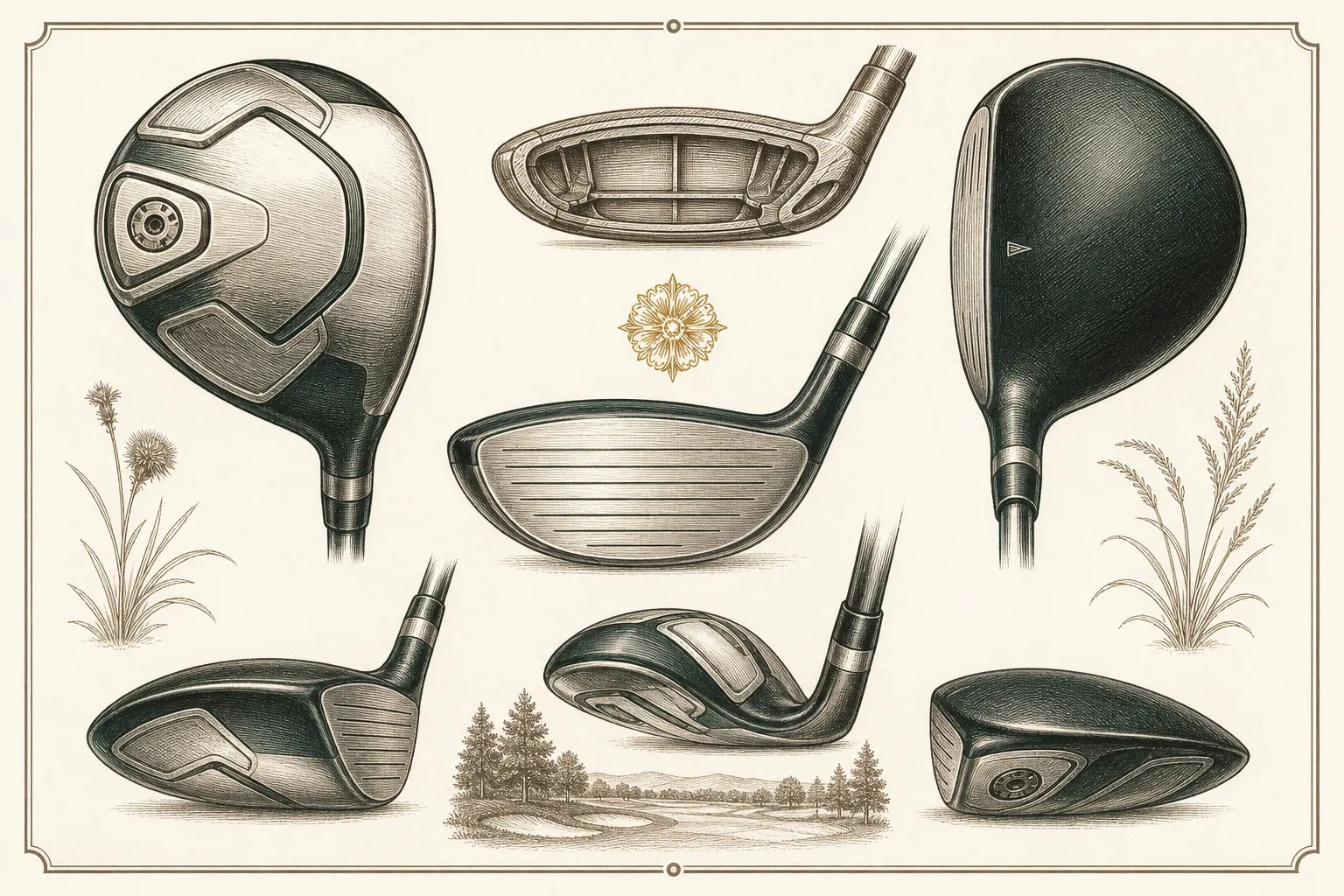
Ping's 2011 G-series fairway wood grew the head from the G15's 154cc to 165cc, added more 'swoop' to the crown profile, and dropped the standard loft a half-degree from 15.5° to 15° while lowering face height for a shallower look at address. An external weight port sits low and back in the head to launch the ball high without piling on spin, and reviewers consistently flagged how easy it launched off tight or thin lies thanks to that shallow face and deep weighting. It shipped with Ping's TFC 169F, a livelier, softer-tipped update of the TFC shaft family built specifically for the G20.
A well-liked, unremarkable gap-filler — GolfWRX and Golf Monthly both reviewed it favorably at launch, and it is still cited in forgiveness comparisons a decade later, but there is no scarcity, no tour legend, and no forum cult attached to it. It did its job as Ping's mid-cycle fairway wood and was replaced on schedule.
Mid-to-high handicappers who struggle to get fairway woods airborne, especially off imperfect lies — the shallow face and deep CG are built exactly for that problem. A better ball-striker who wants a more compact, workable fairway wood shape will find this one clubby-looking and hard to shape shots with.
Part of the same 2011 G20 family as the companion iron set and hybrid, competing against TaylorMade's RocketBallz and Callaway's RAZR fairway woods of the period. Superseded within the G-line first by the G25 Fairway (2013) and then decisively by the Turbulator-crowned G30 Fairway (2014), which added a more aggressive aerodynamic and forgiveness pitch.
Ping catalogued the G20 fairway as a 'standard/versatile' rung rather than its max-forgiveness slot, and that shows: it launches easily and forgives thin strikes well thanks to the shallow face and low-back weighting, but it lacks the more aggressive perimeter/draw-bias engineering Ping later built into the max-forgiveness G30-era woods.
Calibrated across the whole catalog — a tour blade scores low here on purpose; it means control, not ease.
Realistic 2026 private-party price for a clean example is roughly $40–$80; it is a 15-year-old fairway wood with no collector premium, sold mainly as an affordable, easy-hitting option for the bag. Reconditioned-retail listings (2nd Swing, Golfbidder) can run somewhat higher due to grading and warranty.
Reading is one thing — hitting is another. Book a bay and see the numbers for yourself before you buy anywhere.
“A standard, versatile fairway wood - rung-2 neutral flight for a repeating swing and a solid gap-filler between driver and irons. Old but honest; buy on price, not hype.”
Ping's 2011 G-series fairway wood grew the head from the G15's 154cc to 165cc, added more 'swoop' to the crown profile, and dropped the standard loft a half-degree from 15.5° to 15° while lowering face height for a shallower look at address. An external weight port sits low and back in the head to launch the ball high without piling on spin, and reviewers consistently flagged how easy it launched off tight or thin lies thanks to that shallow face and deep weighting. It shipped with Ping's TFC 169F, a livelier, softer-tipped update of the TFC shaft family built specifically for the G20.
A well-liked, unremarkable gap-filler — GolfWRX and Golf Monthly both reviewed it favorably at launch, and it is still cited in forgiveness comparisons a decade later, but there is no scarcity, no tour legend, and no forum cult attached to it. It did its job as Ping's mid-cycle fairway wood and was replaced on schedule.
Mid-to-high handicappers who struggle to get fairway woods airborne, especially off imperfect lies — the shallow face and deep CG are built exactly for that problem. A better ball-striker who wants a more compact, workable fairway wood shape will find this one clubby-looking and hard to shape shots with.
Part of the same 2011 G20 family as the companion iron set and hybrid, competing against TaylorMade's RocketBallz and Callaway's RAZR fairway woods of the period. Superseded within the G-line first by the G25 Fairway (2013) and then decisively by the Turbulator-crowned G30 Fairway (2014), which added a more aggressive aerodynamic and forgiveness pitch.
Ping catalogued the G20 fairway as a 'standard/versatile' rung rather than its max-forgiveness slot, and that shows: it launches easily and forgives thin strikes well thanks to the shallow face and low-back weighting, but it lacks the more aggressive perimeter/draw-bias engineering Ping later built into the max-forgiveness G30-era woods.
Calibrated across the whole catalog — a tour blade scores low here on purpose; it means control, not ease.
Realistic 2026 private-party price for a clean example is roughly $40–$80; it is a 15-year-old fairway wood with no collector premium, sold mainly as an affordable, easy-hitting option for the bag. Reconditioned-retail listings (2nd Swing, Golfbidder) can run somewhat higher due to grading and warranty.
Reading is one thing — hitting is another. Book a bay and see the numbers for yourself before you buy anywhere.