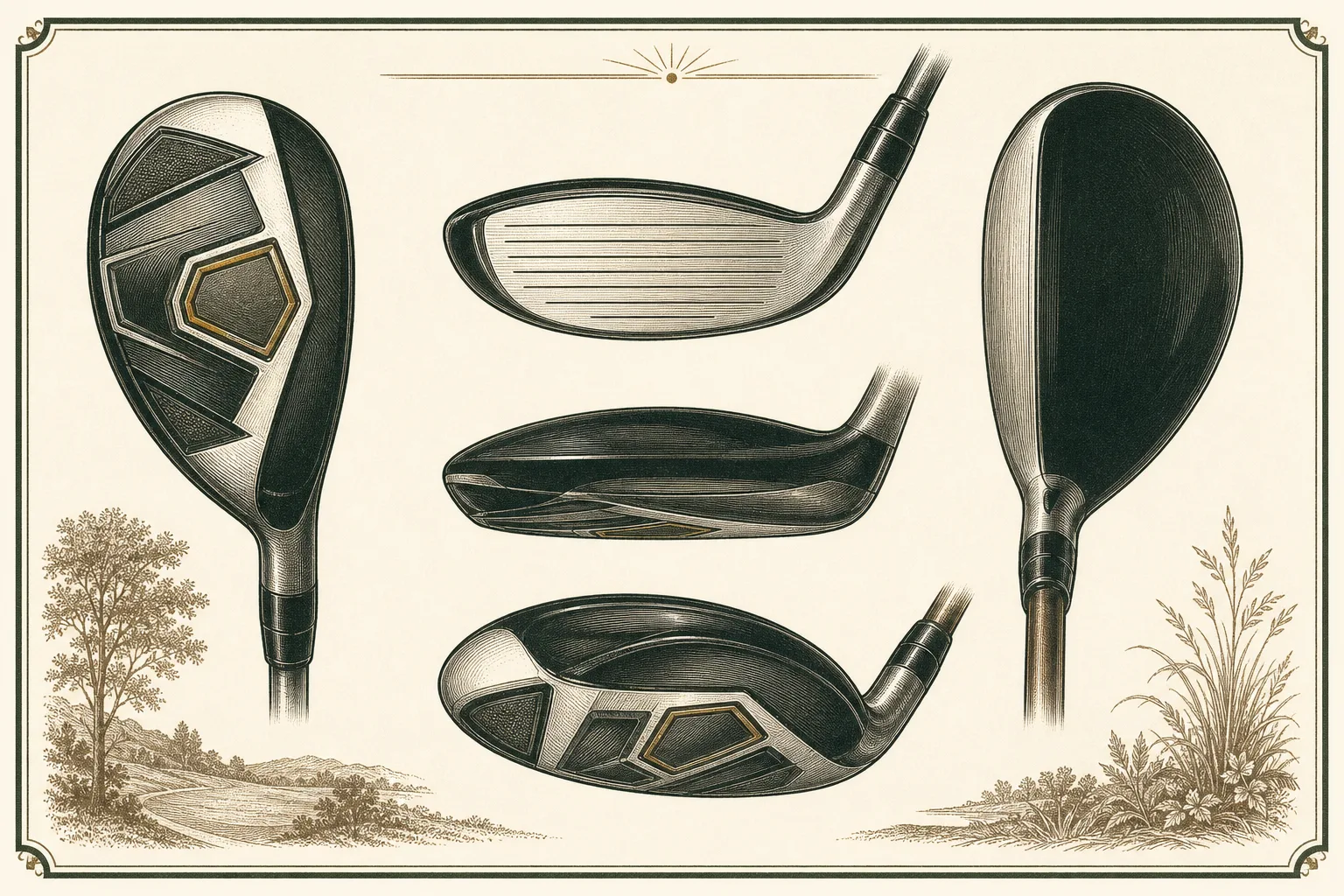
“Smaller, lower-spin, more workable hybrid for the better ballstriker. A standard/player's option; fit to strike quality.”
Released in the same 2013 launch as the standard X Hot Hybrid, the X Hot Pro shrank the head, trimmed offset, and shortened the shaft by 0.75 inches to give better players a hybrid they could shape shots with rather than a pure distance-and-forgiveness tool. It shared the standard model's 15%-thinner precipitation-hardened face and reworked Warbird sole, and Callaway added an extra 16-degree loft option to the Pro range that the standard X Hot did not offer, while its 20- and 23-degree heads were built 1 degree stronger than the prior year's equivalents.
A well-reviewed but ordinary better-player's hybrid within a single product cycle; it did not build a lasting following and was retired when Callaway moved to the X2 Hot line in 2014. National Club Golfer called it easy to hit 'even though it says Pro on it,' which is a compliment on approachability, not a cult-status marker.
Aimed at low-to-mid handicappers who want a compact, workable hybrid with less offset than a game-improvement model; a high-handicapper chasing maximum forgiveness should take the standard X Hot Hybrid instead.
Competed against players'-style hybrids like Titleist's 913H and TaylorMade's RocketBallz Tour; sat above the standard X Hot in Callaway's 2013 hybrid lineup and was replaced by the X2 Hot Pro Hybrid in 2014.
More forgiving than a true players hybrid thanks to the shared thin-face technology, but the smaller head and reduced offset versus the standard X Hot trade away some off-center stability in exchange for shot-shaping control — testers still called it among the most reliably accurate hybrids in the test on both good and mediocre strikes.
Calibrated across the whole catalog — a tour blade scores low here on purpose; it means control, not ease.
Realistic private-party value sits around $30-50; it trades at a discount to the more common standard X Hot Hybrid because Pro-spec (shorter, smaller-head) configurations are a thinner slice of used-market supply.
Reading is one thing — hitting is another. Book a bay and see the numbers for yourself before you buy anywhere.
“Smaller, lower-spin, more workable hybrid for the better ballstriker. A standard/player's option; fit to strike quality.”
Released in the same 2013 launch as the standard X Hot Hybrid, the X Hot Pro shrank the head, trimmed offset, and shortened the shaft by 0.75 inches to give better players a hybrid they could shape shots with rather than a pure distance-and-forgiveness tool. It shared the standard model's 15%-thinner precipitation-hardened face and reworked Warbird sole, and Callaway added an extra 16-degree loft option to the Pro range that the standard X Hot did not offer, while its 20- and 23-degree heads were built 1 degree stronger than the prior year's equivalents.
A well-reviewed but ordinary better-player's hybrid within a single product cycle; it did not build a lasting following and was retired when Callaway moved to the X2 Hot line in 2014. National Club Golfer called it easy to hit 'even though it says Pro on it,' which is a compliment on approachability, not a cult-status marker.
Aimed at low-to-mid handicappers who want a compact, workable hybrid with less offset than a game-improvement model; a high-handicapper chasing maximum forgiveness should take the standard X Hot Hybrid instead.
Competed against players'-style hybrids like Titleist's 913H and TaylorMade's RocketBallz Tour; sat above the standard X Hot in Callaway's 2013 hybrid lineup and was replaced by the X2 Hot Pro Hybrid in 2014.
More forgiving than a true players hybrid thanks to the shared thin-face technology, but the smaller head and reduced offset versus the standard X Hot trade away some off-center stability in exchange for shot-shaping control — testers still called it among the most reliably accurate hybrids in the test on both good and mediocre strikes.
Calibrated across the whole catalog — a tour blade scores low here on purpose; it means control, not ease.
Realistic private-party value sits around $30-50; it trades at a discount to the more common standard X Hot Hybrid because Pro-spec (shorter, smaller-head) configurations are a thinner slice of used-market supply.
Reading is one thing — hitting is another. Book a bay and see the numbers for yourself before you buy anywhere.