“A shallow, easy-launch fairway from the S9 era. Still a fine rung-1 option for slower swings who value getting it airborne.”
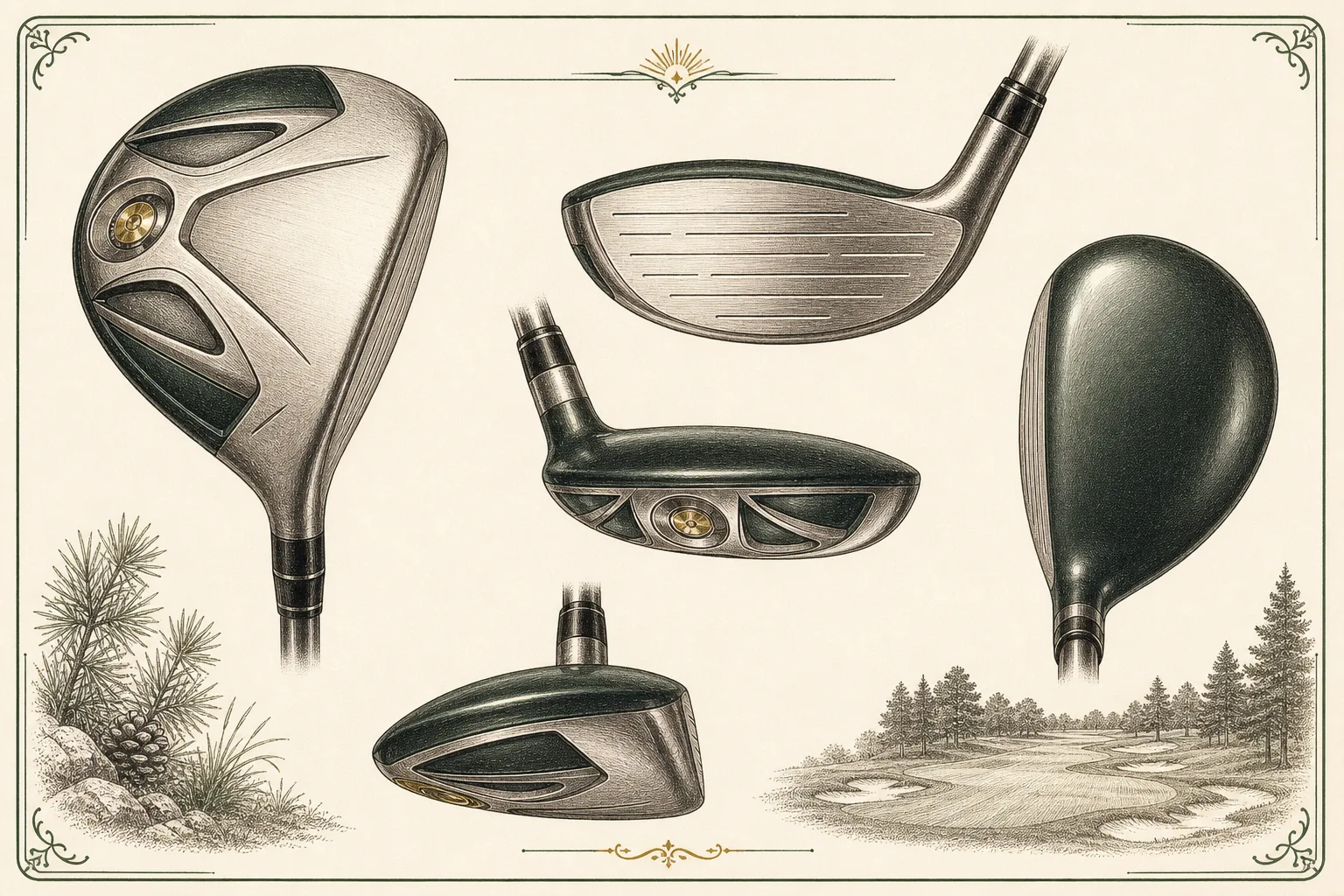
Cobra's mid-2000s S9-1 fairway wood family (the roster's 'S9' matches this line's specs exactly — see flags) used 'Hotter 9 Point Face Technology' with a Dual Rhombus face insert to widen the effective sweet spot and push ball speed across more of the face than Cobra's prior fairway designs. It came in multiple builds — a standard oversize head, an offset 'M' version aimed at higher-handicap and senior golfers who needed slice correction, and a low-spin 'Pro' version for accomplished ball-strikers wanting shot-shaping control — reflecting Cobra's mid-2000s strategy of splitting one platform across skill levels rather than building bespoke heads for each.
No lawsuit, tour legend, or forum reverence attaches to it — it was a competent, forgettable mid-2000s game-improvement fairway sold in volume and long since superseded by Cobra's SZ, F9, and Speedzone lines. It shows up today only as a cheap, plentiful used club, which is the honest verdict for a mainstream product on a normal refresh cycle.
The standard and 'M' offset heads suit mid-to-high handicappers and seniors wanting an easy-launching, slice-resistant fairway wood at low cost today; the Pro head suits a lower-handicap player who still wants a bargain-bin price. Nobody chasing modern ball speed or adjustability should buy this as a primary club — a current sub-$250 fairway wood will out-perform it by a real margin.
Competed against TaylorMade's Burner/RAC and Callaway's Big Bertha/X-series fairway woods of the mid-to-late 2000s and sat in Cobra's line alongside the SZ series before Cobra moved to the Baffler and later ZL/Fly-Z fairway platforms. A modern equivalent within Cobra's current range is the Darkspeed or Aerojet fairway, which deliver far more ball speed from a similarly forgiving, offset-friendly shape.
The 9 Point Face and Dual Rhombus insert were built to keep ball speed up on hits away from center, and the offset 'M' head adds extra heel weighting and a squared face to fight a slice — genuinely forgiving for its era. The 'Pro' variant trades some of that forgiveness for a smaller, lower-spin shape aimed at better players, so the family spans from quite forgiving (M/standard) to moderately so (Pro).
Calibrated across the whole catalog — a tour blade scores low here on purpose; it means control, not ease.
As a roughly 20-year-old mainstream game-improvement fairway wood, realistic private-party prices in 2026 sit in the $25–$60 range for a clean example with a graphite shaft — consistent with comparable-era Cobra/Callaway/TaylorMade fairways of the same vintage on eBay and 2nd Swing. It holds no collector value; price is driven entirely by condition and shaft.
Reading is one thing — hitting is another. Book a bay and see the numbers for yourself before you buy anywhere.
“A shallow, easy-launch fairway from the S9 era. Still a fine rung-1 option for slower swings who value getting it airborne.”
Cobra's mid-2000s S9-1 fairway wood family (the roster's 'S9' matches this line's specs exactly — see flags) used 'Hotter 9 Point Face Technology' with a Dual Rhombus face insert to widen the effective sweet spot and push ball speed across more of the face than Cobra's prior fairway designs. It came in multiple builds — a standard oversize head, an offset 'M' version aimed at higher-handicap and senior golfers who needed slice correction, and a low-spin 'Pro' version for accomplished ball-strikers wanting shot-shaping control — reflecting Cobra's mid-2000s strategy of splitting one platform across skill levels rather than building bespoke heads for each.
No lawsuit, tour legend, or forum reverence attaches to it — it was a competent, forgettable mid-2000s game-improvement fairway sold in volume and long since superseded by Cobra's SZ, F9, and Speedzone lines. It shows up today only as a cheap, plentiful used club, which is the honest verdict for a mainstream product on a normal refresh cycle.
The standard and 'M' offset heads suit mid-to-high handicappers and seniors wanting an easy-launching, slice-resistant fairway wood at low cost today; the Pro head suits a lower-handicap player who still wants a bargain-bin price. Nobody chasing modern ball speed or adjustability should buy this as a primary club — a current sub-$250 fairway wood will out-perform it by a real margin.
Competed against TaylorMade's Burner/RAC and Callaway's Big Bertha/X-series fairway woods of the mid-to-late 2000s and sat in Cobra's line alongside the SZ series before Cobra moved to the Baffler and later ZL/Fly-Z fairway platforms. A modern equivalent within Cobra's current range is the Darkspeed or Aerojet fairway, which deliver far more ball speed from a similarly forgiving, offset-friendly shape.
The 9 Point Face and Dual Rhombus insert were built to keep ball speed up on hits away from center, and the offset 'M' head adds extra heel weighting and a squared face to fight a slice — genuinely forgiving for its era. The 'Pro' variant trades some of that forgiveness for a smaller, lower-spin shape aimed at better players, so the family spans from quite forgiving (M/standard) to moderately so (Pro).
Calibrated across the whole catalog — a tour blade scores low here on purpose; it means control, not ease.
As a roughly 20-year-old mainstream game-improvement fairway wood, realistic private-party prices in 2026 sit in the $25–$60 range for a clean example with a graphite shaft — consistent with comparable-era Cobra/Callaway/TaylorMade fairways of the same vintage on eBay and 2nd Swing. It holds no collector value; price is driven entirely by condition and shaft.
Reading is one thing — hitting is another. Book a bay and see the numbers for yourself before you buy anywhere.