“The club that put Adams on the map. As a standard fairway rung it is all about the low upside-down head getting the ball airborne off tight turf. Collectible nostalgia, but modern fairways outperform it.”
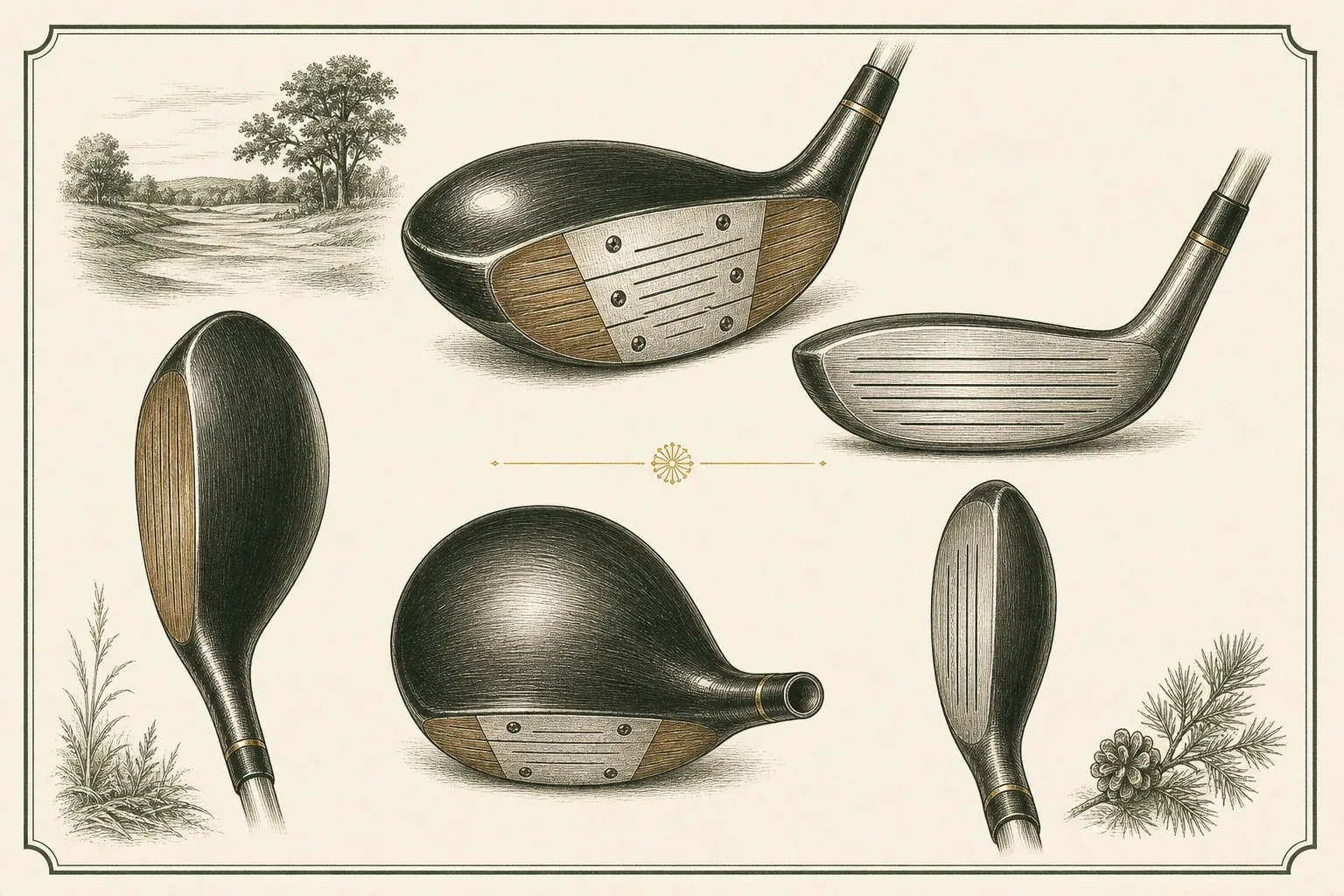
The club that built a company. Barney Adams, running a struggling contract-clubmaking shop, sketched the Tight Lies on a yellow legal pad from notes he'd taken fitting golfers who couldn't get a conventional fairway wood airborne from tight or bare lies. His fix was the 'Tri-Level' upside-down sole: a shallow, trapezoidal head wider at the sole than the crown, which drops the center of gravity low and forward and cuts turf drag so the ball launches high from lies where a deep-faced 3-wood would skid or dig. Adams couldn't get shelf space, so he sold it directly through a 1996 Golf Channel infomercial featuring Hank Haney and broadcaster Jack Whitaker. It exploded: Adams Golf did over $30 million in 1997 and IPO'd in 1998. The Tight Lies didn't just sell, it made the shallow-face, high-launch fairway wood a mainstream category.
Multiple independent sources credit the Tight Lies as the product that created Adams Golf and popularized the shallow-face/low-CG fairway wood: PGA Tour's equipment desk, Golf Digest, and Global Golf Post all recount the yellow-legal-pad origin and the infomercial-to-IPO arc, and Barney Adams is in the Texas Golf Hall of Fame largely on its strength. By 1998 there were reportedly close to a million in play and it was among the most-used woods on the senior tour. Its cultural and commercial footprint is documented across mainstream golf media, not just forums.
Built for mid-to-high handicaps, seniors, and anyone with moderate swing speed who struggles to launch a 3- or 5-wood off the deck. Original lofts of 16 / 19 / 22 degrees play like a strong 3-wood through 7-wood and are ideal as high-launching long-approach or par-5 layup clubs. A fast-swinging better player wanting a penetrating, workable flight or maximum distance should look at a modern low-spin wood instead.
Launched 1996 into a market where fairway woods still mostly meant deep-faced persimmon-descended metalwoods that punished tight lies. It sat opposite conventional TaylorMade and Callaway steel 3/5-woods and beat them on sheer playability from the turf, forcing rivals to build lower-profile fairway woods. Adams later stretched the idea across Tight Lies GT, Ti, and Strong models; TaylorMade bought Adams in 2012 and revived the Tight Lies name in 2013-2015. A modern equivalent in spirit is any of today's high-launch fairway woods (e.g. a Ping G or Callaway shallow-face model), which owe the category to this club.
High for a fairway wood, and that was the entire design brief. The upside-down Tri-Sole geometry parks weight low and wide so the ball climbs easily even from tight, bare, or downhill lies that defeat a deep-faced 3-wood, and the shallow face reduces the miss on thin strikes. Note the score is on the catalog's iron-anchored 1-10 scale used loosely here for a wood: it earns an 8 because launch-from-anywhere ease was its whole reason to exist, not because it has iron-style perimeter forgiveness. It gives up workability and a bit of ball speed versus a modern deep-face wood.
Calibrated across the whole catalog — a tour blade scores low here on purpose; it means control, not ease.
Cheap and plentiful, not a collectible despite its fame, because it was made in huge numbers. Golf Avenue's trade-in average is about $89, which is a store credit figure; realistic 2026 private-party value on eBay/SidelineSwap is lower, roughly $25-70 for a clean original depending on loft and shaft. Beware reconditioned-retail listings that price these old woods far higher than any private buyer will pay. Value is nostalgic and functional, not investment-grade.
The Legends Rack
The upside-down trapezoid that saved a company and launched a thousand infomercials. Low profile, shallow face, and it still gets it airborne off tight lies better than clubs made 30 years later. A genuine cult artifact. Who'll love it: everyone who's ever topped a 3-wood, which is everyone.
Who it suitsAll
Reading is one thing — hitting is another. Book a bay and see the numbers for yourself before you buy anywhere.
“The club that put Adams on the map. As a standard fairway rung it is all about the low upside-down head getting the ball airborne off tight turf. Collectible nostalgia, but modern fairways outperform it.”
The club that built a company. Barney Adams, running a struggling contract-clubmaking shop, sketched the Tight Lies on a yellow legal pad from notes he'd taken fitting golfers who couldn't get a conventional fairway wood airborne from tight or bare lies. His fix was the 'Tri-Level' upside-down sole: a shallow, trapezoidal head wider at the sole than the crown, which drops the center of gravity low and forward and cuts turf drag so the ball launches high from lies where a deep-faced 3-wood would skid or dig. Adams couldn't get shelf space, so he sold it directly through a 1996 Golf Channel infomercial featuring Hank Haney and broadcaster Jack Whitaker. It exploded: Adams Golf did over $30 million in 1997 and IPO'd in 1998. The Tight Lies didn't just sell, it made the shallow-face, high-launch fairway wood a mainstream category.
Multiple independent sources credit the Tight Lies as the product that created Adams Golf and popularized the shallow-face/low-CG fairway wood: PGA Tour's equipment desk, Golf Digest, and Global Golf Post all recount the yellow-legal-pad origin and the infomercial-to-IPO arc, and Barney Adams is in the Texas Golf Hall of Fame largely on its strength. By 1998 there were reportedly close to a million in play and it was among the most-used woods on the senior tour. Its cultural and commercial footprint is documented across mainstream golf media, not just forums.
Built for mid-to-high handicaps, seniors, and anyone with moderate swing speed who struggles to launch a 3- or 5-wood off the deck. Original lofts of 16 / 19 / 22 degrees play like a strong 3-wood through 7-wood and are ideal as high-launching long-approach or par-5 layup clubs. A fast-swinging better player wanting a penetrating, workable flight or maximum distance should look at a modern low-spin wood instead.
Launched 1996 into a market where fairway woods still mostly meant deep-faced persimmon-descended metalwoods that punished tight lies. It sat opposite conventional TaylorMade and Callaway steel 3/5-woods and beat them on sheer playability from the turf, forcing rivals to build lower-profile fairway woods. Adams later stretched the idea across Tight Lies GT, Ti, and Strong models; TaylorMade bought Adams in 2012 and revived the Tight Lies name in 2013-2015. A modern equivalent in spirit is any of today's high-launch fairway woods (e.g. a Ping G or Callaway shallow-face model), which owe the category to this club.
High for a fairway wood, and that was the entire design brief. The upside-down Tri-Sole geometry parks weight low and wide so the ball climbs easily even from tight, bare, or downhill lies that defeat a deep-faced 3-wood, and the shallow face reduces the miss on thin strikes. Note the score is on the catalog's iron-anchored 1-10 scale used loosely here for a wood: it earns an 8 because launch-from-anywhere ease was its whole reason to exist, not because it has iron-style perimeter forgiveness. It gives up workability and a bit of ball speed versus a modern deep-face wood.
Calibrated across the whole catalog — a tour blade scores low here on purpose; it means control, not ease.
Cheap and plentiful, not a collectible despite its fame, because it was made in huge numbers. Golf Avenue's trade-in average is about $89, which is a store credit figure; realistic 2026 private-party value on eBay/SidelineSwap is lower, roughly $25-70 for a clean original depending on loft and shaft. Beware reconditioned-retail listings that price these old woods far higher than any private buyer will pay. Value is nostalgic and functional, not investment-grade.
The Legends Rack
The upside-down trapezoid that saved a company and launched a thousand infomercials. Low profile, shallow face, and it still gets it airborne off tight lies better than clubs made 30 years later. A genuine cult artifact. Who'll love it: everyone who's ever topped a 3-wood, which is everyone.
Who it suitsAll
Reading is one thing — hitting is another. Book a bay and see the numbers for yourself before you buy anywhere.