“A standard, versatile fairway wood - rung-2 neutral flight for a repeating swing and a solid gap-filler between driver and irons. Old but honest; buy on price, not hype.”
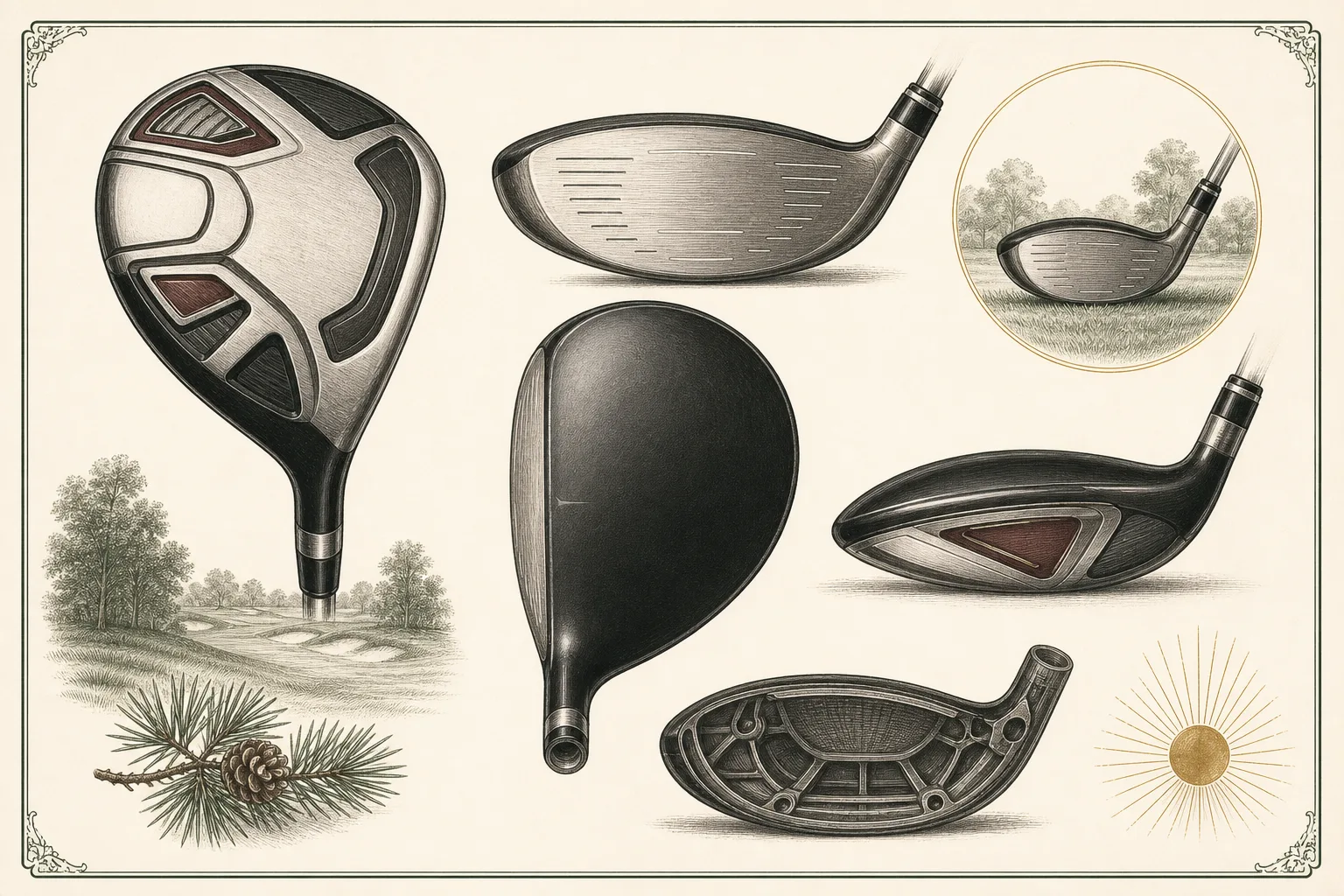
The G15 fairway wood followed the G10 with an elongated, low-profile head shape built specifically to improve turf interaction on fairway and rough lies, while an external sole weight pad pulled the CG further back and slightly lower than the G10. Ping quoted a 23% MOI increase over its predecessor, and testers found it easy to launch with a medium-to-high trajectory and above-average forgiveness even from imperfect lies - one reviewer called it the easiest fairway wood to hit in a multi-brand test. It shipped in four lofts (retailer listings round to 15/17/18/21, some sources list 15.5/18.5/21.5 - the minor rounding does not change the range) on a stock Aldila Serrano 75 or lighter Ping TFC 149F graphite shaft, and like the rest of the G15 family it was a competent, workmanlike refinement rather than a category-defining design.
Well-reviewed in its day but with no lasting cult or collector reputation - one generation in Ping's routine two-year fairway wood refresh cycle (G10 to G15 to G20), sold on functional merit and forgotten once the next model arrived. Positive contemporaneous reviews do not translate into any modern-day hunt for this specific head.
Mid-swing-speed players who want a reliable, easy-launching gap filler between driver and irons and who mishit fairway woods off the deck more often than not. Better players wanting to shape shots or hit a low, penetrating ball flight will find it launches higher and spins more than a players' fairway wood.
Sat in Ping's 2009-2010 fairway wood generation between the G10 (2007) and G20 (2011); it competed against TaylorMade's Burner and Callaway's Diablo/FT fairway woods of the same period. Red triangle alignment aids and the black/red/silver sole color scheme were shared cosmetic details across the whole G15 family (driver, fairway, hybrid, irons).
The elongated head shape (a 23% MOI increase over the G10) and rearward external sole weighting were purpose-built for forgiveness on off-center hits and mis-struck turf contact, and reviewers consistently rated it among the more forgiving fairway woods of its 2009-2010 test class; it is not a low-spin players' fairway wood, so shot-shapers give up workability for that ease.
Calibrated across the whole catalog — a tour blade scores low here on purpose; it means control, not ease.
Used G15 fairway woods typically sell for $40-80 in 2026, in line with other mid-2000s-to-2010s Ping fairway woods - functional, forgiving, and priced as a commodity gap-filler rather than a collectible.
Reading is one thing — hitting is another. Book a bay and see the numbers for yourself before you buy anywhere.
“A standard, versatile fairway wood - rung-2 neutral flight for a repeating swing and a solid gap-filler between driver and irons. Old but honest; buy on price, not hype.”
The G15 fairway wood followed the G10 with an elongated, low-profile head shape built specifically to improve turf interaction on fairway and rough lies, while an external sole weight pad pulled the CG further back and slightly lower than the G10. Ping quoted a 23% MOI increase over its predecessor, and testers found it easy to launch with a medium-to-high trajectory and above-average forgiveness even from imperfect lies - one reviewer called it the easiest fairway wood to hit in a multi-brand test. It shipped in four lofts (retailer listings round to 15/17/18/21, some sources list 15.5/18.5/21.5 - the minor rounding does not change the range) on a stock Aldila Serrano 75 or lighter Ping TFC 149F graphite shaft, and like the rest of the G15 family it was a competent, workmanlike refinement rather than a category-defining design.
Well-reviewed in its day but with no lasting cult or collector reputation - one generation in Ping's routine two-year fairway wood refresh cycle (G10 to G15 to G20), sold on functional merit and forgotten once the next model arrived. Positive contemporaneous reviews do not translate into any modern-day hunt for this specific head.
Mid-swing-speed players who want a reliable, easy-launching gap filler between driver and irons and who mishit fairway woods off the deck more often than not. Better players wanting to shape shots or hit a low, penetrating ball flight will find it launches higher and spins more than a players' fairway wood.
Sat in Ping's 2009-2010 fairway wood generation between the G10 (2007) and G20 (2011); it competed against TaylorMade's Burner and Callaway's Diablo/FT fairway woods of the same period. Red triangle alignment aids and the black/red/silver sole color scheme were shared cosmetic details across the whole G15 family (driver, fairway, hybrid, irons).
The elongated head shape (a 23% MOI increase over the G10) and rearward external sole weighting were purpose-built for forgiveness on off-center hits and mis-struck turf contact, and reviewers consistently rated it among the more forgiving fairway woods of its 2009-2010 test class; it is not a low-spin players' fairway wood, so shot-shapers give up workability for that ease.
Calibrated across the whole catalog — a tour blade scores low here on purpose; it means control, not ease.
Used G15 fairway woods typically sell for $40-80 in 2026, in line with other mid-2000s-to-2010s Ping fairway woods - functional, forgiving, and priced as a commodity gap-filler rather than a collectible.
Reading is one thing — hitting is another. Book a bay and see the numbers for yourself before you buy anywhere.