“Callaway's boldest early swing -- an entirely carbon-composite head, ultralight with a long shaft for high launch. A beloved oddball to collect; a modern carbon-crown driver does the idea far better.”
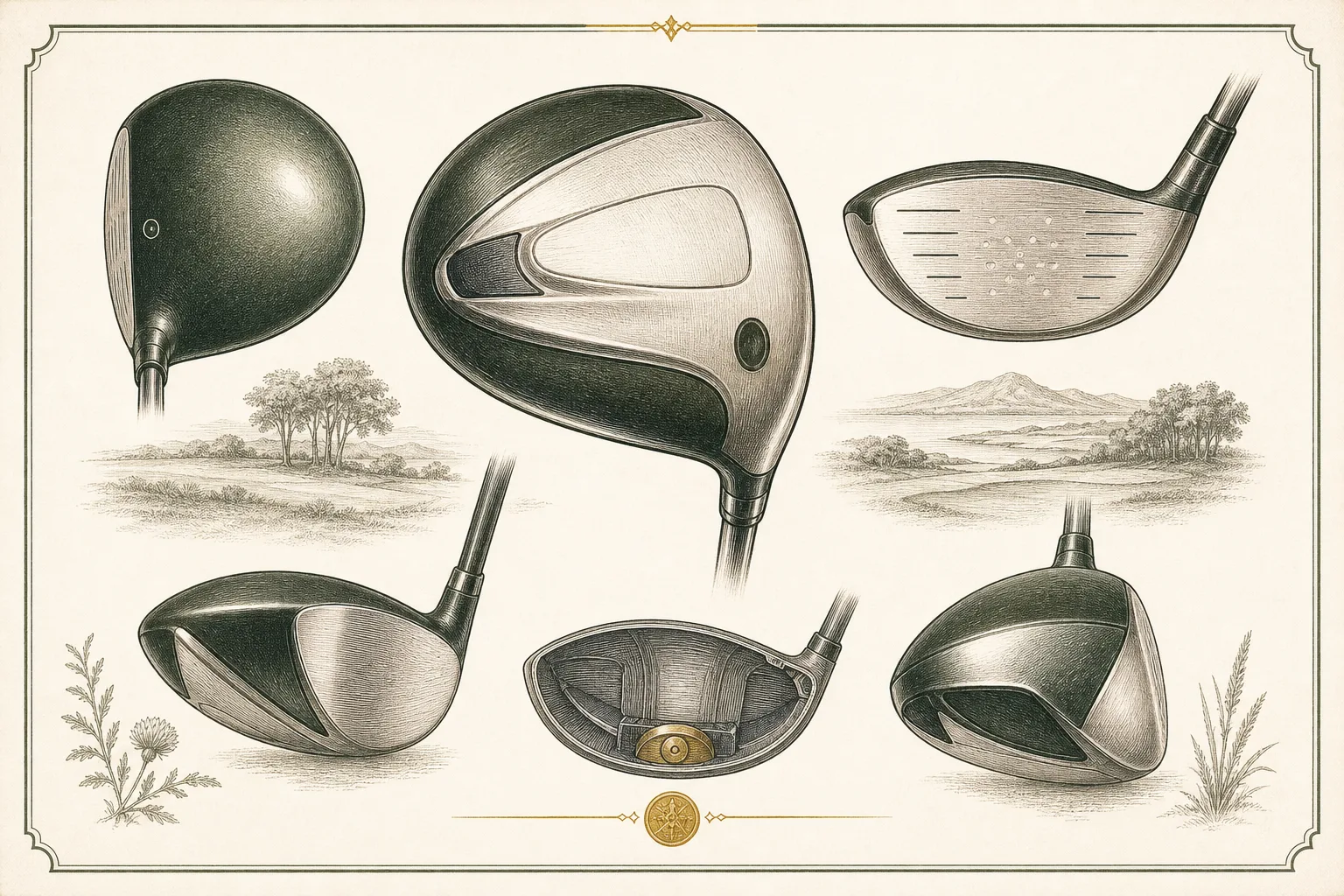
The C4 was Callaway's most radical Big Bertha: a 360cc head built with Compression Cured Carbon (C4) composite instead of titanium, Callaway's largest clubhead to date yet lighter than titanium rivals the same size. It launched via a Super Bowl ad and hit shelves on Valentine's Day 2002 at $540 MSRP — an aggressive push for an experimental construction. The composite body used tungsten-urethane and an aluminum sole for perimeter weighting while keeping head weight down, on a longer 45.5-inch shaft for added speed. It found brief tour relevance (Carlos Franco gamed it) and pop-culture notice (Alice Cooper cited as a player) before Callaway returned to titanium in later Big Berthas.
This model doesn't show the forum-reverence or active collecting subculture that a true cult classic requires — no GolfWRX retro threads or dedicated collector demand, only period coverage of its launch (a Super Bowl ad, a Cigar Aficionado feature, tour/celebrity use). It remains a genuinely notable engineering and marketing footnote — Callaway's boldest all-composite driver experiment, abandoned within a generation — rather than a documented, ongoing cult favorite.
Best suited today to a golfer who wants a lower-swing-speed, high-launch driver as a curiosity or budget beater rather than peak performance — the longer 45.5-inch shaft and large, light composite head still launch the ball easily. A player chasing modern ball speed and MOI numbers should buy a current driver; this is a historical piece, not a competitive one anymore.
Launched in 2002 as Callaway's answer to titanium-driver rivals from TaylorMade and Titanium-era Ping, betting on carbon composite instead of metal to save weight. The bet was not repeated at this scale — Callaway's subsequent Big Bertha generations (including the Diablo, 2009) returned to titanium and multi-piece metal construction, and Callaway's later composite/titanium hybrid drivers (Big Bertha Fusion, 2016) used composite only for crowns, not entire heads.
For 2002, a 360cc head with tungsten-urethane perimeter weighting was genuinely large and forgiving — reviewers called it 'the friendliest high velocity driver ever' at launch. Measured against modern 460cc titanium/carbon-crown drivers with far more sophisticated MOI engineering, it is only moderately forgiving today; the score reflects its era-relative strength, not equivalence to a current game-improvement head.
Calibrated across the whole catalog — a tour blade scores low here on purpose; it means control, not ease.
MSRP was $540. As a 24-year-old composite-head driver with no collector premium, used examples in playable condition typically sell for roughly $25-$60 in 2026 — value is purely functional/nostalgic, not appreciating, and buyers should inspect the composite crown and face for age-related cracking or delamination before purchase.
Reading is one thing — hitting is another. Book a bay and see the numbers for yourself before you buy anywhere.
“Callaway's boldest early swing -- an entirely carbon-composite head, ultralight with a long shaft for high launch. A beloved oddball to collect; a modern carbon-crown driver does the idea far better.”
The C4 was Callaway's most radical Big Bertha: a 360cc head built with Compression Cured Carbon (C4) composite instead of titanium, Callaway's largest clubhead to date yet lighter than titanium rivals the same size. It launched via a Super Bowl ad and hit shelves on Valentine's Day 2002 at $540 MSRP — an aggressive push for an experimental construction. The composite body used tungsten-urethane and an aluminum sole for perimeter weighting while keeping head weight down, on a longer 45.5-inch shaft for added speed. It found brief tour relevance (Carlos Franco gamed it) and pop-culture notice (Alice Cooper cited as a player) before Callaway returned to titanium in later Big Berthas.
This model doesn't show the forum-reverence or active collecting subculture that a true cult classic requires — no GolfWRX retro threads or dedicated collector demand, only period coverage of its launch (a Super Bowl ad, a Cigar Aficionado feature, tour/celebrity use). It remains a genuinely notable engineering and marketing footnote — Callaway's boldest all-composite driver experiment, abandoned within a generation — rather than a documented, ongoing cult favorite.
Best suited today to a golfer who wants a lower-swing-speed, high-launch driver as a curiosity or budget beater rather than peak performance — the longer 45.5-inch shaft and large, light composite head still launch the ball easily. A player chasing modern ball speed and MOI numbers should buy a current driver; this is a historical piece, not a competitive one anymore.
Launched in 2002 as Callaway's answer to titanium-driver rivals from TaylorMade and Titanium-era Ping, betting on carbon composite instead of metal to save weight. The bet was not repeated at this scale — Callaway's subsequent Big Bertha generations (including the Diablo, 2009) returned to titanium and multi-piece metal construction, and Callaway's later composite/titanium hybrid drivers (Big Bertha Fusion, 2016) used composite only for crowns, not entire heads.
For 2002, a 360cc head with tungsten-urethane perimeter weighting was genuinely large and forgiving — reviewers called it 'the friendliest high velocity driver ever' at launch. Measured against modern 460cc titanium/carbon-crown drivers with far more sophisticated MOI engineering, it is only moderately forgiving today; the score reflects its era-relative strength, not equivalence to a current game-improvement head.
Calibrated across the whole catalog — a tour blade scores low here on purpose; it means control, not ease.
MSRP was $540. As a 24-year-old composite-head driver with no collector premium, used examples in playable condition typically sell for roughly $25-$60 in 2026 — value is purely functional/nostalgic, not appreciating, and buyers should inspect the composite crown and face for age-related cracking or delamination before purchase.
Reading is one thing — hitting is another. Book a bay and see the numbers for yourself before you buy anywhere.