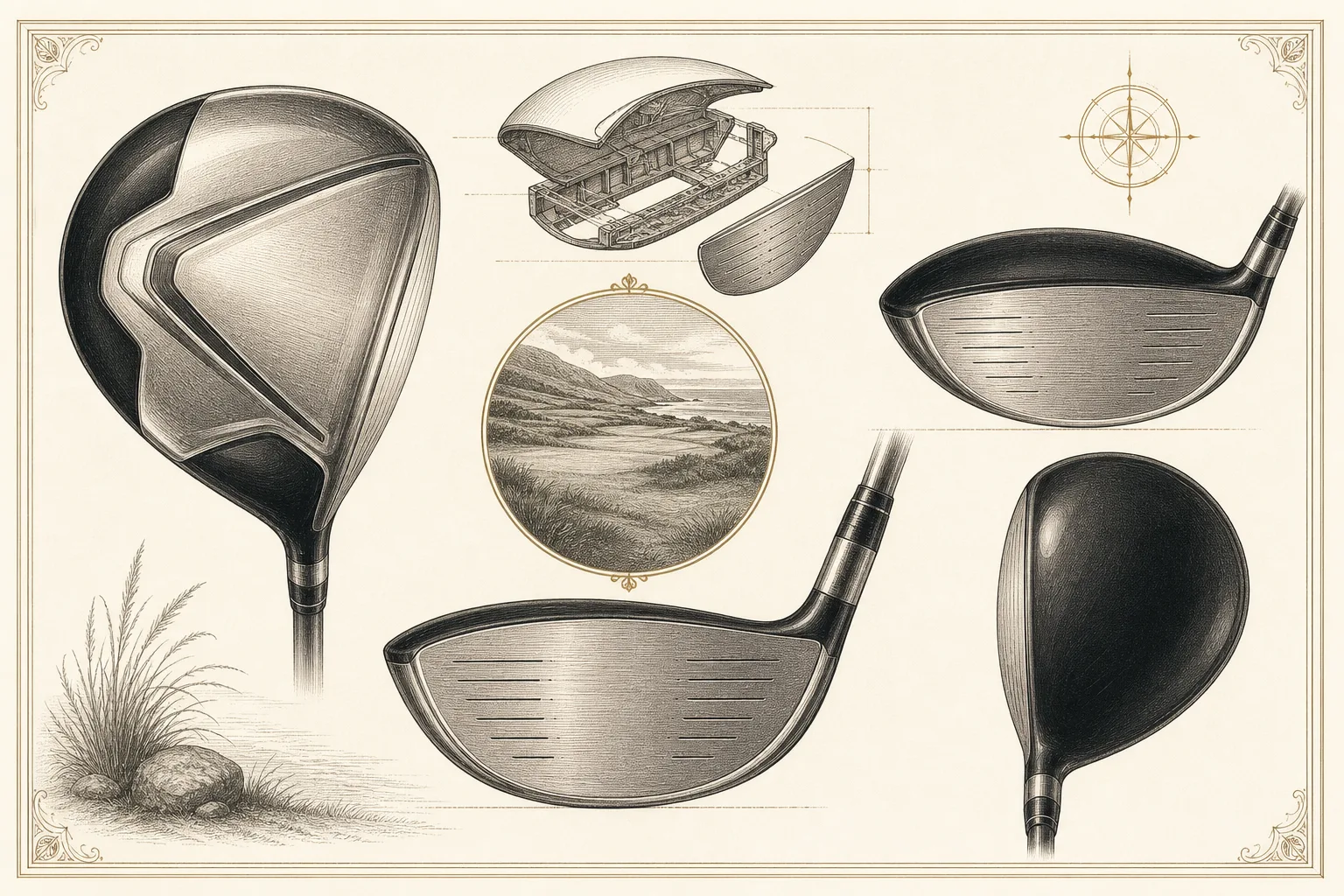
Shown at the 2013 PGA Show and released the same year, the Classic XL was Cleveland's flagship driver built around the largest and deepest clubface Cleveland had put on a driver to that point — a deep face intended to give a bigger visible hitting area and a larger effective sweet spot. Cleveland retuned the internal weighting from the 2012 version specifically to raise launch angle further, chasing the high-launch/low-spin combination that produces long, high-carrying drives. It was sold in both a standard Classic XL and a Classic XL Custom (adjustable) version, and reviewers singled out its classic gold-and-black cosmetics and a distinctive, polarizing impact sound as much as its performance.
It earned genuine equipment-press praise in its own testing cycle — reviewers called it one of the longest and highest-launching drivers tested in 2013 and "the nicest sounding driver" in at least one roundup — but there is no ongoing forum-hunted demand or scarcity for it today; it is a well-regarded but ordinary used driver a decade later.
Good for a mid-handicap player who wants extra carry distance and a naturally higher, more draw-biased flight; a player who already hooks the ball or needs a fade-friendly head should look elsewhere, and a low-handicap workability-first player will find more shot-shaping control in a smaller, less draw-biased modern head.
Competed in the crowded 2013 driver field against TaylorMade's SLDR/R1, Callaway's RAZR Fit Xtreme, and Titleist's 913 series. It followed a 2012 Classic XL and represented one step in Cleveland's driver line before the brand's later pivot toward the Launcher franchise (see companion Launcher records) as its primary driver identity. A modern equivalent in spirit is the current Cleveland Launcher XL2 — same high-launch, forgiveness-first brief.
The deep, large face and retuned internal weighting deliver high launch and low spin on center strikes, giving strong carry distance on good contact, but reviewers noted the optimized CG produces a ball flight that draws more easily than it fades — meaning a mis-hit toward the toe tends to turn over into a hook rather than holding a neutral line, a real trade-off for players who already fight a draw.
Calibrated across the whole catalog — a tour blade scores low here on purpose; it means control, not ease.
2nd Swing's remaining graded inventory has listed examples around $143 (Above Average condition) marked down from a $249.99 comparison price; realistic private-party/eBay pricing for a clean Classic XL in 2026 runs roughly $60-$110 depending on shaft and condition.
Reading is one thing — hitting is another. Book a bay and see the numbers for yourself before you buy anywhere.
Shown at the 2013 PGA Show and released the same year, the Classic XL was Cleveland's flagship driver built around the largest and deepest clubface Cleveland had put on a driver to that point — a deep face intended to give a bigger visible hitting area and a larger effective sweet spot. Cleveland retuned the internal weighting from the 2012 version specifically to raise launch angle further, chasing the high-launch/low-spin combination that produces long, high-carrying drives. It was sold in both a standard Classic XL and a Classic XL Custom (adjustable) version, and reviewers singled out its classic gold-and-black cosmetics and a distinctive, polarizing impact sound as much as its performance.
It earned genuine equipment-press praise in its own testing cycle — reviewers called it one of the longest and highest-launching drivers tested in 2013 and "the nicest sounding driver" in at least one roundup — but there is no ongoing forum-hunted demand or scarcity for it today; it is a well-regarded but ordinary used driver a decade later.
Good for a mid-handicap player who wants extra carry distance and a naturally higher, more draw-biased flight; a player who already hooks the ball or needs a fade-friendly head should look elsewhere, and a low-handicap workability-first player will find more shot-shaping control in a smaller, less draw-biased modern head.
Competed in the crowded 2013 driver field against TaylorMade's SLDR/R1, Callaway's RAZR Fit Xtreme, and Titleist's 913 series. It followed a 2012 Classic XL and represented one step in Cleveland's driver line before the brand's later pivot toward the Launcher franchise (see companion Launcher records) as its primary driver identity. A modern equivalent in spirit is the current Cleveland Launcher XL2 — same high-launch, forgiveness-first brief.
The deep, large face and retuned internal weighting deliver high launch and low spin on center strikes, giving strong carry distance on good contact, but reviewers noted the optimized CG produces a ball flight that draws more easily than it fades — meaning a mis-hit toward the toe tends to turn over into a hook rather than holding a neutral line, a real trade-off for players who already fight a draw.
Calibrated across the whole catalog — a tour blade scores low here on purpose; it means control, not ease.
2nd Swing's remaining graded inventory has listed examples around $143 (Above Average condition) marked down from a $249.99 comparison price; realistic private-party/eBay pricing for a clean Classic XL in 2026 runs roughly $60-$110 depending on shaft and condition.
Reading is one thing — hitting is another. Book a bay and see the numbers for yourself before you buy anywhere.