“A standard, versatile fairway wood - rung-2 neutral flight for a repeating swing and a solid gap-filler between driver and irons.”
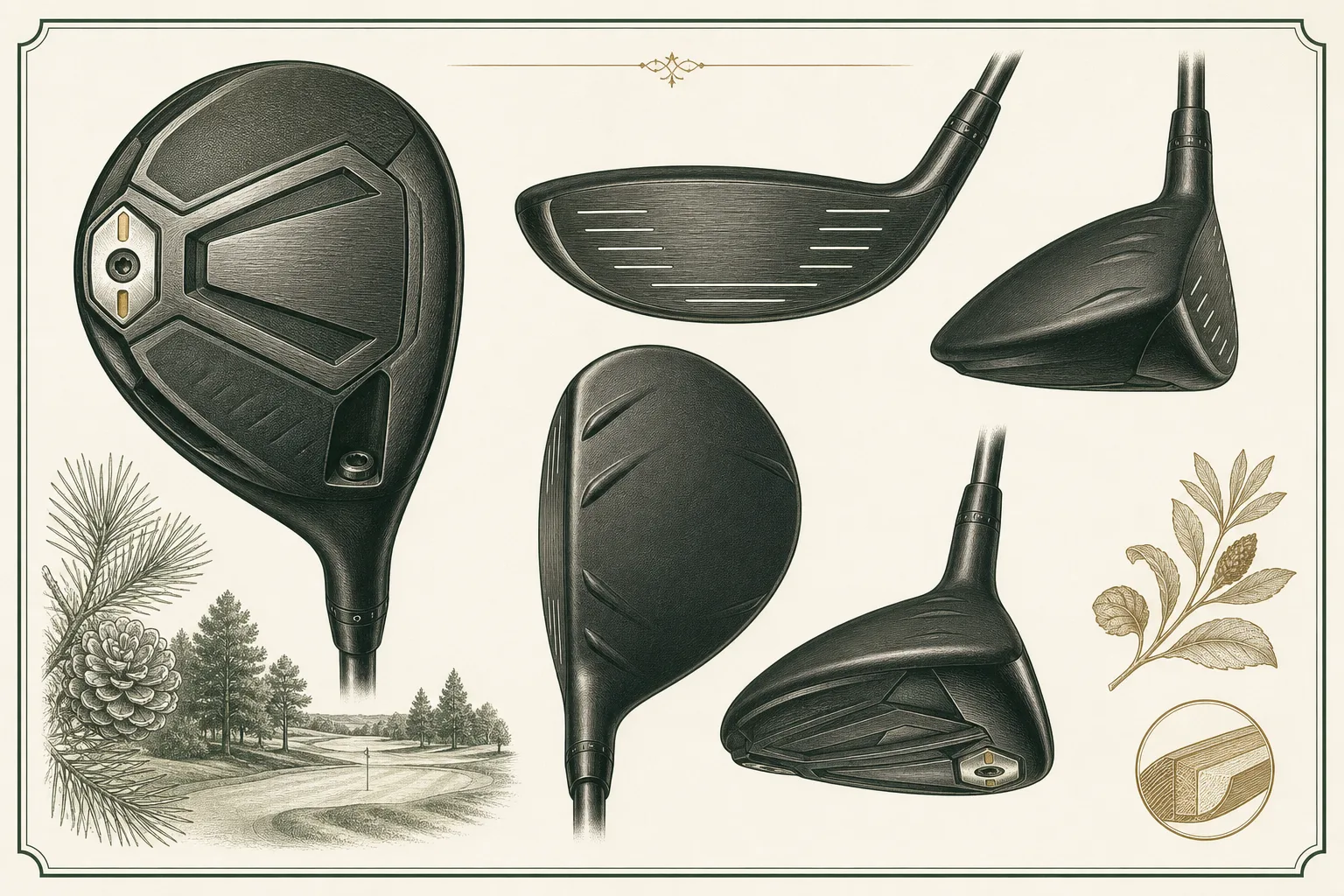
The standard G410 fairway wood carried forward Ping's shift to a forged, shallow maraging-steel face first seen on the driver, moving the CG lower and further forward than the G400 fairway it replaced. Ping paired that face with a redesigned Turbulator pattern on the crown for cleaner airflow and claimed roughly 300 rpm less spin and about 5 yards more carry than its predecessor. It sat as the neutral, do-everything rung-2 option in a three-model G410 fairway lineup that also included the lower-spinning LST and the draw-biased SFT, aimed at players who wanted a repeatable, versatile gap-filler off the tee and the turf rather than a specialist low-spin or draw-bias tool.
Consistently rated as one of the best all-around fairway woods of its year by independent reviewers (Plugged In Golf, Golfalot, The Hackers Paradise), but it's a mainstream, two-year product on Ping's normal replacement cycle with no scarcity or forum mythology attached to it.
A good fit for the broad middle of golfers who want a fairway wood that performs both off the tee and off the turf without needing a specific miss corrected. Players fighting a slice should look at the SFT; players wanting the lowest spin for maximum swing speed should look at the LST.
Part of the January 2019 G410 launch, competing with TaylorMade's M5/M6 and Callaway's Epic Flash fairway woods. Replaced by the G425 fairway line in 2021, which added further face and turbulator refinements on the same forged-face concept.
The standard, neutral member of the G410 fairway trio, sitting between the max-forgiveness SFT and the low-spin LST. The thin forged face and lower/forward CG give strong ball speed retention on off-center hits, and reviewers specifically called it forgiving and versatile, but it does not carry the extra draw-bias weighting or MOI-maximizing shape of the SFT.
Calibrated across the whole catalog — a tour blade scores low here on purpose; it means control, not ease.
Realistic 2026 private-party value for a clean head-and-shaft: roughly $55-$95, typical for a seven-year-old premium fairway wood once initial demand settles; reconditioned-retail listings run higher but reflect grading and warranty rather than collector value.
Reading is one thing — hitting is another. Book a bay and see the numbers for yourself before you buy anywhere.
“A standard, versatile fairway wood - rung-2 neutral flight for a repeating swing and a solid gap-filler between driver and irons.”
The standard G410 fairway wood carried forward Ping's shift to a forged, shallow maraging-steel face first seen on the driver, moving the CG lower and further forward than the G400 fairway it replaced. Ping paired that face with a redesigned Turbulator pattern on the crown for cleaner airflow and claimed roughly 300 rpm less spin and about 5 yards more carry than its predecessor. It sat as the neutral, do-everything rung-2 option in a three-model G410 fairway lineup that also included the lower-spinning LST and the draw-biased SFT, aimed at players who wanted a repeatable, versatile gap-filler off the tee and the turf rather than a specialist low-spin or draw-bias tool.
Consistently rated as one of the best all-around fairway woods of its year by independent reviewers (Plugged In Golf, Golfalot, The Hackers Paradise), but it's a mainstream, two-year product on Ping's normal replacement cycle with no scarcity or forum mythology attached to it.
A good fit for the broad middle of golfers who want a fairway wood that performs both off the tee and off the turf without needing a specific miss corrected. Players fighting a slice should look at the SFT; players wanting the lowest spin for maximum swing speed should look at the LST.
Part of the January 2019 G410 launch, competing with TaylorMade's M5/M6 and Callaway's Epic Flash fairway woods. Replaced by the G425 fairway line in 2021, which added further face and turbulator refinements on the same forged-face concept.
The standard, neutral member of the G410 fairway trio, sitting between the max-forgiveness SFT and the low-spin LST. The thin forged face and lower/forward CG give strong ball speed retention on off-center hits, and reviewers specifically called it forgiving and versatile, but it does not carry the extra draw-bias weighting or MOI-maximizing shape of the SFT.
Calibrated across the whole catalog — a tour blade scores low here on purpose; it means control, not ease.
Realistic 2026 private-party value for a clean head-and-shaft: roughly $55-$95, typical for a seven-year-old premium fairway wood once initial demand settles; reconditioned-retail listings run higher but reflect grading and warranty rather than collector value.
Reading is one thing — hitting is another. Book a bay and see the numbers for yourself before you buy anywhere.