“A standard, versatile fairway wood - rung-2 neutral flight for a repeating swing and a solid gap-filler between driver and irons.”
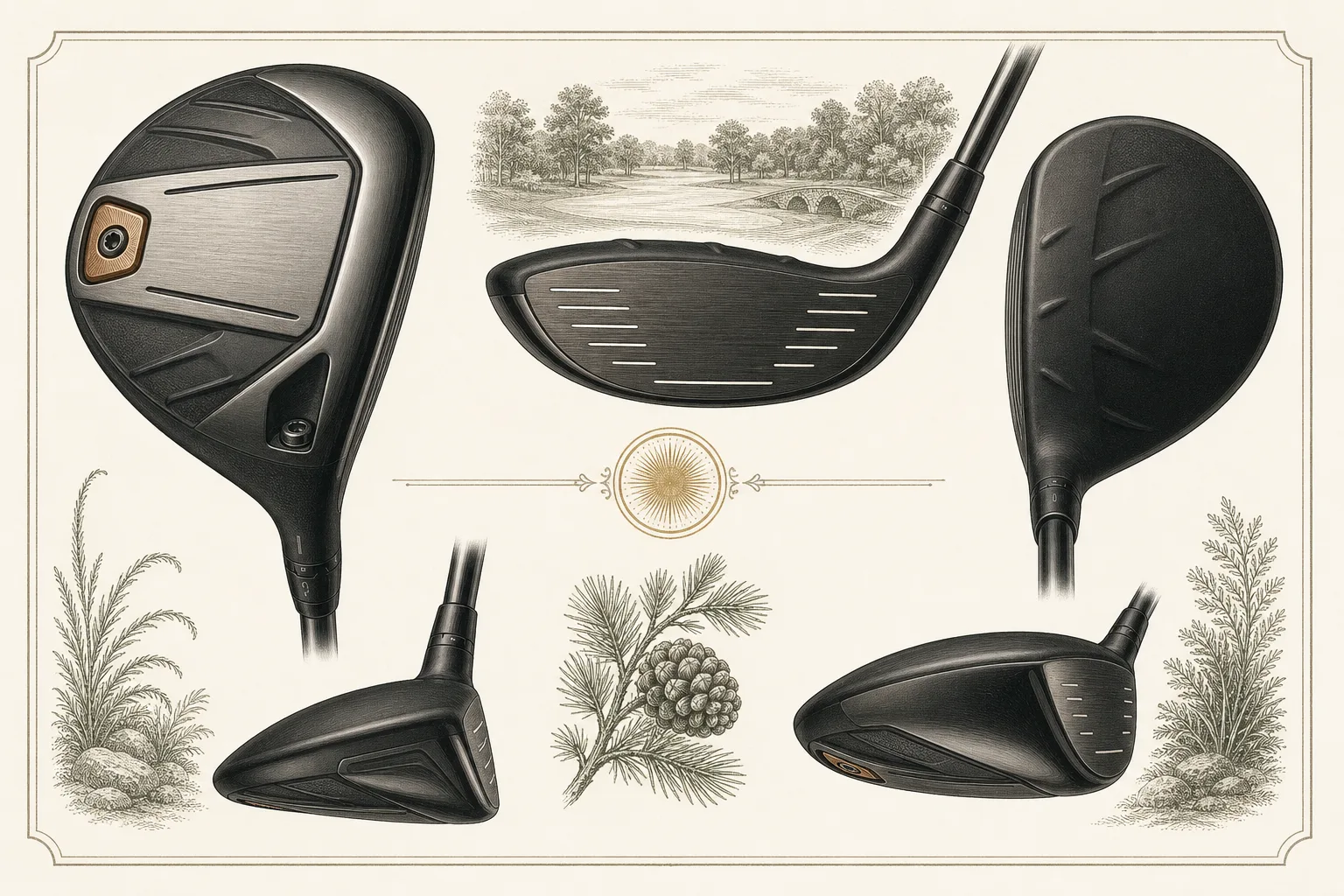
The standard G400 fairway wood paired Ping's Hydropearl 2.0 finish with a maraging-steel face 28% thinner than stainless, engineered to flex 30% more and add a claimed 2% ball speed at 105mph swing speed. A low-profile head sits flat and confidence-inspiring at address, and a higher-density back weight plus thinner crown pushed MOI up versus the outgoing G/G30 fairway for a slightly more forgiving, more stable head without changing its neutral-flight, better-player-leaning character. It launched in four lofts (14, 17, 20, 23) as the 'standard' rung in Ping's 2017 fairway lineup, sitting between the higher-launching, draw-biased SFT and the deeper-face G400 Stretch aimed at faster swingers.
No cult status: reviewers (Plugged In Golf, Golfalot, Bunkered, Today's Golfer) consistently call it a solid, well-engineered, unspectacular fairway wood - 'another solid fairway' is the representative verdict. It sold well as part of a hugely popular G400 family but carries no standalone legend.
A versatile gap-filler for mid-handicap players with a repeating swing who want neutral flight rather than draw bias - someone who already hits it fairly straight and just needs help getting a fairway wood airborne. Chronic slicers are better served by the SFT version; faster swingers wanting more spin control should look at the deeper-faced G400 Stretch.
Part of the 2017 G400 fairway wood trio (standard, SFT, Stretch) that replaced the G/G30 fairways, competing with TaylorMade's M2 and Callaway's Rogue fairway woods. Succeeded by the G410 fairway wood (2019); a modern equivalent is the Ping G430 Max fairway.
Genuinely forgiving for a neutral-flight fairway wood - the thinner maraging face and repositioned back weight both help mis-hits retain ball speed, and reviewers called it as easy to launch as anything tested in 2017. It sits below the draw-biased SFT (built specifically to maximize forgiveness and correction) on Ping's own internal ladder, so a 7 reflects solid, not maximal, forgiveness.
Calibrated across the whole catalog — a tour blade scores low here on purpose; it means control, not ease.
A single G400 fairway wood typically sells for $70-110 private-party in 2026, down from its roughly $288 retail price new. It's a common, plentiful used club given how many were sold as part of the popular G400 line, keeping prices on the low end of that range for anything with visible face or sole wear.
Reading is one thing — hitting is another. Book a bay and see the numbers for yourself before you buy anywhere.
“A standard, versatile fairway wood - rung-2 neutral flight for a repeating swing and a solid gap-filler between driver and irons.”
The standard G400 fairway wood paired Ping's Hydropearl 2.0 finish with a maraging-steel face 28% thinner than stainless, engineered to flex 30% more and add a claimed 2% ball speed at 105mph swing speed. A low-profile head sits flat and confidence-inspiring at address, and a higher-density back weight plus thinner crown pushed MOI up versus the outgoing G/G30 fairway for a slightly more forgiving, more stable head without changing its neutral-flight, better-player-leaning character. It launched in four lofts (14, 17, 20, 23) as the 'standard' rung in Ping's 2017 fairway lineup, sitting between the higher-launching, draw-biased SFT and the deeper-face G400 Stretch aimed at faster swingers.
No cult status: reviewers (Plugged In Golf, Golfalot, Bunkered, Today's Golfer) consistently call it a solid, well-engineered, unspectacular fairway wood - 'another solid fairway' is the representative verdict. It sold well as part of a hugely popular G400 family but carries no standalone legend.
A versatile gap-filler for mid-handicap players with a repeating swing who want neutral flight rather than draw bias - someone who already hits it fairly straight and just needs help getting a fairway wood airborne. Chronic slicers are better served by the SFT version; faster swingers wanting more spin control should look at the deeper-faced G400 Stretch.
Part of the 2017 G400 fairway wood trio (standard, SFT, Stretch) that replaced the G/G30 fairways, competing with TaylorMade's M2 and Callaway's Rogue fairway woods. Succeeded by the G410 fairway wood (2019); a modern equivalent is the Ping G430 Max fairway.
Genuinely forgiving for a neutral-flight fairway wood - the thinner maraging face and repositioned back weight both help mis-hits retain ball speed, and reviewers called it as easy to launch as anything tested in 2017. It sits below the draw-biased SFT (built specifically to maximize forgiveness and correction) on Ping's own internal ladder, so a 7 reflects solid, not maximal, forgiveness.
Calibrated across the whole catalog — a tour blade scores low here on purpose; it means control, not ease.
A single G400 fairway wood typically sells for $70-110 private-party in 2026, down from its roughly $288 retail price new. It's a common, plentiful used club given how many were sold as part of the popular G400 line, keeping prices on the low end of that range for anything with visible face or sole wear.
Reading is one thing — hitting is another. Book a bay and see the numbers for yourself before you buy anywhere.