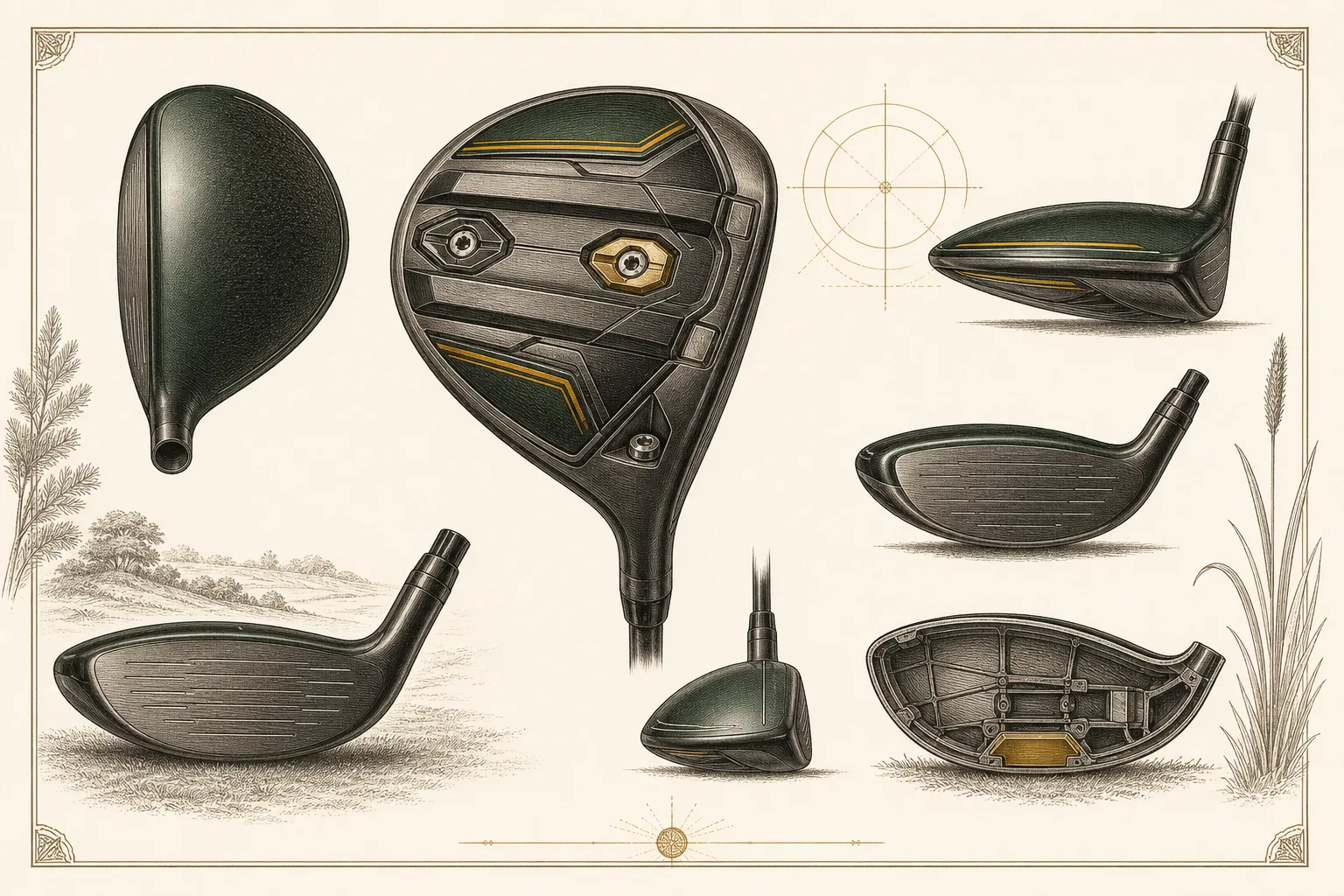
New for 2020 as the direct predecessor to the RadSpeed, the King Speedzone fairway wood paired a CNC-milled face (for a face that stays thin and consistent across its whole surface) with a carbon-fiber crown that saved about 10 grams, weight Cobra redeployed low in the head to lower the CG for higher launch. Split, flexible hollow sole rails were new that year to boost ball speed. It shipped in standard, Tour, and Big Tour builds — 167cc (3-wood) down to 153cc (7-wood) heads — each with Cobra's 8-way adjustable hosel, at a $280 retail price.
It drew solid, unremarkable reviews (Golf Monthly and Today's Golfer both praised its easy launch and distance) but was replaced within a single product cycle by the RadSpeed the very next year and left no independent legacy of its own — no tour-win story, no scarcity, no lasting forum thread. It is simply a good, ordinary fairway wood from Cobra's annual release cadence.
Suits mid-handicap golfers who want an easy-launching, mid-forgiving fairway wood at a now-bargain used price; the Tour and Big Tour heads suit lower handicaps wanting less spin and a smaller profile. Anyone shopping new or wanting maximum modern ball speed should look at Cobra's current Darkspeed/Aerojet fairways instead — the six-year-old face and crown tech is measurably behind them.
Launched into the same 2020 fairway-wood class as TaylorMade's SIM, Callaway's Mavrik, and Titleist's TS3, and served as Cobra's flagship for exactly one year before the RadSpeed (2021) took its place. A modern equivalent in Cobra's current line is the Darkspeed fairway, which carries the same low-CG/high-launch brief with newer face and crown materials.
The carbon crown weight savings and low CG genuinely help get the ball airborne and hold launch on thinner strikes, and the split hollow rails add some off-center ball-speed retention — but the standard head is a mid-size, mid-forgiveness shape rather than a max-GI design, so it sits a notch below true game-improvement fairways in outright mishit tolerance.
Calibrated across the whole catalog — a tour blade scores low here on purpose; it means control, not ease.
Complete used heads (with stock graphite shaft) typically sell for roughly $80–$150 on eBay and Golf Avenue in 2026, with head-only listings lower; Golf Avenue lists graded used examples starting near $115 against an original $280 retail. It has depreciated in line with any 5-to-6-year-old mainstream fairway wood.
Reading is one thing — hitting is another. Book a bay and see the numbers for yourself before you buy anywhere.
New for 2020 as the direct predecessor to the RadSpeed, the King Speedzone fairway wood paired a CNC-milled face (for a face that stays thin and consistent across its whole surface) with a carbon-fiber crown that saved about 10 grams, weight Cobra redeployed low in the head to lower the CG for higher launch. Split, flexible hollow sole rails were new that year to boost ball speed. It shipped in standard, Tour, and Big Tour builds — 167cc (3-wood) down to 153cc (7-wood) heads — each with Cobra's 8-way adjustable hosel, at a $280 retail price.
It drew solid, unremarkable reviews (Golf Monthly and Today's Golfer both praised its easy launch and distance) but was replaced within a single product cycle by the RadSpeed the very next year and left no independent legacy of its own — no tour-win story, no scarcity, no lasting forum thread. It is simply a good, ordinary fairway wood from Cobra's annual release cadence.
Suits mid-handicap golfers who want an easy-launching, mid-forgiving fairway wood at a now-bargain used price; the Tour and Big Tour heads suit lower handicaps wanting less spin and a smaller profile. Anyone shopping new or wanting maximum modern ball speed should look at Cobra's current Darkspeed/Aerojet fairways instead — the six-year-old face and crown tech is measurably behind them.
Launched into the same 2020 fairway-wood class as TaylorMade's SIM, Callaway's Mavrik, and Titleist's TS3, and served as Cobra's flagship for exactly one year before the RadSpeed (2021) took its place. A modern equivalent in Cobra's current line is the Darkspeed fairway, which carries the same low-CG/high-launch brief with newer face and crown materials.
The carbon crown weight savings and low CG genuinely help get the ball airborne and hold launch on thinner strikes, and the split hollow rails add some off-center ball-speed retention — but the standard head is a mid-size, mid-forgiveness shape rather than a max-GI design, so it sits a notch below true game-improvement fairways in outright mishit tolerance.
Calibrated across the whole catalog — a tour blade scores low here on purpose; it means control, not ease.
Complete used heads (with stock graphite shaft) typically sell for roughly $80–$150 on eBay and Golf Avenue in 2026, with head-only listings lower; Golf Avenue lists graded used examples starting near $115 against an original $280 retail. It has depreciated in line with any 5-to-6-year-old mainstream fairway wood.
Reading is one thing — hitting is another. Book a bay and see the numbers for yourself before you buy anywhere.