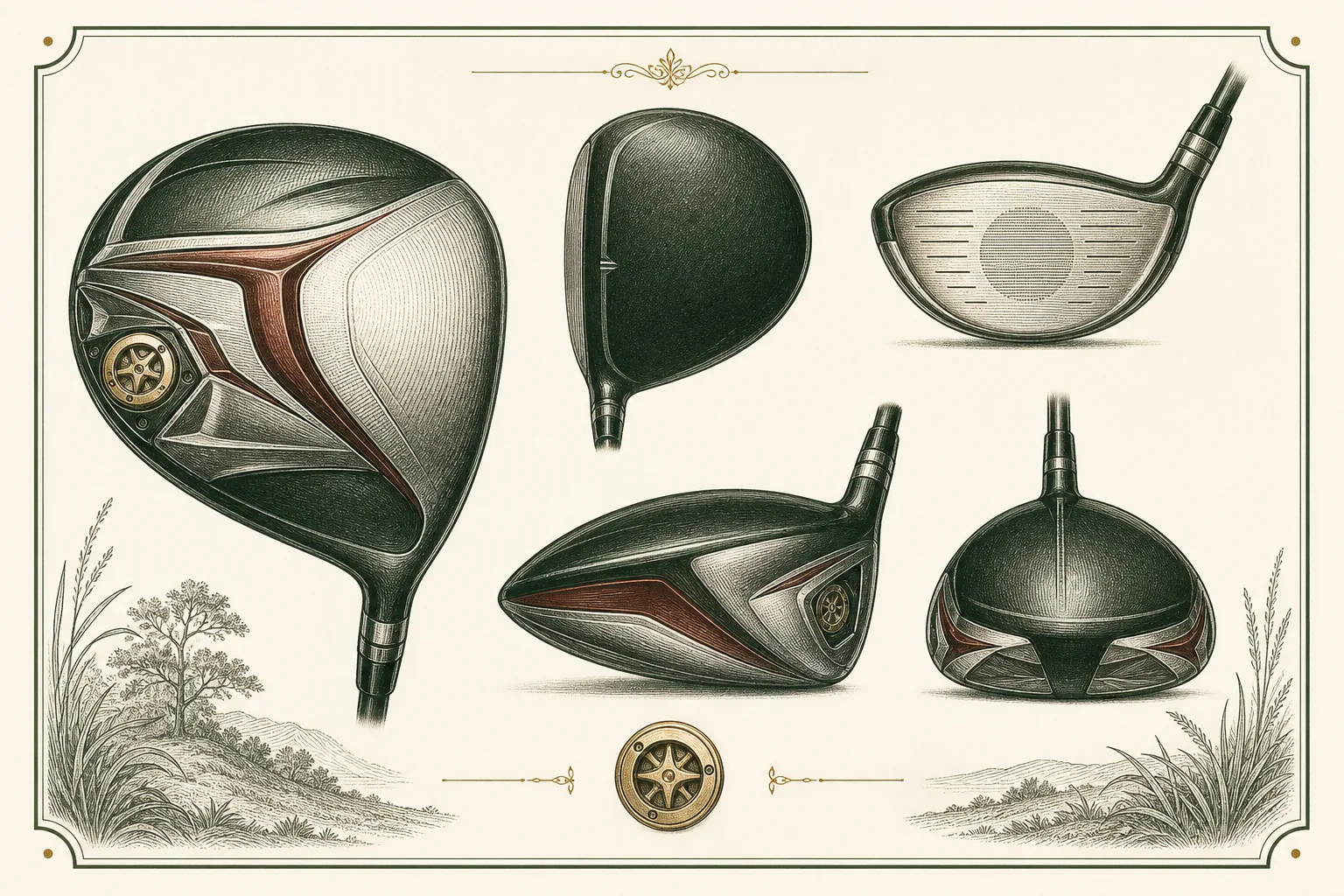
“Lamborghini-derived Forged Composite crown, also sold in a low-spin Tour head. Easy to launch and forgiving; a good cheap option for the mid-speed player.”
Callaway's 2011 successor to the Diablo Edge driver, notable chiefly for introducing 'Forged Composite' - a carbon-fiber crown material developed with Automobili Lamborghini and marketed as Callaway's lightest, strongest material yet. Sources give differing fiber-structure detail (one figure cites 500,000 turbostatic fibers per square inch, another says 10 million fibers making up a third of the clubhead) - the numbers don't cleanly reconcile, but both agree crown savings were reinvested into perimeter weighting for higher MOI. Sold in standard and Tour builds, the lighter crown and a longer shaft added distance - Callaway claimed roughly 8 yards over the Diablo Edge. Testers described an easier swing and a sharper 'clack' sound distinct from an all-titanium head.
Notable rather than a true cult classic: Forged Composite was a genuine, sourced engineering step (an early mainstream carbon-crown driver with a documented automotive-industry material partnership), and it drew strong contemporary reviews. But it did not create lasting demand or scarcity - it was replaced within roughly a year by newer Callaway drivers (RAZR series), and there is no evidence of forum-driven collector interest in 2026.
Golfers chasing extra distance from a lighter, faster-swinging driver, especially those who found the Diablo Edge's titanium head and sound less appealing. The Tour version's smaller address look may not suit players who want a visually confidence-inspiring big head. Anyone shopping today should recognize this is a first-generation carbon-crown design - a decade-plus of materials refinement separates it from a current composite driver.
Launched in 2011 into a market where carbon-crown drivers were just becoming mainstream (TaylorMade's Burner SuperFast used composite crowns around the same period). Diablo Octane sat as Callaway's accessible-tier driver below its flagship RAZR Fit line. It was followed within about a year by Callaway's next driver generation as the company moved away from the Diablo sub-brand entirely.
Callaway repositioned the crown-weight savings into perimeter/MOI-boosting placement, and reviewers noted good forgiveness, but the headline benefit reported at launch was distance, not forgiveness - one review specifically flagged that forgiveness 'was not the headline performance gain.' Scored a notch below the cast Diablo Edge (8) for that reason, while still ahead of a compact players' head.
Calibrated across the whole catalog — a tour blade scores low here on purpose; it means control, not ease.
Realistic used pricing is low and consistent across listings: eBay/SidelineSwap sales for a clean head with shaft run roughly $60-$90 in 2026, well down from the $349 MSRP. There is no meaningful reconditioned-retail premium documented for this model the way there is for some other used clubs.
Reading is one thing — hitting is another. Book a bay and see the numbers for yourself before you buy anywhere.