“Ultralight, high-launch women's hybrid - rung-1 forgiveness for slower speeds; the light shaft is the fit, not a downgrade. Old but honest; buy on price, not hype.”
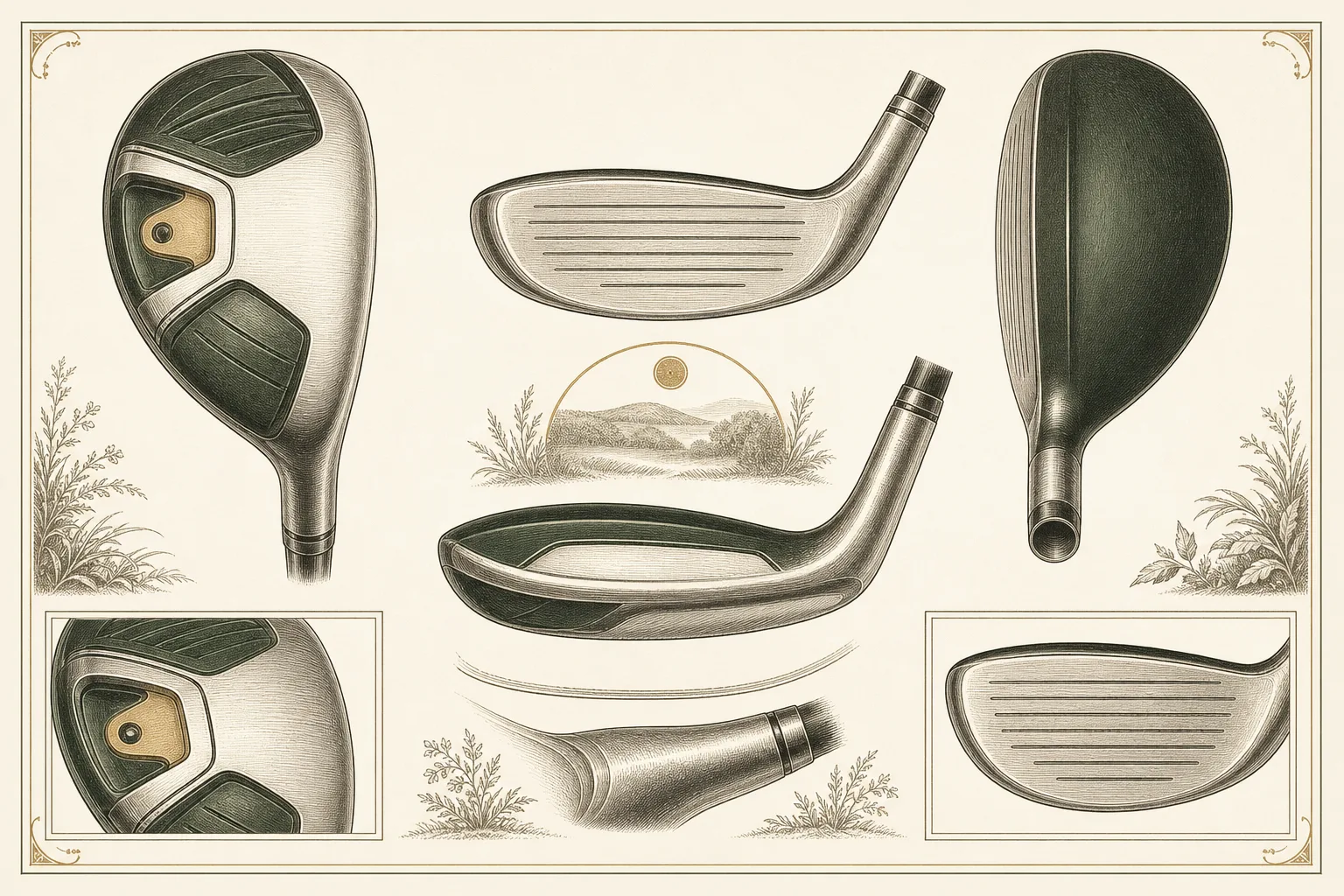
The Faith Hybrid was Ping's ultralight women's rescue club, built to replace long irons for slower swing speeds with a large internal toe weight boosting MOI, stability and forgiveness on off-center hits, paired with a Ping ULT 200 graphite shaft to maximize clubhead speed for a lighter swing. It was sold as part of the broader Ping Faith women's family (irons, hybrid, driver) aimed squarely at the mid-to-high-handicap female recreational market, prioritizing distance and forgiveness from high launch over workability. Independent confirmation of the exact 2009 launch year was not found in available sources, though its retail packaging (12-month guarantee, free headcover) and positioning are consistent with Ping's late-2000s women's product cadence.
It receives functional, positive-but-unremarkable coverage (Today's Golfer, 2nd Swing) as a forgiving women's long-iron replacement; there is no forum reverence, scarcity, or tour pedigree attached to it -- it is a solid, honestly forgettable entry in Ping's women's-club history.
Realistic 2026 used pricing is low: 2nd Swing/eBay listings run roughly $27-$57 depending on condition, reflecting its age, mass-market original positioning, and lack of any collector interest.
Fits mid-to-high handicap women golfers with slower swing speeds looking for an easy, forgiving long-iron replacement; a sensible cheap bag-filler purchase today given its age and low used price. Not for low-handicap or faster-swing-speed women players who would be better served by a modern Ping G Le hybrid with current materials and fitting support.
Sold within Ping's women's product family alongside the Faith irons and driver in the late 2000s; Ping's women's line has since evolved through Rhapsody, G Le, G Le2 and current G Le3/G Le4 generations, each incorporating newer metalwood/hybrid technology than the Faith's era.
The large internal toe weight is explicitly designed to boost MOI and stability so off-center hits still find the fairway; reviewers describe it as forgiving even 'when you don't catch your golf ball quite as well as you'd hoped,' consistent with a max-forgiveness women's rescue club, though independent mishit-testing data was not found.
Calibrated across the whole catalog — a tour blade scores low here on purpose; it means control, not ease.
Reading is one thing — hitting is another. Book a bay and see the numbers for yourself before you buy anywhere.