“A light, easy-launch Rescue for moderate swings. A fine, cheap rung-1 hybrid on the used rack.”
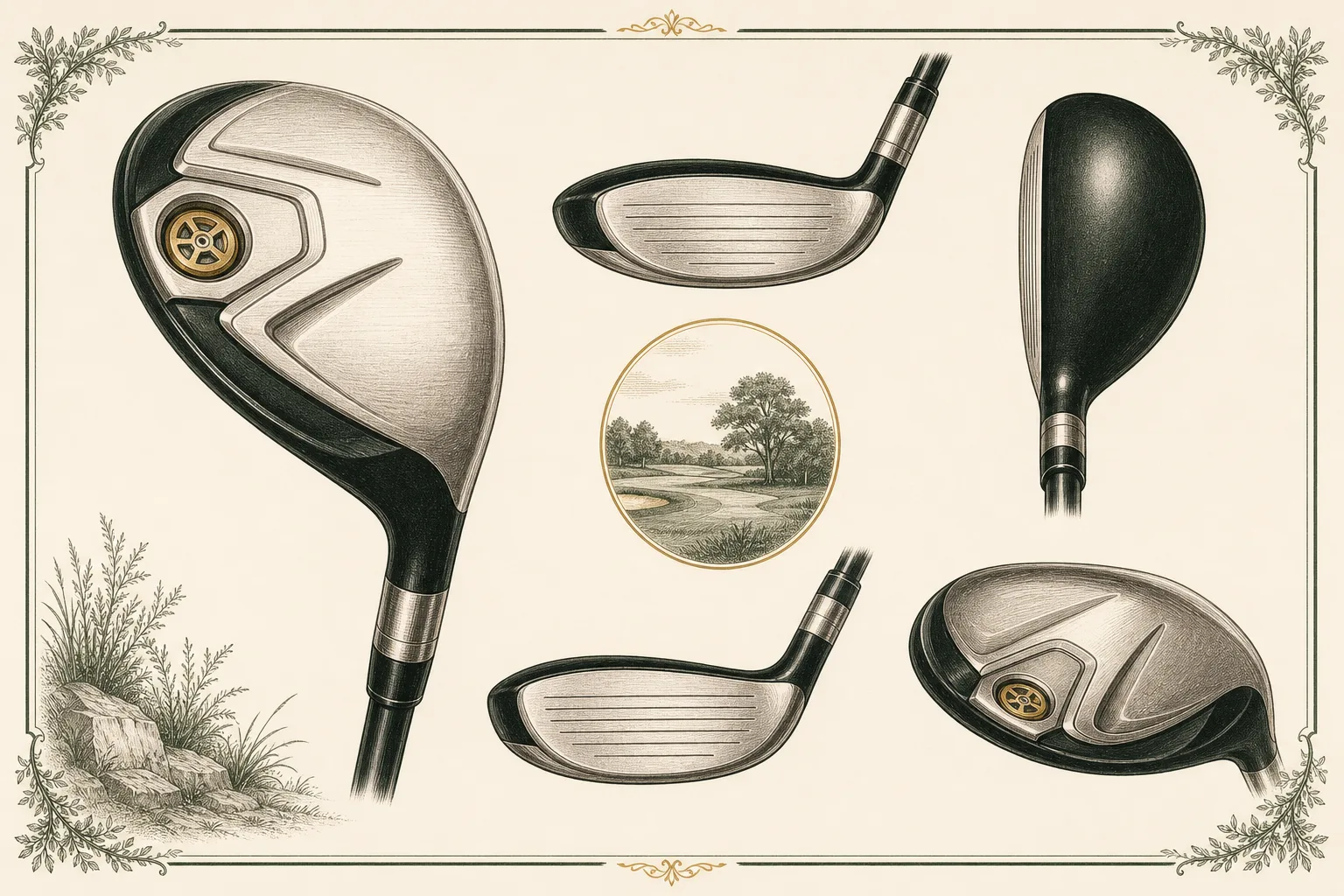
The 2008 Burner Rescue was TaylorMade's mainstream hybrid replacement for long irons, built around a triangular, almost mini-fairway-wood-shaped head using Dual Crown Technology and Ultra-Thin Wall construction to push the center of gravity low and deep for easy, high launch. TaylorMade split it into two distinct builds rather than one generic hybrid: a High Launch version for moderate swing speeds, offered in five lofts from 17 to 28 degrees on a 60-gram SuperFast graphite shaft, and a Tour Launch version for faster swings wanting a lower, more workable flight, built on an 85-gram graphite shaft in stiffer flexes. The SuperFast shaft branding tied the Rescue into the same swing-speed-focused marketing story as that year's Burner driver and fairway woods.
It carries no cult status: it sold as a mainstream, easy-to-hit replacement for 3- and 4-irons, was fully superseded within about a year by the Burner SuperFast hybrid, and has no notable tour story or collector demand attached to it today.
Built for golfers who struggle to launch long irons — moderate swing speeds in the High Launch build, faster swingers wanting a flatter flight in the Tour Launch build; a low-handicap player who already flights long irons well and wants to shape shots has little reason to choose it over a blade-style hybrid.
It launched alongside the 2008 Burner fairway woods as part of TaylorMade's broader SuperFast lightweight push, competing with Callaway's Big Bertha hybrids and Ping's Rapture/G10 hybrids of the same period, and TaylorMade replaced it with the Burner SuperFast hybrid within about a year.
The triangular head, low-and-deep CG, and wide sole make mis-hits easy to get airborne from rough or tight lies alike; reviewers specifically praised how easy it was for golfers of any ability to hit, at the cost of the workability a true long iron would offer.
Calibrated across the whole catalog — a tour blade scores low here on purpose; it means control, not ease.
Original retail was $179.99; used examples in played condition now commonly sell for roughly $20-40 depending on shaft and grade, reflecting both its age and its status as a mass-market rather than premium hybrid even when new.
Reading is one thing — hitting is another. Book a bay and see the numbers for yourself before you buy anywhere.
“A light, easy-launch Rescue for moderate swings. A fine, cheap rung-1 hybrid on the used rack.”
The 2008 Burner Rescue was TaylorMade's mainstream hybrid replacement for long irons, built around a triangular, almost mini-fairway-wood-shaped head using Dual Crown Technology and Ultra-Thin Wall construction to push the center of gravity low and deep for easy, high launch. TaylorMade split it into two distinct builds rather than one generic hybrid: a High Launch version for moderate swing speeds, offered in five lofts from 17 to 28 degrees on a 60-gram SuperFast graphite shaft, and a Tour Launch version for faster swings wanting a lower, more workable flight, built on an 85-gram graphite shaft in stiffer flexes. The SuperFast shaft branding tied the Rescue into the same swing-speed-focused marketing story as that year's Burner driver and fairway woods.
It carries no cult status: it sold as a mainstream, easy-to-hit replacement for 3- and 4-irons, was fully superseded within about a year by the Burner SuperFast hybrid, and has no notable tour story or collector demand attached to it today.
Built for golfers who struggle to launch long irons — moderate swing speeds in the High Launch build, faster swingers wanting a flatter flight in the Tour Launch build; a low-handicap player who already flights long irons well and wants to shape shots has little reason to choose it over a blade-style hybrid.
It launched alongside the 2008 Burner fairway woods as part of TaylorMade's broader SuperFast lightweight push, competing with Callaway's Big Bertha hybrids and Ping's Rapture/G10 hybrids of the same period, and TaylorMade replaced it with the Burner SuperFast hybrid within about a year.
The triangular head, low-and-deep CG, and wide sole make mis-hits easy to get airborne from rough or tight lies alike; reviewers specifically praised how easy it was for golfers of any ability to hit, at the cost of the workability a true long iron would offer.
Calibrated across the whole catalog — a tour blade scores low here on purpose; it means control, not ease.
Original retail was $179.99; used examples in played condition now commonly sell for roughly $20-40 depending on shaft and grade, reflecting both its age and its status as a mass-market rather than premium hybrid even when new.
Reading is one thing — hitting is another. Book a bay and see the numbers for yourself before you buy anywhere.