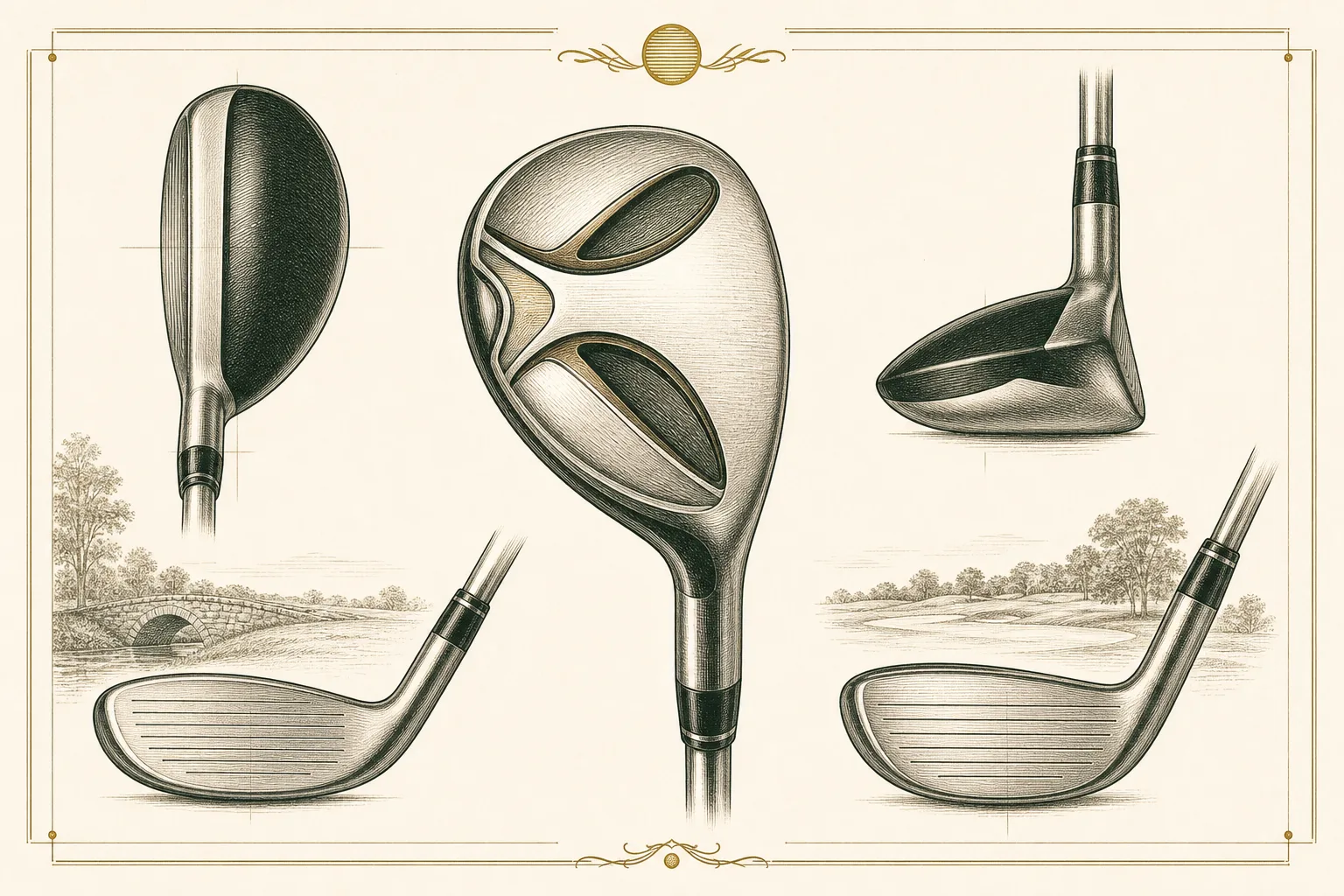
“The rescue-club member of the well-liked MX-700 metalwood family. Rung-1.”
The rescue-club member of Mizuno's well-liked MX-700 metalwood family, built around a thin ES230 'Hot Metal' steel face plasma-welded to a 4-31 stainless body — Mizuno's first real push of Hot Metal face technology into a hybrid rather than just a fairway wood. Its signature feature was the 'Drop Down Crown', a crown that steps sharply downward toward the back of the head to drag the center of gravity low and deep, making it launch easily even from mediocre lies. It sat in Mizuno's lineup as the forgiving, game-improvement rescue option alongside the MX-700 driver and fairway, not a players' tool — a get-the-ball-airborne club rather than a shot-shaping one.
No cult following and no lasting reputation beyond its own release cycle: it drew solid, unremarkable trade-press reviews (Today's Golfer, GolfWRX, The Sand Trap) praising easy launch and a clean address look, then was superseded within Mizuno's normal product refresh and forgotten. It is not discussed on collector forums or hunted down today — it is simply an old, cheap, easy-launching hybrid.
Cheap and plentiful: 2026 private-party listings on eBay for a single MX-700 hybrid typically run $25–$50 depending on shaft and loft, with ladies' and left-handed configurations at the low end of that range. Original retail was around $220; there is no collector premium of any kind.
Mid-to-high handicappers needing help getting long-iron-length shots airborne from the fairway or rough, and players replacing a hard-to-hit 3- or 4-iron. Not for a better player wanting to shape shots or control trajectory — the whole design brief is 'launch it high and don't punish a mediocre strike.'
Released in 2009 alongside Mizuno's Hot Metal push into fairway woods and irons (the MX-1000 iron, 2009, was Mizuno's first Hot Metal iron), competing against hybrids like TaylorMade's Rescue TP and Callaway's Big Bertha Diablo Hybrid. It predates today's adjustable-hosel hybrids by several years — loft and lie were fixed, and fitting meant picking from four static loft options rather than dialing one head in multiple directions.
Genuinely easy to hit: the Drop Down Crown pulls CG low and back for a high, forgiving launch, and reviewers specifically called it 'one of the easiest hybrids to hit' with towering shot height even on so-so strikes. As a game-improvement-era hybrid it trades feel and workability for launch — reviewers noted it gives little feedback on mis-hits, which is the point for its target buyer.
Calibrated across the whole catalog — a tour blade scores low here on purpose; it means control, not ease.
Reading is one thing — hitting is another. Book a bay and see the numbers for yourself before you buy anywhere.