“A rung-4 blade aimed squarely at elite players, with the soft forged feel Bridgestone is known for. Holds value with the blade crowd. No help on off-center hits, so only buy if you flush it.”
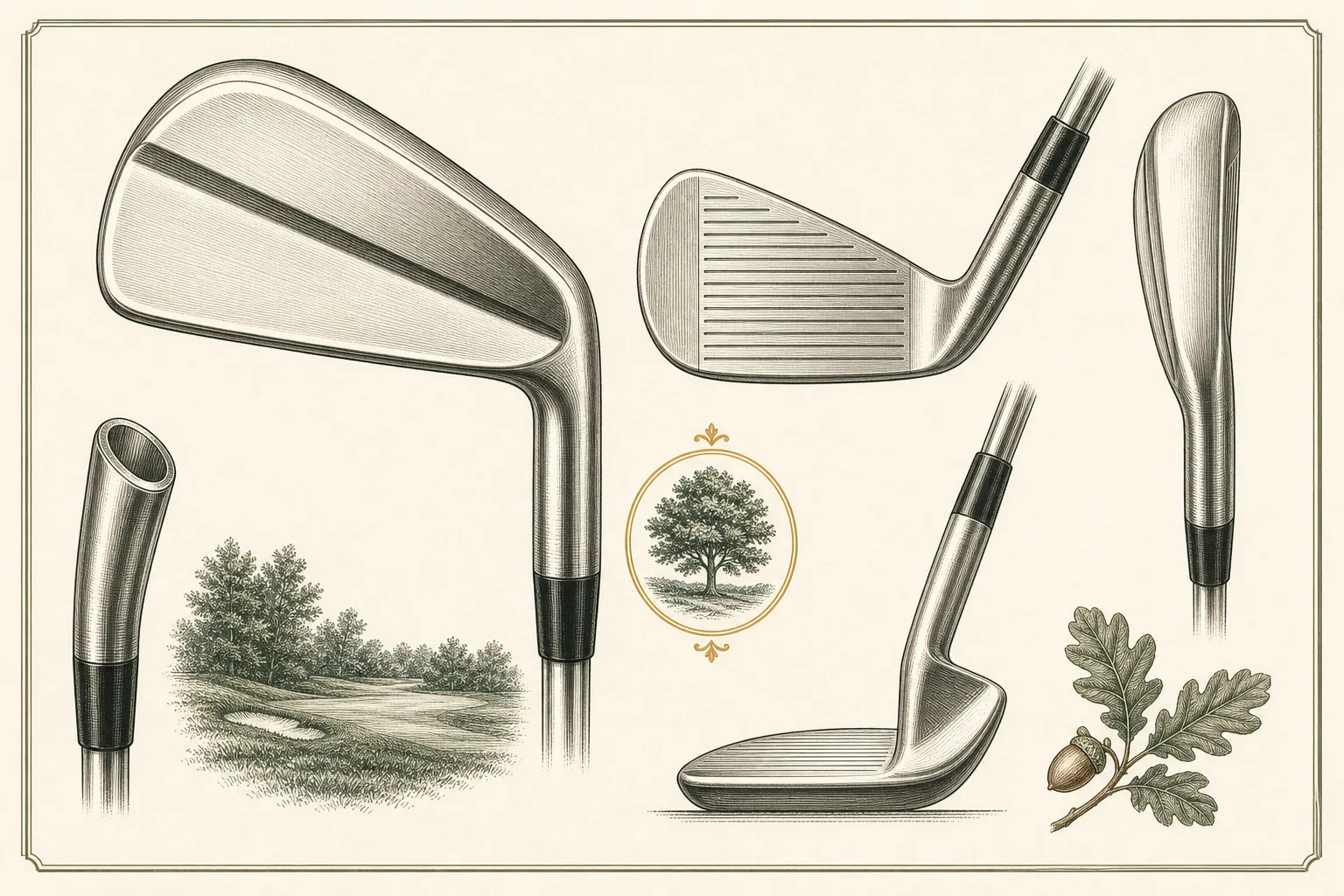
The J15 MB was Bridgestone's 2015 blade and one of the last iron lines the brand sold widely in the US before retreating from American hard goods. Forged from 1020 carbon steel, it paired an ultra-compact head with a narrow 'Sure Contact Sole' tuned for clean turf interaction and consistent strike, aimed squarely at elite players. It headlined a four-model J15 forged family, MB (blade), CB (players cavity), DF (Driving Forged) and DPF (Driving Pocket Forged), so a golfer could combo a forgiving long iron with blade scoring clubs. Reviewers singled out its deliberately stripped-down cosmetics, 'no colors or busy crap, just pure metal and a B stamp,' as a standout in an era of loud iron branding. Its lofts crept slightly stronger than the older J33/J36 blades.
A genuinely admired blade for its clean, logo-minimal aesthetics and Endo-forged feel, but its cultural footprint is modest, so 'notable' not 'cult classic.' The J15 MB arrived in 2015 as Bridgestone's US presence in hard goods was already thinning (the brand exited the US club market not long after), which limited its installed base and community. GolfWRX and Golfalot covered the J15 family and reviewers singled out the MB's stripped-down looks ('no colors or busy crap, just pure metal and a B stamp'), but there is no scarcity-driven hunt or tour legend to justify cult status.
Skilled, low-handicap ball-strikers who prioritize workability, trajectory control and soft forged feel over any forgiveness. Its slightly stronger lofts than the J33/J36 (3=21 vs 22, PW=47 vs 48) nudge it fractionally longer, but it remains a flush-it-or-else blade; mid and high handicaps should look at the J15 CB, DF or DPF instead.
Launched in 2015 as the blade of a four-model J15 forged family: MB (blade), CB (players cavity), DF (Driving Forged) and DPF (Driving Pocket Forged players-distance). It competed with the Mizuno MP-4/MP-5, Titleist 714 MB and Callaway Apex MB. It was among the last Bridgestone iron lines widely sold in the US before the brand's hard-goods retreat, making it a bookend to the J-series until the 2024 22-series relaunch.
An out-and-out blade aimed squarely at elite players: an ultra-compact head, thin topline and a narrow 'Sure Contact Sole' tuned for turf interaction and consistent strike, not error correction. Minimal offset and a tiny sweet spot mean off-center hits bleed distance and feel. A 2 puts it alongside the J33 and 220 MB at the unforgiving end of the catalog.
Calibrated across the whole catalog — a tour blade scores low here on purpose; it means control, not ease.
Realistic 2026 private-party value for a clean set is roughly $175-$325; original MSRP was ~$789. It can sit a touch firmer than the older J-blades because it is newer with modern-ish lofts, but its thin US distribution means fewer listings and a small buyer pool, so pricing is condition- and shaft-sensitive. Reconditioned-retail single irons list higher per club than private-party full sets.
Reading is one thing — hitting is another. Book a bay and see the numbers for yourself before you buy anywhere.
“A rung-4 blade aimed squarely at elite players, with the soft forged feel Bridgestone is known for. Holds value with the blade crowd. No help on off-center hits, so only buy if you flush it.”
The J15 MB was Bridgestone's 2015 blade and one of the last iron lines the brand sold widely in the US before retreating from American hard goods. Forged from 1020 carbon steel, it paired an ultra-compact head with a narrow 'Sure Contact Sole' tuned for clean turf interaction and consistent strike, aimed squarely at elite players. It headlined a four-model J15 forged family, MB (blade), CB (players cavity), DF (Driving Forged) and DPF (Driving Pocket Forged), so a golfer could combo a forgiving long iron with blade scoring clubs. Reviewers singled out its deliberately stripped-down cosmetics, 'no colors or busy crap, just pure metal and a B stamp,' as a standout in an era of loud iron branding. Its lofts crept slightly stronger than the older J33/J36 blades.
A genuinely admired blade for its clean, logo-minimal aesthetics and Endo-forged feel, but its cultural footprint is modest, so 'notable' not 'cult classic.' The J15 MB arrived in 2015 as Bridgestone's US presence in hard goods was already thinning (the brand exited the US club market not long after), which limited its installed base and community. GolfWRX and Golfalot covered the J15 family and reviewers singled out the MB's stripped-down looks ('no colors or busy crap, just pure metal and a B stamp'), but there is no scarcity-driven hunt or tour legend to justify cult status.
Skilled, low-handicap ball-strikers who prioritize workability, trajectory control and soft forged feel over any forgiveness. Its slightly stronger lofts than the J33/J36 (3=21 vs 22, PW=47 vs 48) nudge it fractionally longer, but it remains a flush-it-or-else blade; mid and high handicaps should look at the J15 CB, DF or DPF instead.
Launched in 2015 as the blade of a four-model J15 forged family: MB (blade), CB (players cavity), DF (Driving Forged) and DPF (Driving Pocket Forged players-distance). It competed with the Mizuno MP-4/MP-5, Titleist 714 MB and Callaway Apex MB. It was among the last Bridgestone iron lines widely sold in the US before the brand's hard-goods retreat, making it a bookend to the J-series until the 2024 22-series relaunch.
An out-and-out blade aimed squarely at elite players: an ultra-compact head, thin topline and a narrow 'Sure Contact Sole' tuned for turf interaction and consistent strike, not error correction. Minimal offset and a tiny sweet spot mean off-center hits bleed distance and feel. A 2 puts it alongside the J33 and 220 MB at the unforgiving end of the catalog.
Calibrated across the whole catalog — a tour blade scores low here on purpose; it means control, not ease.
Realistic 2026 private-party value for a clean set is roughly $175-$325; original MSRP was ~$789. It can sit a touch firmer than the older J-blades because it is newer with modern-ish lofts, but its thin US distribution means fewer listings and a small buyer pool, so pricing is condition- and shaft-sensitive. Reconditioned-retail single irons list higher per club than private-party full sets.
Reading is one thing — hitting is another. Book a bay and see the numbers for yourself before you buy anywhere.